Rooting for Root

Great thoughts by Cassandra on one of my favorite pop culture heroines! Thanks, Geeky Voyage!

Cassandra's avatarGeeky Voyage

Over the summer, I discovered a television series that blew my mind and changed my perception on modern television. Said series is Person of Interest.

Until I had subscribed to Netflix back in June, I hadn’t heard much about the series. I knew of the two main female characters, Root and Shaw (their portmanteau pairing name being the apposite “Shoot”) and that was as far as my knowledge on POI stretched. Sadly, the series receives next to no promotion in the UK so it is largely unknown to the majority of British audiences.

I had been fresh off an Angel binge at the time and I was dying for some more Amy Acker in my life. So when I saw an advertisement for POI on Netflix—its title card blown up in all of its deceptively subtle glory— I bit the bullet and loaded it up.

The first thing that I…

View original post 1,325 more words

Why the Dream of the Sandwich Never Dies

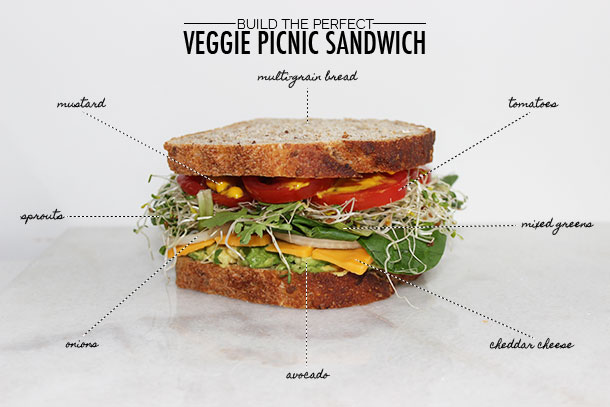
the-perfect-sandwich2

Since the dawn of lunch, roughly the mid-eighteenth century, when John Montagu, the Fourth Earl of Sandwich, too busy gambling with his friends to eat a real meal, asked his valet to bring him some meat in between two slices of bread, people have appreciated the portability of the sandwich.

The two places where I work are both nearby a Rebecca’s and an Au Bon Pain, so you can imagine that I have been eating a lot of sandwiches recently, some of them remarkably better than others. And just when I finally find a sandwich I can fall in love with, the place changes the menu, and not for the better. And even when you get the same sandwich on Friday, for example, that you also got on the previous Tuesday, the person who makes it can make all the difference. (Note to Au Bon Pain: mustard is a condiment, not a soup. The same goes for lemon aioli.)

Disappointments abound, but humans are aspirational creatures. If we weren’t, the species would have pretty much petered out by now, given how often love fails. And we can’t even blame Disney for our apparent optimism. When was the last time you heard a bunch of forest animals singing about the happy ending that was surely in the human characters’ future: to wit, a perfect sandwich? (Okay, the closest thing I can think of to this would be the animated film, Over the Hedge, where the animals go through the humans’ trash like connoisseurs.)

And I just discovered that “Club Sandwich” means that there is an extra piece of bread in the middle, a hundred needless calories where there could be Meaningful Filling of Actual Substance. Harrumph.

The Poetry of Mishearing

Waves-2


So yesterday as I was riding the train to work, the loudspeaker announced, “Destination: North Station.” But what I heard was “Fascination: North Station.” And I thought, “Yep, it’s true what they say. It’s not the journey; it’s the fascination.”


Simply fascination: the purr of the train as it glides

East, seaward, never to reach the ocean as it might

Desire to: our needs command the journey to end

Far short of the ebb and flow of tides. Our work

Calls us into the city that squats delicately on

The edge of the Charles River, but only that

River has the privilege of reaching the sea,

Joining its flow with the far greater fascination

Of the blue-green rolling, rolling, West, then

East, as we will eight hours from now, and home.

Narratives for Survival #2

Ferdinand_Keller_-_Scheherazade_und_Sultan_Schariar_(1880)

Scheherazade Speaks


For nearly thirty-three months, I told an unfinished tale

To the king who had promised to kill his wife each night

So that she could never be unfaithful, then marry again

The next night. I who had spent my youth in the library

Of my father’s home, knew many tales, a thousand

And one in all. I secretly vowed to bend him to my will.


Painting by Ferdinand Keller, 1880.

More on Voice, and Also Why I Hate Rhyme

Everyone-you-meet-is-fighting-a-battle-you-know-no

“Man, sometimes it takes you a long time to sound like yourself.” –Miles Davis

So I was thinking about this line from Miles Davis (because it turns out that epigraphs are a great way to overcome your writer’s block), and I thought about how we constitute the self. And then I had that last stanza from Philip Larkin’s poem “This Be the Verse” go through my head, one of the very few pieces of poetry I have memorized:

This Be The Verse

They fuck you up, your mum and dad.
They may not mean to, but they do.
They fill you with the faults they had
And add some extra, just for you.

But they were fucked up in their turn
By fools in old-style hats and coats,
Who half the time were soppy-stern
And half at one another’s throats.

Man hands on misery to man.

It deepens like a coastal shelf.

Get out as early as you can,

And don’t have any kids yourself.


Now, I will admit that this is more than a bit cynical and that I have been relatively lucky in my upbringing, but there is also some good sense to it, as when people have pain, they tend to spread it around like manure, but generally without the benefit of nourishing anything. Still the eight-syllable line and abab rhyme scheme together make for a catchy (and therefore more memorizable) poem, even if does get a little sing-songy, which maybe takes away from the seriousness. So I adopted some of this to create my own bit.


The Tri-fold Self


Three things make up the self, I think:

The mind, the body and the voice.

Such things are passed on down to us

Without our say-so or our choice.


First comes the mind, the wandering wit

That tilts at windmills, fights through mazes,

Eats the words served up in books

And dreams the world in smoky hazes.


Next comes the body, old workhorse

That carries Mind from place to place.

We exercise to keep it fit

And use makeup to gild its face.


Last comes the voice, through which the mind

Speaks from this body to that.

And other minds judge what they hear

And call us either sharp or flat.


It takes long practice to learn how

The mind best works itself to learn,

Itself a cosmos hidden deep

Within the body, there to burn.


And longer still it takes to see

The beauty in the body aging,

Aching, creaking, fighting, winning,

Singing, all while life engaging.


But longest yet it takes the ears

To love the sound the tongue releases

From the moment we, born, wail

Until our last, when all breath ceases.


And so it is, all of us struggle

To be ourselves: voice, body, mind.

You know the struggle all too well,

So as you walk the world, be kind.


Psycho Sunday: Badass Women in Combat Gear #3.25

Reposted from The Guardian 26 Feb. 2016:

3936

“The Black Mambas are winning the war on poaching,” insists Siphiwe Sithole. “We have absolutely zero tolerance for rhino poaching and the illegal wildlife trade. The poachers will fall – but it will not be with guns and bullets.”

Sithole and Felicia Mogakane are members of South Africa’s Black Mambas, the world’s first all-female anti-poaching unit that has captured the public’s imagination. But it’s their success in reducing rhino deaths and breaking down the barriers between poor communities and elite wildlife reserves that is their most powerful weapon in the war on poaching, and has seen them pick up their second international conservation award this week.

The two women have travelled to London to receive the inaugural Innovation in Conservation award from UK charity Helping Rhinos. The award recognises projects “with an inspiring and innovative approach” that have shown positive results in protecting rhino populations.

Since forming in 2013, the Black Mambas have seen a 76% reduction in snaring and poaching incidents within their area of operation in Balule nature reserve in the country’s north-east. As well as the famous big five of rhino, lion, elephant, buffalo and leopard, the 40,000-hectare private reserve is home to zebra, antelope, wildebeest, cheetah, giraffe, hippos, crocodiles and hundreds of species of trees and birds.

In the six months before the Mambas were set up, 16 rhinos were lost in Balule, one of several private reserves bordering Kruger national park. In the 12 months after, fatalities were reduced to just three rhinos.

Unable to Tire of Sandwiches

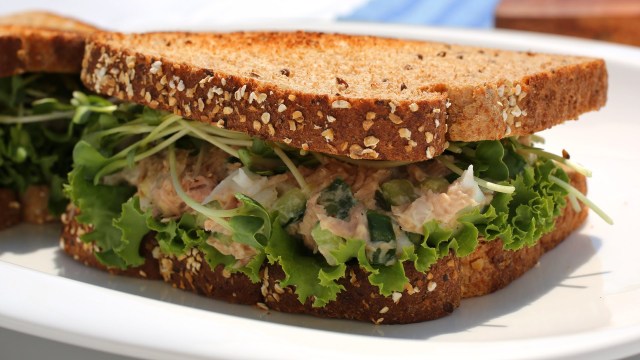
So I had a Reuben at Grendel’s in Cambridge, MA today. Not as good as Mike’s Deli in Brookline, but the sauerkraut was quite tangy.

maxresdefault

“Too few people understand a really good sandwich.” — James Beard


A really good sandwich is a journey, not

A destination, a relentless pursuit of perfection,

Of smooth and rough, crispy and soft, of sweet

And salt and tangy. The sound your teeth make


When you chew, the way your eyes close,

Unintentionally, and just a hint of the drip, but

Never too much. The really good sandwich is

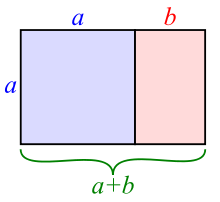
A golden rectangle, with one-half b on either side


Of the filling, a, whether tuna salad, say, with lettuce

And frozen peas, or roast beef, tomato, horseradish,

Carmelized onion… Myths of this ratio’s appeal

In nature, in the Parthenon, are overstated


Of course, if not completely fabricated, but what

Is a sandwich or any temple to the senses

But a fabrication? What separates humans from

Other animals? Our ability to measure and layer.

220px-SimilarGoldenRectangles.svg


Inventing the Poet

“In order to write poetry, you must first invent the poet who will write it.” — Antonio Machado

poet

In this year-long lab in Innovative Inventions, we shall experiment

With a variety of elements, chemical compositions, media (including bricks

And Legos, crayons, pen and ink, and the dreams of flightless waterfowl),

Books, of course, lots of books, starting with a dictionary, thesaurus, all

The Peterson’s Guides—for birds, trees, flowers, gems, and librarians of

All stripes. You never know when you will run into the need to identify

Friend or foe, ibex or oboe, atlas or armillary sphere. What kind of poet


Are you going to make? The kind with frilly cuffs or the kind with battered

Shoes and a flannel shirt? The kind with a black beret and a bicycle, or

The kind with cufflinks and a VW Bug? Will the poet write in Chinese

Characters all the way down the window shade, or type some beatnik

Manifesto on the back of small cards to slip into unsuspecting readers’

Pockets: sub rosa poetry. What kind of shamanic powers will you endow

Your poet with? Incense and Latin chant is good, as is a walk in the woods,


Or a picket line, a fife and drum parade; avoid public readings as they cause

An unfortunate increase in hatband size. The chemicals come last, cheap wine,

Margaritas, Gatorade, tea and much, much coffee, particularly if yours

Is a morning poet, trained to greet the day as soon as the birds declare it

Has begun. Add foam and cinnamon or a rim of salt. Add the tears of broken

Love, the sweat of labors performed to pay the rent, the blood of ancestors.

Stir carefully. Such ingredients are flamboyant and may explode.

Emergence

10274098_1320345484653126_8268387390674366604_n

Poetry puts language in a state of emergence, in which life becomes manifest through its vivacity. These linguistic impulses, which stand out from the ordinary rank of pragmatic language, are miniatures of the vital impulse.” ― Gaston Bachelard

As I have mentioned before, in science, emergence is the process/concept that/whereby a thing has characteristics that are not shared by its component parts. Hydrogen and oxygen do not necessarily glitter, gurgle or slake thirst by themselves, though when put together as water, they do. Mind is an emergent property of the physical brain and its chemicals and electrical impulses. Like that.

So words, which written in the dictionary and unread, do not have the power they have when we put them together, read them and speak them. Nothing about each word separately—and still less each letter separately—moves people to go to war, make peace, marry each other or even laugh when laughter seems impossible. All of this comes from the emergent nature of language. To take language a step further, we can talk about poetry.

(And I should make clear that we could just as easily talk about science writing, since it is kind of amazing that we can communicate the incredible microcosms and macrocosm of our universe, brain to brain, through language filtered through the scientific process. This is only different from poetry in that the beauty of the content is foregrounded; the beauty of the carrier of the content—language—is usually pretty dry, although I have heard lots of arguments for the aesthetic appeal of the math. Sorry, that bit is lost on me. But I believe these people because when they say it, they get all starry-eyed.)

I am not sure that Bachelard is using this particular definition of emergence in his statement above. I think he is saying something more, perhaps that while language shares in the magic of emergence, poetry puts language on steroids, and the emergence that is made possible through poetry is something more like the Big Bang, not just a universe but a universe full of universes may come into being, like Sir Terry Pratchett’s Multiverse. Similarly, poetry makes possible not simply beautiful images and ideas but the possibility of Beauty itself. Not to get Platonic here, but there is nothing inherent in a massive explosion of matter or words that should create sentience or souls or song.

It shouldn’t. But it does.

Psycho Sunday: Badass Women in Combat Gear #3.5

MV5BMzM3MTYxMDg4MV5BMl5BanBnXkFtZTgwMTMyMjU2MTE@._V1_UY268_CR16,0,182,268_AL_

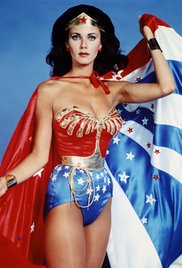
Raise your hand if you spent any part of the 1970s spinning around in your living room, hoping that this time, you’d gain superpowers, a golden lasso and maybe an invisible jet. Watching Diana Prince (Linda Carter) beat up the bad guys and save Steve Trevor (Lyle Waggoner) again was very fulfilling and set me up for two decades of disappointed TV watching until the mid-1990s came around and Wonder Women’s spiritual daughters, Xena and Buffy, appeared kicking ass and dusting their enemies.

And while Linda Carter will always be Wonder Woman to me, the new DC comics movie is coming out this spring, with Gal Gadot in Batman v. Superman: Dawn of Justice. Given that Gadot will be in the solo Wonder Woman film in 2017, I have hopes that the actor, writers and directors step up to the plate. I had always hoped for a Joss Whedon written/directed film with Lucy Lawless in the title role, but such vain hopes were not to be.

chris-pine-to-star-alongside-gal-gadot-in-dc-s-wonder-woman-686234

I still want some bullet-repelling bracelets in case I need to travel outside of New England, but I suppose if they were out there on the market, the NRA would try to make them go away.