Thoughts for a Doodle Do…

So my pal Mike Allegra over at heylookawriterfellow is doing his semi-annual Doodle Contest. So here are my words: panther, dapper, samurai, flying pig, poetry. Because the Middlebury College mascot is a panther (and let’s face it, my cat Musashi is kind of like a very formal, tuxedoed panther), Musashi is dapper, I studied Japanese fencing, I had a coaching company with a flying pig logo, and um, er, uh, can’t remember the reason for the last one, might have to think about it more…

HOW TO ENTER

To get your name in the drawing, leave a list of five words in the comments section below. They can be any words at all, but – and this is important – the words cannot be completely random. Each word must be connected to you in some way.

For example, here are my five words:

Capybara

Bert

Skipping

Juneau

Chip ‘n’ Putt

The connection between you and the words doesn’t need to be deep or profound, it just needs to exist.

HOW TO INCREASE YOUR CHANCE OF WINNING

Want me to stuff the ballot box in your favor? Fiiine. I’ll add two more ballots if you announce this contest on your blog and link back to this page. That’s three chances to win!

Don’t have a blog? No problem. I’ll give you one extra ballot if you announce this contest on your Facebook page or Twitter feed. (Be sure to post links in the comments.)

PRIZES! (PLURAL!)

As I mentioned, the winner of the drawing will get a custom made, one-of-a-kind, Mike Allegra doodle suitable for framing! Woo!

But the winner will also get something else:

An original, one-of-a-kind, Mike Allegra-penned story! This story will contain all five of the words you supplied to enter this contest. I can’t promise you a good story, but I will do my best.

So do me a favor and choose fun words, OK?

DEADLINES, ETC.

Your entry is due on or before Tuesday, April 5. The winner of the drawing will be announced on Wednesday, April 6.

That’s it! Give me five words and get going!

GOOD LUCK!

When I Am Seventy-Plus

70plus

It took a year-plus to relieve the trauma we recall

From last winter that pounded us with seventy-plus

Inches of snow. It took an unseasonably mild winter


To counter the instant dismay caused by a sky greying

Over like ice over broken tar. We paused, tensed,

Refused to panic. We checked our shovels. We relaxed


When we realized that the 36-inch forecast meant

An inch or two, though wet. We still shudder to think

Of the wall of snow on every sidewalk, the wall that made


Parking almost impossible. We still shudder to think

How cold we were. We still shiver. Last July, I heard a man

Talk about how he still couldn’t believe the snow had melted.


Last July, the last of the snow finally melted. Last July,

When the summer was mild and I was not melting

In the 70-plus-plus but not yet 90-degree heat,


I shivered, but not as much as I am shivering this winter,

This mild, mild winter, when Christmas is 70 degrees

And it’s snowing at Easter, and no one really knows


How to forecast the future, how to predict weather:

I shiver in fear that the extra 20 or 30 degrees added

To our winter will also be added not just to this summer


But to all the summers to come, both those now

When I squander my forties and those later when I, 70-plus,

Look around at the 120 degree heat, and learn despair.

That Poem about the Quokka

A friend in need, Mike Allegra, heylookawriterfellow, recently gave me a writing topic when I was sore in need of ideas. He wrote, “Aw! Blockage stinks. But I’m here to help; write about quokkas. You’re welcome.” I had never heard of these, but when I Googled it, here is the picture that looked back at me.

quokka1

The kangaroo’s cousin, cute little quokka

With teddy bear eyes and a winning small smile,

Nicely nocturnal you feed on the seedpods,

Leaves and soft bark by the light of the moon.


Quick! Make a wish! A big steaming mocha

Or peppermint muffins stacked up in a pile:

Some sign that you haven’t been mocked by the food gods.

The Nightblooming Rainbow will bring it right soon.

Squirrel Revolution

Girl on the Contrary is predicting that the squirrels in her neighborhood may be plotting a revolution. Until I read this, I did not understand the Sandy Skoglund installation/photo entitled “Squirrels.” Now, however, I am beginning to get it…

Sandy_Skoglund_01

They are in fact everywhere, probably

Watching us through our windows, looking

Innocent and fuzzy as they scamper up and down

Trees in the park. Only the big black dog knows

What they are up to and chases them at top speed

Leaping easily over the fence and trying to follow

Them up the tree. But paws like his were not made

For vertical climbing. So the ides of March comes

Closer every day, the revolution comes disguised

In soft greys and browns, with beady black eyes and

Fluffy tails twitching in Morse code: Soon. Very soon.

Response to Robert Okaji’s “How to Write a Poem”

Response to Robert Okaji’s “How to Write a Poem”


How to Revise a Poem


Having learned to make a toast in nine languages

And setting aside the chainsaw with which I carved


This poem out of a block of fresh ice, I take up the scalpel,

Heated over the blue flame of the gas stove. I stand


For a moment like a conductor in white tie and tails,

Waiting for the crowd to fall silent, and make the first cut


Into the heart of the poem. Does it bleed? Do the words

Fall to the dirt among the pigeons? Do the courtesies


Sound hollow or sincere? The moon pulls at my arm

Like a cat in search of dinner or a playmate. I accept all:


Love, envy, ambition, and drive the wrong way down

One-way streets. They won’t catch me. They will


Park their Black Marias on the sidestreet, dig in

To the bowls of chili I provide for them while I steal


The bullets from their guns. Finally! At last! Just exactly

What I needed for the new ending to the poem.


Rooting for Root

Great thoughts by Cassandra on one of my favorite pop culture heroines! Thanks, Geeky Voyage!

Ms Buffy Buff (Cassandra)'s avatarGeeky Voyage

Over the summer, I discovered a television series that blew my mind and changed my perception on modern television. Said series is Person of Interest.

Until I had subscribed to Netflix back in June, I hadn’t heard much about the series. I knew of the two main female characters, Root and Shaw (their portmanteau pairing name being the apposite “Shoot”) and that was as far as my knowledge on POI stretched. Sadly, the series receives next to no promotion in the UK so it is largely unknown to the majority of British audiences.

I had been fresh off an Angel binge at the time and I was dying for some more Amy Acker in my life. So when I saw an advertisement for POI on Netflix—its title card blown up in all of its deceptively subtle glory— I bit the bullet and loaded it up.

The first thing that I…

View original post 1,325 more words

Why the Dream of the Sandwich Never Dies

the-perfect-sandwich2

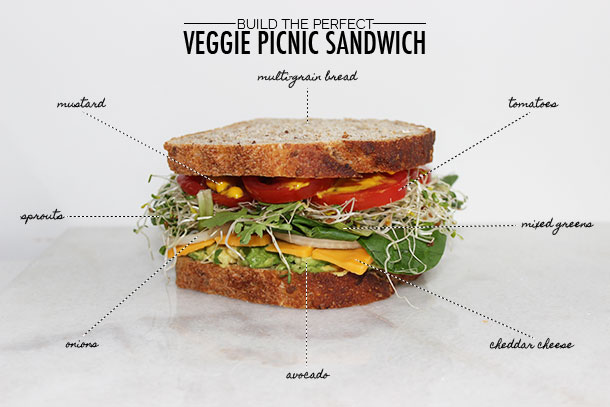
Since the dawn of lunch, roughly the mid-eighteenth century, when John Montagu, the Fourth Earl of Sandwich, too busy gambling with his friends to eat a real meal, asked his valet to bring him some meat in between two slices of bread, people have appreciated the portability of the sandwich.

The two places where I work are both nearby a Rebecca’s and an Au Bon Pain, so you can imagine that I have been eating a lot of sandwiches recently, some of them remarkably better than others. And just when I finally find a sandwich I can fall in love with, the place changes the menu, and not for the better. And even when you get the same sandwich on Friday, for example, that you also got on the previous Tuesday, the person who makes it can make all the difference. (Note to Au Bon Pain: mustard is a condiment, not a soup. The same goes for lemon aioli.)

Disappointments abound, but humans are aspirational creatures. If we weren’t, the species would have pretty much petered out by now, given how often love fails. And we can’t even blame Disney for our apparent optimism. When was the last time you heard a bunch of forest animals singing about the happy ending that was surely in the human characters’ future: to wit, a perfect sandwich? (Okay, the closest thing I can think of to this would be the animated film, Over the Hedge, where the animals go through the humans’ trash like connoisseurs.)

And I just discovered that “Club Sandwich” means that there is an extra piece of bread in the middle, a hundred needless calories where there could be Meaningful Filling of Actual Substance. Harrumph.

Voice

“What is the source of our first suffering? It lies in the fact that we hesitated to speak….it was born in the moments when we accumulated silent things within us.” ― Gaston Bachelard

Lately I have been playing with a metaphor for the changes I have been witnessing within myself: that certain people (human and furrier) have rearranged the furniture in my head (or possibly heart). What I had not really considered is that the different things inside me might have more or less import than others. Bachelard’s comment suggests that some of the things themselves are silent and equates that with our being unable to speak, so a silent thing inside leads to silence outside. So is the flipside of this idea that loud things lead us to speak loudly?

This makes a lot of sense, especially if you look at internalized oppression. In one person, that kind of institutional wrong could be held tightly silent on the inside and lead to a keeping-your-head-down kind of silence or a shame-filled silence; in another person, it could lead instead to rebellion, activism, or some other form of proud rejection of the wrong being done and the ideas behind it.

I think, though, that other “things” are a bit more like cats: sometimes purring, sometimes snoring, sometimes quietly patting us on the face to wake us out of a dead sleep or a crazy dream, pointing us in the direction of the cat food, the pragmatic necessities and the sweet varieties that life offers on a daily basis. These are generally not things that require yelling or even singing; they certainly do not demand our silence.

So then, if I return to my idea for this blog, that poetry can be sublime, ridiculous and useful, I also return to what sort of speaking poetry can do on a given day: give voice to the things that do not dare speak, tune the angry things to a frequency people will be able to hear, and hum simple tunes to keep our voices warm and ready to say the words that are still slowly making their way toward articulation.

Narratives for Survival #1

Screen_shot_2013-11-12_at_11.56.19_PM

So I found this meme on Facebook the other day, not long after Umberto Eco’s death, and I thought that it might just kick my writer’s block in the pants. “To survive, you must tell stories.” I tend to look at this blog as a “platform” for my books of poetry that I am going to be publishing in the next few years, a way to “build an audience,” and I imagine that many of my readers who are also bloggers feel a similar way.

But I often get dragged off course, usually by popular culture narratives with kickass women characters who lead, make choices and decisions, fight, kill, deal with the trauma, and work to balance the things and people they love with the things and people they have to deal with in often less than loving ways. These are the narratives I am magnetically drawn to.

Clearly, they are not the only important narratives. I have a shelf of books on World War II and the Holocaust because memory and testimony are crucial types of narratives for survival. I don’t write about these much because I don’t have firsthand knowledge, but I am going to be giving my writing students a speech by Elie Wiesel to read because they might take his thoughts on “The Perils of Indifference” better than they would take such thoughts from me.

There are also meta-stories: stories about how stories affected you, as we often hear when we start talking about representation in popular culture narratives. So Whoopi Goldberg has often talked about the galvanizing affect seeing Nichelle Nichols playing Lt. Uhura on Star Trek had on her when she was a little girl, suddenly realizing that a black woman could be a leader rather than just a servant. So clearly it is just as important to consider how we tell the stories we tell.

But there are other narratives too, the stories we tell ourselves when we are too tired to do the laundry or too hopeless to fall asleep at three in the morning, or too optimistic to consider consequences or too busy to separate the recycling. Sometimes they serve us well, reminding us to save our energy for the big things or to hold on to the small things until we have the resources to work for the bigger things. And sometimes they just get in the way. So maybe it is not only about what stories we tell and how we tell them, but also how we use them and how they serve us and others or do not.

Emergence

10274098_1320345484653126_8268387390674366604_n

Poetry puts language in a state of emergence, in which life becomes manifest through its vivacity. These linguistic impulses, which stand out from the ordinary rank of pragmatic language, are miniatures of the vital impulse.” ― Gaston Bachelard

As I have mentioned before, in science, emergence is the process/concept that/whereby a thing has characteristics that are not shared by its component parts. Hydrogen and oxygen do not necessarily glitter, gurgle or slake thirst by themselves, though when put together as water, they do. Mind is an emergent property of the physical brain and its chemicals and electrical impulses. Like that.

So words, which written in the dictionary and unread, do not have the power they have when we put them together, read them and speak them. Nothing about each word separately—and still less each letter separately—moves people to go to war, make peace, marry each other or even laugh when laughter seems impossible. All of this comes from the emergent nature of language. To take language a step further, we can talk about poetry.

(And I should make clear that we could just as easily talk about science writing, since it is kind of amazing that we can communicate the incredible microcosms and macrocosm of our universe, brain to brain, through language filtered through the scientific process. This is only different from poetry in that the beauty of the content is foregrounded; the beauty of the carrier of the content—language—is usually pretty dry, although I have heard lots of arguments for the aesthetic appeal of the math. Sorry, that bit is lost on me. But I believe these people because when they say it, they get all starry-eyed.)

I am not sure that Bachelard is using this particular definition of emergence in his statement above. I think he is saying something more, perhaps that while language shares in the magic of emergence, poetry puts language on steroids, and the emergence that is made possible through poetry is something more like the Big Bang, not just a universe but a universe full of universes may come into being, like Sir Terry Pratchett’s Multiverse. Similarly, poetry makes possible not simply beautiful images and ideas but the possibility of Beauty itself. Not to get Platonic here, but there is nothing inherent in a massive explosion of matter or words that should create sentience or souls or song.

It shouldn’t. But it does.