Pride Goeth, after the Fall

Sidewalk_in_autumn_-_Salem,_Oregon

How did we get here after nine feet

Of snow fell on my city, my streets

Where I walk unhindered eight months

Of each year? How did we get to this brightness

With trees waving yellow hands and smiling

With cheery red faces? Who allowed spring

.

To be so very short indeed, maybe two months

And then a long, slow summer, not too hot

And, thank God, not humid nearly at all

For a change? This chill in the air cheers

Me, suggests to me even better things

To come, despite the inevitability of winter

.

Just around the corner. I will not say

I am ready for any of it. I will not claim to be

Happy to see autumn go, with its bright

Calm and see winter come, all slippery

And not trustworthy at all, white sidewalks

Preparing now, in secret, to take us down.

Weighing In On the Issues, #2

tumblr_pumpkinT91qewacoo1_500

Ah, autumn. When the trees turn red, yellow and brown. When the weather cools to a crisp Ishouldhavewornajacket-ness. When students keep turning in the papers I assign, and I keep being forced to grade them. And, apparently most importantly, when pumpkin spice is a thing.

Everywhere.

Doughnuts. Coffee. Beer. Crackers. And although I haven’t been to Staples recently, I suspect pencils.

I get it. I do. We all appreciate pumpkins. We all anticipate dressing up as Agent Melinda May and waiting for the Great Pumpkin in our local organic-certified sincere pumpkin patch (okay, admittedly, I am speaking for myself here). And we all just loooove our allspice.

But enough already.

Thank you. That is all.

The Ankle Brace of Forgiveness

images

Well, it has now been about a month since I sprained my ankle fighting off the Saracens (whom my landlord sent to check on our plumbing). So, among other things, I have not been doing any yoga and bloody little exercise other than walking and taking stairs Very Slowly Indeed. This means that I also haven’t needed to wear my hand brace for protecting my arthritic carpal bones. But I have been wearing the damn ankle brace instead and it has been annoying.

It seems odd to me the love/hate relationship we have with these kinds of mobility aids. I remember walking the dog with my mother one winter and watching her hack away at some ice in the sidewalk with her cane, and I realized she hates her cane as much as I hate my hand brace. I guess it is a resentment that we need something to do the stuff we used to do unaided.

On the other hand (as it were), being forced to slow down and pay attention to bumps in the sidewalk, which can be very painful at speed, is not necessarily a bad thing. A friend with a lot of invisible disabilities always used to remind me to listen to my body and go easier on myself, and the damn braces remind me for her.

Colonialism Day

12112200_1116040721740730_6001021426054574235_n

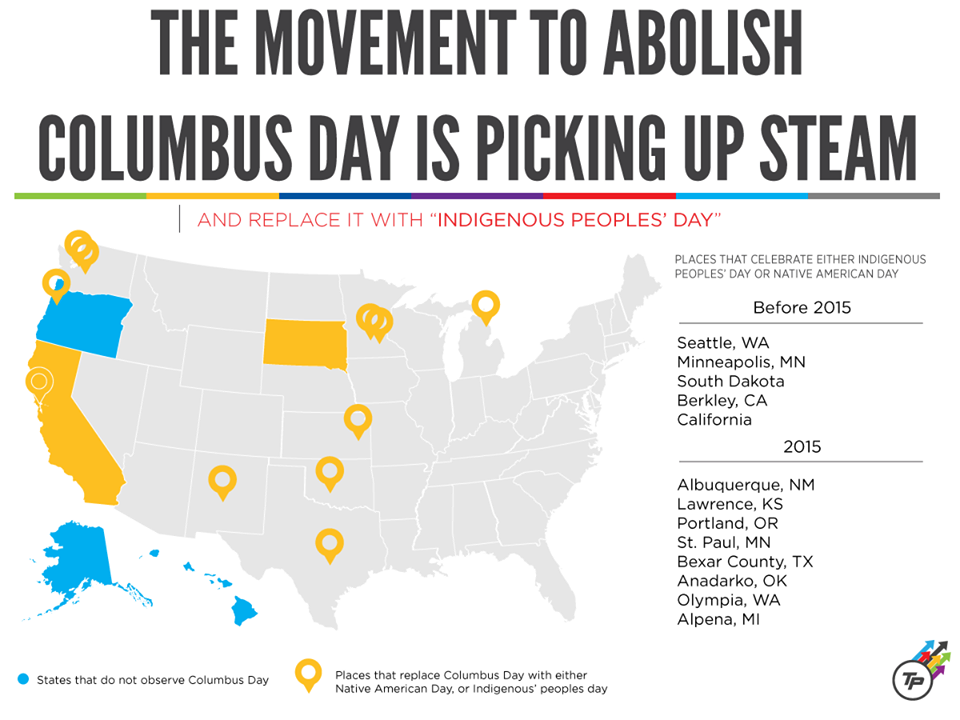
It seems a bit strangely appropriate that, on the weekend when we celebrate a bunch of Europeans getting lost on their way to India and making the most of it by taking custody of the land, I will be grading papers. Thirty-six of them, to be exact.

Here is a poem for today by the Coeur d’Alene poet Sherman Alexie. Refer back to my post about the problem-solution nature of sonnets if you have trouble seeing how it is a sonnet.

Totem Sonnet #3

.

Crazy Horse

Sitting Bull

Captain Jack

Black Kettle

Ishi

Joseph

Qualchan

Wovoka

.

Anna Mae Aquash

Wilma Mankiller

Tantoo Cardinal

Winona LaDuke

Buffy Sainte-Marie

Maria Tallchief

.

Alexie, Sherman. The Summer of the Black Widows. New York: Hanging Loose Press, 1996.

Psycho Sunday: Baddass Women in Combat Gear #9

RASPUTIN

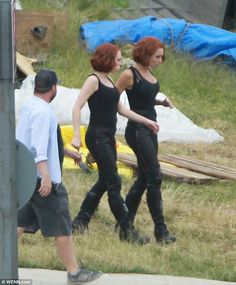
Number Nine on my list of BWCGs is Black Widow, Natasha Romanov. Unlike Deputy Jo Lupo, Romanov probably didn’t start out as a badass, but was twisted by the USSR’s Black Widow Program, which trained young girls to be assassins. Played by Scarlett Johansson, an actor with a strong work ethic, Romanov comes off as badass, but not in a testosterone kind of way. In the recent film Avengers: Age of Ultron, she is the only Avenger who doesn’t feel the need to try to pick up Thor’s hammer; she makes it clear she has nothing to prove. The downside of her portrayal in that film is her getting paired up romantically with the Hulk instead of Hawkeyes (wrong, wrong, wrong) and the whole thing where the graduation ceremony from the Black Widow Program is getting a hysterectomy. That makes sense in a communist patriarchy kind of way storywise, but it says something about women who are Allowed to be Badasses in Popular Culture. Too many of them are broken in some way.

But I like that Johansson does as many of her own stunts as she can, and from the very beginning in Iron Man 2, those stunts are just PRETTY! She says:

“I like doing the stunts. Oh, sure, it hurts sometimes. I came into work on Winter Soldier some days aching with bruises and bangs, and Samuel L. Jackson, my co-star, would say: ‘So why not just hand over that stuff to the experts, Scarlett, and save yourself from pain?’ I explained to him why I just couldn’t do that. Please don’t think I’m stupid, though. I know my limitations. When Natasha, my character, has to bound 20ft in the air and do four cartwheels, it’s my stunt double Heidi Moneymaker who’s doing that.”

843316932e3cf693e5831a2efe8300d2

Peachey, James. “Scarlett Johansson Keeping Figure, Doing Stunts…” Daily Mail. 2 April 2014. Web. 20 Sept. 2015.

In Which, Suddenly, I Nerd Hard

chris-evans-captain-america

I am not sure when it happened, the transformation from English teacher who likes smart action TV to nerd. People say you are a nerd when you like something unabashedly and a whole lot. I suspect it is a combination of Joss Whedon simply doing what he does—creating feminist TV and fun movies—and the social phenomenon of Netflix and bingewatching old and new TV shows. Suddenly I can immerse myself into something cool and pay really close attention to the details and catch the kinds of continuity elements that are obvious when you watch four episodes in an evening rather than over the course of four weeks. That leads to an admiration of the writers/actors/set designers, a kind of “I see what you did there” that otherwise would be unavailable to me. Then you add social media and discover that other people really love the same things that you really love, which then makes it even safer to really love it, a kind of reverse peer pressure.

So, yes, the Earth is going to hell in a handbasket, no question, but at least I have my Captain America.

The Joys of Horseradish

keats-header

I just discovered that horseradish has its own International Horseradish Festival in Illinois. Yum. Who’s with me?

John “Keats’ letters preserve his contributions to literary history, but they also contain a surprising moment in culinary history: one of the first mentions of a roast beef sandwich in print. On a walking tour of the U.K. in 1818, Keats worked up such a hunger that he fantasized about food. “[I] long for some famous Beauty to get down from her Palfry … and give me—a dozen or two capital roast-beef Sandwiches,” he wrote—perhaps the only Romantic poet to privilege lunch over lust. While the first appearance of sandwiches in print dates back to 1762, they were often made with ham; it wasn’t until the middle of the 19th century that roast beef sandwiches were popular enough to be referenced by cookbooks. By the turn of the century, the dish had firmly established its place in the lunchtime pantheon; Keats’ fantasy meal was well ahead of its time.” Paperandsalt. “John Keats: Roast Beef Sandwiches with Horseradish Dressing.” 31 Mar. 2015 Web. 9 Oct. 2015

Note: mixing horseradish with Greek yogurt is healthier than mixing it with mayonnaise or sour cream. You’re welcome.

45 Quotes about Poetry for National Poetry Day

Some brilliant little gems from our friends at Interesting Literature!

InterestingLiterature's avatarInteresting Literature

Witty and inspiring quotations about poetry in honour of National Poetry Day

As it’s National Poetry Day here in the UK (held in early October every year, usually on the first or second Thursday in the month), we’ve gathered together some of our favourite quotations (or quotes, depending on your preference) about poetry and poets, from the poetry of the everyday to the big philosophical questions which poetry presents us with. Where we’ve included a link on the author’s name, you’ll find more information about them – interesting facts, more quotations, or biographical material. We hope you enjoy the quotations.

There is no money in poetry, but then there is no poetry in money, either. – Robert Graves

Poetry is the rhythmical creation of beauty in words. – Edgar Allan Poe

There is no Frigate like a Book / To take us Lands away, / Nor any Coursers like a…

View original post 845 more words

Weighing In On the Issues, #1

CP-DsdAUEAADeuL

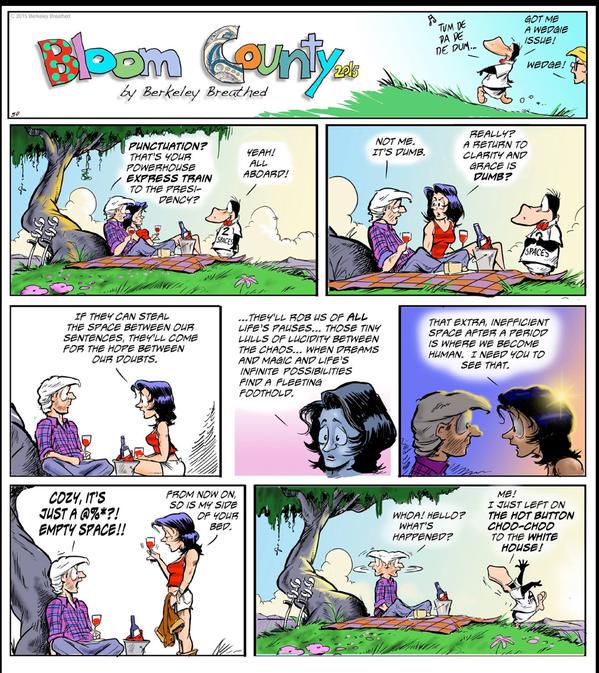
Before I begin explaining Campaign Issue Number One, I have to explain where it comes from. Hopefully, if you haven’t been living in a cave recently, and/or your cat hasn’t knocked your computer mouse off your desk so that you are incapable of accessing Facebook, then you know that Berkeley Breathed has broken his 25 year sabbatical and brought Bloom County back in time for the 2016 American presidential circus. I mean, election. And of course Opus is running, with Bill the Cat as his Veep of choice.

Now let me get a leetle political here and say that at this point I would probably vote for Opus before any of the Republican contenders and most of the Democratic ones, which is sad. I believe that Opus probably wouldn’t get us into yet another war (not sure about Bill) or try to defund cancer screenings for women. That is just not how he rolls.

However, I must say that the hot-button issue he has chosen as the main plank in his platform is something I simply cannot get behind: reverting to using two spaces after a period.

People talk about how we’ve abandoned our traditional values, rejected the teachings of the Bible (presumably by eating shrimp and not having concubines, because I am pretty sure ancient Hebrew doesn’t actually use punctuation). But what they ignore is the reason we used to have two spaces after the period back in the day when we typed on actual typewriters, manual and electric.

The way I was taught, the letters in the font that typewriters used were of different widths and the space was narrow, so the extra space did something to balance that out. Now, the letters of most fonts are less varied, so the extra space isn’t needed. I don’t know if that is true. What I do know is that should you, gods forbid, justify your writing on both left and right, an extra space could end up giving you a huge hole in the middle of your paragraph as your word processing program works overtime to fix what ain’t broke.

Where do you stand on the debate?

Summer of 1816, or, Who Knew?

MTIwNjA4NjMzOTUzMDkzMTMy

My officemate at MIT has on her wall a call for papers about the Summer of 1816: Creativity and Turmoil. As she is, among other things a Shelley scholar, that year is right up her alley, so to speak, since in 1816 Percy and Mary Shelley were doing exciting things, most notably telling each other horror stories that eventually led to Frankenstein. Apparently major volcanic activity in 1815 caused major global cooling that led to a huge agricultural disaster, leading 1816 to be called the Year Without a Summer.

To put this in some kind of perspective, Jane Austen’s novel Emma came out in 1815. In the following year, Rossini’s The Barber of Seville premiered in Rome. Also the stethoscope was invented. I think of this now in part because I have been thinking about what we get taught in history, and how the Great Man Tradition of history is still running the show, even though social history (how people lived) and material history (what things people lived with) are lively trends in historical studies.

But I have looked at my high school world history textbook, and it segues from World War I to the Depression to the things that led to World War II without ever mentioning the Spanish flu that killed 500 million people worldwide between January 1918 and December 1920. But apparently that is less important to know about than World War I which only killed 10 million or so in twice the time, because it’s not political.

There’s a lot goes on we don’t get told. Or perhaps it is more apt to say that some of the things we get told are wrong. Think about the poem, “Paul Revere’s Ride” by Henry Wadsworth Longfellow.

.

Listen my children and you shall hear
Of the midnight ride of Paul Revere,
On the eighteenth of April, in Seventy-five;
Hardly a man is now alive
Who remembers that famous day and year.

He said to his friend, “If the British march
By land or sea from the town to-night,
Hang a lantern aloft in the belfry arch
Of the North Church tower as a signal light,–
One if by land, and two if by sea;
And I on the opposite shore will be,
Ready to ride and spread the alarm
Through every Middlesex village and farm,
For the country folk to be up and to arm.”

Then he said “Good-night!” and with muffled oar
Silently rowed to the Charlestown shore,
Just as the moon rose over the bay,
Where swinging wide at her moorings lay
The Somerset, British man-of-war;
A phantom ship, with each mast and spar
Across the moon like a prison bar,
And a huge black hulk, that was magnified
By its own reflection in the tide.

Meanwhile, his friend through alley and street
Wanders and watches, with eager ears,
Till in the silence around him he hears
The muster of men at the barrack door,
The sound of arms, and the tramp of feet,
And the measured tread of the grenadiers,
Marching down to their boats on the shore.

Then he climbed the tower of the Old North Church,
By the wooden stairs, with stealthy tread,
To the belfry chamber overhead,
And startled the pigeons from their perch
On the sombre rafters, that round him made
Masses and moving shapes of shade,–
By the trembling ladder, steep and tall,
To the highest window in the wall,
Where he paused to listen and look down
A moment on the roofs of the town
And the moonlight flowing over all.

Beneath, in the churchyard, lay the dead,
In their night encampment on the hill,
Wrapped in silence so deep and still
That he could hear, like a sentinel’s tread,
The watchful night-wind, as it went
Creeping along from tent to tent,
And seeming to whisper, “All is well!”
A moment only he feels the spell
Of the place and the hour, and the secret dread
Of the lonely belfry and the dead;
For suddenly all his thoughts are bent
On a shadowy something far away,
Where the river widens to meet the bay,–
A line of black that bends and floats
On the rising tide like a bridge of boats.

Meanwhile, impatient to mount and ride,
Booted and spurred, with a heavy stride
On the opposite shore walked Paul Revere.
Now he patted his horse’s side,
Now he gazed at the landscape far and near,
Then, impetuous, stamped the earth,
And turned and tightened his saddle girth;
But mostly he watched with eager search
The belfry tower of the Old North Church,
As it rose above the graves on the hill,
Lonely and spectral and sombre and still.
And lo! as he looks, on the belfry’s height
A glimmer, and then a gleam of light!
He springs to the saddle, the bridle he turns,
But lingers and gazes, till full on his sight
A second lamp in the belfry burns.

A hurry of hoofs in a village street,
A shape in the moonlight, a bulk in the dark,
And beneath, from the pebbles, in passing, a spark
Struck out by a steed flying fearless and fleet;
That was all! And yet, through the gloom and the light,
The fate of a nation was riding that night;
And the spark struck out by that steed, in his flight,
Kindled the land into flame with its heat.
He has left the village and mounted the steep,
And beneath him, tranquil and broad and deep,
Is the Mystic, meeting the ocean tides;
And under the alders that skirt its edge,
Now soft on the sand, now loud on the ledge,
Is heard the tramp of his steed as he rides.

It was twelve by the village clock
When he crossed the bridge into Medford town.
He heard the crowing of the cock,
And the barking of the farmer’s dog,
And felt the damp of the river fog,
That rises after the sun goes down.

It was one by the village clock,
When he galloped into Lexington.
He saw the gilded weathercock
Swim in the moonlight as he passed,
And the meeting-house windows, black and bare,
Gaze at him with a spectral glare,
As if they already stood aghast
At the bloody work they would look upon.

It was two by the village clock,
When he came to the bridge in Concord town.
He heard the bleating of the flock,
And the twitter of birds among the trees,
And felt the breath of the morning breeze
Blowing over the meadow brown.
And one was safe and asleep in his bed
Who at the bridge would be first to fall,
Who that day would be lying dead,
Pierced by a British musket ball.

You know the rest. In the books you have read
How the British Regulars fired and fled,—
How the farmers gave them ball for ball,
>From behind each fence and farmyard wall,
Chasing the redcoats down the lane,
Then crossing the fields to emerge again
Under the trees at the turn of the road,
And only pausing to fire and load.

So through the night rode Paul Revere;
And so through the night went his cry of alarm
To every Middlesex village and farm,—
A cry of defiance, and not of fear,
A voice in the darkness, a knock at the door,
And a word that shall echo for evermore!
For, borne on the night-wind of the Past,
Through all our history, to the last,
In the hour of darkness and peril and need,
The people will waken and listen to hear
The hurrying hoof-beats of that steed,
And the midnight message of Paul Revere.

.

“Historians say Longfellow probably knew most of this when he wrote his poem. He had access to Revere’s written recollections, but he seems to have ignored them. “I think he told it the way he did because it’s simpler and more dramatic,” says Patrick Leehey, research director at the Paul Revere House in Boston.” (qtd. in Ewers)

.

“1918 Flu Pandemic.” Wikipedia. 3 Sept. 2015. Web. 1 Oct. 2015.

Ewers, Justin. “Rewriting the Legend of Paul Revere.” U.S. News & World Report.

27 June 2008. Web. 5 Oct. 2015.