How Line Lengths and Breaks Might Convey Voice

tumblr_lxdwjjKKUr1r9gjy7o1_500

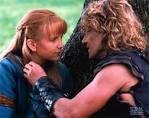
So the other day, I went back to a poem I had started about Callisto, Xena’s arch-nemesis. This one is about episode 2.7 Intimate Stranger, where Xena and Callisto get their bodies switched by one of the gods, primarily because Lucy Lawless had broken her pelvic bones in a fall from a horse she was practicing stunts on for the Tonight Show. It was a great choice, not only because it is always fun to see characters we know switch (Enver Gjokaj is a genius at this; check out the Joss Whedon series Dollhouse), but because it pointed out how similar these two women are. With the right (or wrong, really) set of circumstances, they actually could have been each other: Callisto the warlord who set a village afire that would turn the orphan Xena into a psychopath. We like them better as they are, because let’s face it, Callisto is the BDVE (Best Damn Villain Ever), with her creepy line delivery and spidery physicality.

So anyway, I wrote version 1.0 below and did not think much about it. But then I was looking at the previous poem I wrote about Callisto, with the first two lines:

“As children we come to experiences bone to bone,

with no kind skin to muffle the uproar. Imagine:”

I realized that the new poem was at least a full inch thinner, 2 1/2 inches, than the old one, which has line lengths of 3 1/2 inches. Well, the thing is, at 5’ 8” and 120 pounds, one of the first things you notice about Hudson Leick is how thin she is, an impression fostered by her costume being even more revealing than Xena’s, especially at her midsection.

Know Your Enemy, Know Yourself: X. Reflects on C., v.1.0

In the night season, I dream memories

Misremembered, death in the form of

My perfect nemesis, a woman born

In the fire that killed her family. She is

Me. And I did create her as she claims,

Though it was not my hand that lit

The spark that tore her world away.

She revels in her pain. I did that

Once, as she does, and spread it

Far and wide: if I suffer, so too must

Everyone. I will wring out the world

Like a map weeping blood. I am

Her now, our minds and bodies

Switched by the gods in their infinite

Unfairness. My enemy is me. I look

In the river and the body that I know

Does not look back. She promised

Once to take away everything

I loved, my friends, family, horse,

Reputation, everything it took me

So many years to win back.

Now in her body I must race

Against time, again, to stop her.

Both of us suffer from my monumental

Guilt. Like a crashing wave, once

It starts, there is no stopping it.

So then I thought about a poem I wrote many years ago titled Cancer Barbie, using the image of a Barbie whose hair as been loved off, a là The Velveteen Rabbit, to talk about cancer as I have seen friends experience it. Given that the image is Barbie, the shape of the poem really matters, so I tried to make a poem about Barbie look like Barbie, to wit:

Cancer Barbie

for Jackie, Anita, Judy

Some

little girl

has loved

this doll

completely, loved her

long blonde hair

right off

just the

way these

chemicals

coursing

through

your body

love you down

to the very follicle

love you right

all

the

way

down

to

your

roots.

 …

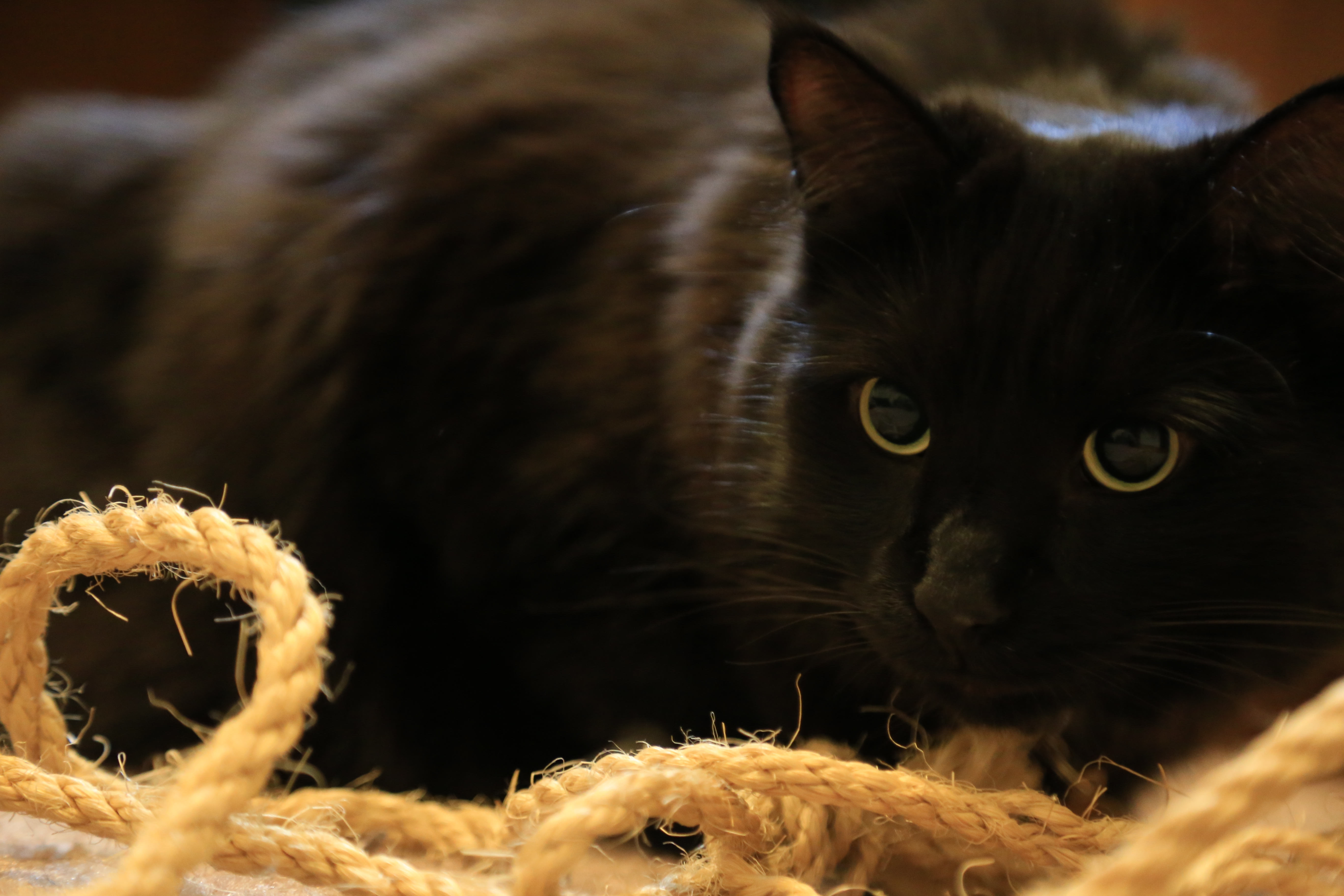
At first, I thought I could do a similar thing by centering what I have here as version 2.0, but it ended up looking like, depending on how generous you want to be, a stubby gingerbread man or something my cat coughed up. So forget the centering. What the erratic breaks and short line lengths do is to make the voice of the speaker, in this case Xena inside Callisto’s body, sound more erratic. I can’t decide if the body you are in should decide your voice or if it is only the mind. In that case, I should go with Version 1.0 for this, but if I find a way to write a poem using Callisto’s voice, regardless of which body she is in, I will totally use this style. So let me know: which do you prefer, version 1.0 or 2.0 and why?

Know Your Enemy, Know Yourself: X. Reflects on C., v.2.0

In the night season, I dream

memories misremembered,

death in the form of

my perfect nemesis, a woman

born in the fire

that killed her family. She is

me. And I did create her

as she claims, though it was not

my hand that lit the spark

that tore her world away.

She revels in her pain. I did that

once, as she does,

and spread it far

and wide: if I suffer, so too

must everyone.

I will wring out the world

like a map weeping blood.

I am her now, our minds

and bodies switched by the gods

in their infinite

unfairness. My enemy is me.

I look in the river and the body

that I know does not look back.

She promised once to take away

everything I loved,

my friends, family, horse,

reputation, everything it took me

so many years to win back.

Now in her body I must race

against time, again,

to stop her. Both of us suffer

from my monumental

guilt. Like a crashing wave,

once it starts, there

is no stopping it.

 …

Spilecki, Susan.   “Cancer Barbie,” Midwest Poetry Review. Summer 2002.

The Ups & Downs of Giving My Brain a Home

h_coverc

We each have a unique brain, but my lately my own brain has been acting particularly unique. On Tuesday, as I was heading for work, I started thinking about what I would write in the next blog. When I got to the train, I dug around in my coat for a file card and wrote 24 lines in very tiny handwriting to capture my ideas before class. I do realize that a lot of you young whippersnappers, especially those born after the bicentennial, probably would have tippy-tappy typed yourself a text or email, but you would, I argue, be losing out. The e-world does not have the serendipity of the material world (Oooh, now there is an epigraph. Everyone: go write me a poem with this as its heart’s kernel! Report back.) It is hard to accidentally come across something you have put into the ether as I did yesterday when I found the file card my cat had knocked off the dresser, a file card scribbled last year when I was at a bookstore, remembered the book and the line in it and copied it down, knowing I would eventually use it to write something (which I had done a few years earlier when I first read the book, but I lost that particular note). Serendipity on top of serendipity.

Anyway, my brain. So as I was entering the building where I teach, looking at my notes, I suddenly started singing in my head:

Chicken scratch blogpost, I don’t care!

Chicken scratch blogpost, I don’t care!

Chicken scratch blogpost, I don’t CAAAAAAAARE!

My master’s gone away!

Sigh. But there is also an upside to hosting my particular brain. On Monday afternoon, just as I was waking up from a nap, I could see, as if typed on the inside of my skull, the line, “As children we come to experiences bone to bone, with no kind skin to muffle the uproar.”

I know, right? Amazing!

I immediately knew that it was the beginning of a poem, at first I thought the poem about Troy but as I sat up and scrambled to get to the computer to write it down, I realized that instead it would enable me to write about the origin of the character I would argue is the Best Damn Villain Ever in popular culture, Xena’s nemesis Callisto, portrayed by the very talented Hudson Leick, who apparently now teaches yoga. That seems a trifle ironic, given that Callisto is a very likeable psychotic mass-murdering fiend. I even saw a short, 4 minute, YouTube video that explains with clips from the shows, just why Leick’s Callisto is the Best Villain Ever (so it is not just my opinion, huh!).

This is why, despite all my protests that There Is No Muse, GRRR!, I can absolutely understand why the ancients would make up the idea of the muse. Even I, after briefly minoring in psychology in college, have a hard time giving my own mind credit for such an unlikely phenomenon as the perfect gift of a perfect line after a damn fine nap. It is easier to give somebody else credit, whether that’s nine generous Greek chicks or God. The Greeks are the ones who handed us down the idea of hubris, the dangerous self-pride or arrogance that offends the gods. For writers, inspiration is a precarious thing, as illustrated by all the blogs on WordPress alone that focus on writers block. Even for me, the instinct is to be cautiously humble…

Epigrams, War, and Madness

krj

You know how in wintertime, your hands grow rough, so that, when you go to pick something up, a sweater, say, it snags and forces you to look at it more closely? That is I think the usefulness of an epigraph, a phrase or sentence you come across in one place that then serves as a springboard for you, the writer, to go off in another direction with it. I have written before about how the poet Simon Perchik has frequently provided me with springboard lines of this sort, such as “or perhaps your shadow spilling over again,” which blows my mind every time I read it.

And while not all my epigraphs are about or lead me to write about mental health problems, the quote on the file card I came across this morning (thank you, Musashi, for walking across my dresser at 5 a.m.) is by Kaye Redfield Jamison, from her memoir about being a psychologist with bipolar disorder, An Unquiet Mind. (Yes, Amy Carleton, go read it. You will thank me.) I think her line will be my own Trojan Horse, a way into the set of poems about Troy that I have been contemplating writing.

The line comes from the end of a chapter about Jamison’s work at Bellevue Hospital’s psychological emergency room. Previously we have read about what happened when Jamison went off her meds and had to be hospitalized so she is humbly aware of the mirroring she feels when a bipolar patient in the grips of the manic state is wheeled in, fighting against the straps that cuff her to the gurney. As Jamison says, “We all move uneasily in our own restraints.” I can think of no better way to springboard into a series of small poems subverting an epic poem about a ten year long siege.

Mu with String

Siberine, Jack. Musashi with String. 2014.

Inhabiting the Xenaverse

Prometheus_hercules_and_xena

So I did not make it quite as far as Troy this week, alas and alack. Instead I found myself working on FanFic or perhaps FanEpicPo instead. These two poems comment on Xena Episode 1.8 Prometheus. The first speaker is Hercules and the second Gabrielle. It is a start.

Reconnecting: Hercules Speaks

“You‘re not much for girl talk, are you?

Of course, you‘re not like most girls.” –G. to X.

Your friend is right. You are not like most, whether

Girl or epic hero. Your rage still lies close

To the surface, a tool to be saved, and used

When the time of danger comes, and returns,

And returns, and returns. At a moment’s notice,

You turn it outward, with glee, a strange set

Of companions to hold in your heart. We made

A pretty good team once, too, the son of a god

And the daughter of an innkeeper, turned warlord,

Then reformed. I hear you’ve been helping people

To find your purpose. So yes, I do believe

The world needs you at least as much as me.

I will not see you sacrifice the life I helped turn

To the service of the world, not now. You mean too much

To me. It is easier to hold up a wall of rocks

On my back than to change your mind when you

Have made it up. Any other time I would find that

Admirable, but now you are risking your one, sweet

Life when I could do it for you, save the world

Without your cold corpse haunting my days.

Selfish? Yes, but sometimes I wonder if

We shared a soul once. And if I can do

Anything to prevent your untimely death,

That would be a labor worth undertaking.

What We Might Regain: G. Contemplates

Sometimes I wonder what she sees in me.

Sometimes I think of that story Plato wrote

About the people with four legs and two heads

That Zeus got all upset about and split

With lightning bolts, leaving us all asunder:

Only two legs, one head, and half a soul.

If, when Prometheus was rebound and doomed

To have his liver eaten by foul birds,

Day after day, mortals lost his gifts:

Fire and healing. Then what would it mean

If some heroes saved him? What does it mean

That she lets me travel with her, unable

To help with her adventures? It is intimidating,

Sometimes, watching her work like she is

A female Hercules. The sword is one thing,

But backflips and double kicks? I have begun

To write it all down, as Homer did for Achilles

And Odysseus. More people should know of her

Brilliance. Too, I sometimes wonder, if

Saving Prometheus will bring us back our fire

And ability to heal ourselves, what would we

Gain if she ever found that hero, the one

Who somehow in another human body holds

The other half of her enormous soul?

gi

Inhabiting Homer

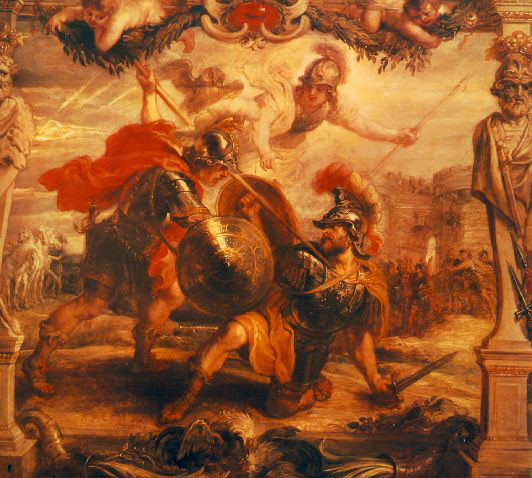
So I am thinking about writing about Troy, and I want to do it in a way that avoids pretty much everything Homer did with it. Who cares about the Muses, Agamemnon and Achilles? I want to figure out what Helen was thinking, and all those normal soldiers killing and dying in the shadow of the Great Hero Guys. I want to know what the Trojan horse was thinking and how the people of Troy had anything left to eat after the first two years.

Iliad_VIII_245-253_in_cod_F205,_Milan,_Biblioteca_Ambrosiana,_late_5c_or_early_6c

Also, I want to make it beautiful and dignified, so, yeah probably back to blank verse, that go-to meter of English poetry. And I want to say something about beauty and war and femininity and masculinity. And if I want to ever have the chance of getting published, it will probably need to be less than 50 lines long.

Slays_Hector

Easy peasy.

Line Lengths and a Viking Bunny

LingonberryTreatsWaffles

So I have been thinking about line lengths lately. I am working on a set of poems loosely set in ancient Greece, which has led me to sorta kinda use iambic pentameter, which means ten syllables with an unstressed followed by a stressed syllable, times five. But sometimes for the sake of either a conversational sound or to end a line on a solid word (generally not a preposition, although I am not opposed to that), I add or take away a few syllables. The Alexandrine line, so called because it was frequently used by Alexander Pope, the misogynist bastard, is twelve syllables, and I recall my English teachers saying that he chose it because twelve syllables is about the maximum you can say on a single breath. But the poem I wrote today about the Roman criminal punishment of crucifixion (you have remember that all this has been inspired by Xena: Warrior Princess) has lines of fifteen or more syllables and I think the breath is fine. It might be that shorter syllables take less breath, I suppose, which would make sense if you set a poem to music and hold some notes longer, probably frequently the longer syllables.

I guess for the most part, I am looking for a line of three to four inches in Times New Roman 12 point font, though how I got that line length, I have no idea. The writer of the blog Optional Poetry uses extremely short lines, sometimes only a few words. What kind of line lengths do you use in your poetry?

Also, this Viking Bunny appeared in my email inbox today, so I am doing you the favor of sharing. Pass it on.

What We Expect from Our Readers

change-the-world

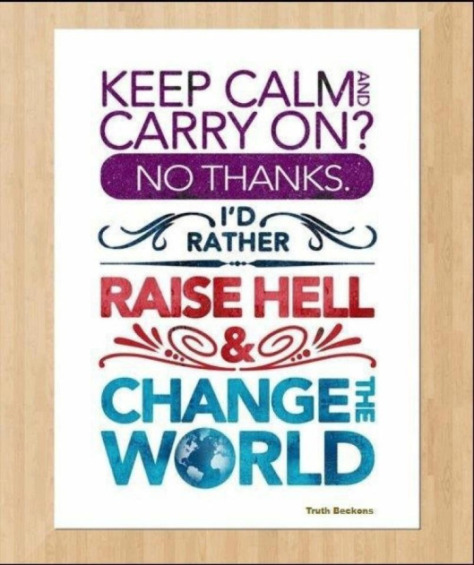
So last night, my roommate Jack asked me what I expected my readers to do after they read my more serious, didactic poems, the ones about Hiroshima and domestic violence and such. Do I expect to change the world? Do I expect to change my readers?

I think that expectation is not necessarily the best way to phrase the answer. Since people come to read poetry at very different times in their lives, weeks, days, I really cannot expect anything. I can hope, certainly. I can hope that they will feel something and perhaps think something, maybe even things that they have not felt or thought before regarding the topic. And for the people who are ready to change, who knows? Maybe something I write can be a springboard. But really it is more about offering a form of companionship. I write what I write because the flame insists on it. If you recognize something in what I write and you feel you are not alone, then that is how the world starts changing. As Jane Hirshfield says:

“I think compassion, in a way, is one of the most important things poems do for me, and I trust do for other people. They allow us to feel how shared our fates are. If a person reads this poem when they’re inside their own most immediate loss, they immediately — I hope — feel themselves accompanied. Someone else has been here. Someone else has felt what I felt. And, you know, we know this in our minds, but that’s very different from being accompanied by the words of a poem, which are not ideas but are experiences.”

Hirshfield, Jane. “’Windows’ That Transform The World: Jane Hirshfield On Poetry.” 14 March 2015. NPR. Web. 23 March 2015.

When Writing Gets in the Way of Blogging about Writing

writer003

Welcome to Spring. Finally! Yes, I have spent the last two days reading and writing about ancient Greece rather than writing about reading and writing about… You see the problem. Once again the idea of competing priorities takes the stage. The difference is that in my last post, the priorities were literary priorities: rhythm versus flexibility versus imagery versus placement in the poem (e.g., need for transitions or closure). Basically, poetry as problem and solution over and over again.

In contrast, the priorities this weekend were those of time and space. My roommate, talented filmmaker, Jack Siberine, was making another film in our apartment, and it turns out that to make a ten minute film, you pretty much have to shoot ten hours or so of footage (or whatever they call it in the digital age) as well as feeding your 16 person crew pizza, and moving all the furniture out of one room and into others and vice versa. This makes those of us who would rather not get in the way spend time at cafes and the library.

Do not get me wrong. I am a big fan of both cafes and libraries, because 1) duh, coffee and 2) libaries are where the books live. But it does change the kind of work you can do, particularly when the cafe you have chosen turns off its free WiFi on the weekends to get a faster customer turnover. Sigh. Now that I finally have a mobile thingy (iPad), I cannot use it. So instead I wrote poetry. Longhand. Because it Just Feels Better.

What do you do when your normal routine is obstructed?

snoopy2

Process: Notes on Competing Priorities

WaterhouseUlyssesButt

Okay, so yesterday I wrote a poem for which I am using the working title Odyssey, because it ended up being about Odysseus and Penelope. Let me unpack my process.

Inspiration: Something my yoga teacher said, because, duh, Erica Magro Cahill. “The intimacy of a beating heart inside your beautiful skin…”

Part 1. The image of my heart peeking out from behind my sternum on an x-ray of my esophagus and larynx.

Problem: The point I want to make is about the heart but suddenly my larynx is involved.

Solution: When we sing, we don’t think about the bits of our body we are singing with, we think about the heart and what it does and wants. This leads to the idea of singing comfort to a “fearful, feral/cornered self within another body contained in skin, the reverse of Siren song.”

Part 2. The image of the skin as a map, marked by scars, wrinkles and ink. Using the concept I got from two separate students last semester that it helps when you suffer from depression to tattoo a message or symbol on your body to remind you that life is doable. This allowed me to use the line that Sir Terry Pratchett quotes in his recent nonfiction book, A Blink of the Screen, which he attributes to G.K. Chesterton, “Fairy tales do not tell children that dragons exist, for they already know dragons exist. Fairy tales tell children that dragons can be killed.” But of course, this is wordy and I already have the map, so:

Application: “Even tied to the mast, straining against our good sense,/We remember: Here be dragons. Reading our skin,/We recall, relieved: Dragons may be slain.”

Part 3. I need to get from Odysseus tied to the mast back to Penelope waiting on Ithaca, fending off suitors with her ten-year-long craft project. I start with the sail as a reminder of our fate as it is woven by the maiden, matron and crone: “We weave what they give us/Into something of use…” I transition to Penelope’s weaving. In the original, she tells the suitors that she cannot marry anyone until she finishes weaving her father-in-law’s shroud.

Feminist Revisionist Mythmaking: (Okay, here is the fun part!) I turn the shroud instead into a 1) tapestry of 2) Penelope herself as the matron Fate weaving and unweaving a tapestry of 3) Odysseus’s ship. “She turns its prow repeatedly/Back toward Ithaca. With each reweaving,/She brings the hero that much sooner home.” With this I take the power of the Fates and the Gods who are pissed off at Odysseus and give it to Penelope, making her thwart all of them and get her husband back sooner. Very meta.

Part 4. Now the first three parts have had relatively even stanza sizes: 1) 3 stanzas of 6 lines, 2) 4 stanzas of 4 lines, and 3) 4 stanzas of 5 lines. That is just the way that it worked out. When I started Part 4 I had a big long stanza that I did not know how to break. I had two ideas when I started the section: that all of us are all of the things I have discussed: “ship, map, compass, sail;/…the perilous waters and the sweet,/ Populous shores of home… ” But I also wanted to talk about fate and choices and somehow get some closure back to the x-ray. Further, although I did not hew the line, I was pulled in the first three sections toward blank verse, unrhymed iambic pentameter, I suspect because the topic is Classical Antiquity and Tennyson’s poem “Ulysses” (the Latin name for Odysseus) is in blank verse. But when I broke that first stanza of this section in half, I found that both of them started with a middle length line, followed by lines that got longer, followed by lines that got shorter: kind of like waves going in and out of shore! Nice… Then I noticed that the first was six lines and the second fifth: kind of like my verses were ebbing….

Solution: ALWAYS FOLLOW ARTISTIC SERENDIPITY. (Repeat after me: I meant to do that!) All I needed then were two more stanzas with a similar tidal/ebbing structure, so I ended with:

“How hardy this tremulous heart

Peeking around the mast, not deaf to these

Lyric-less singers, the waves assembling,

Disassembling, dissembling…

How impotent the gods

Who made us like themselves: willful,

Changeable, immortal.”

waterhouse_penelope_and_the_suitors

Waterhouse, John. Ulysses and the Sirens, 1891. Penelope and the Suitors, 1912.

The Eternal Treasure Hunt

200px-Dickin_Medal

Let me tell you about one of my yoga sestinas and how it illustrates something about me as a writer and, to an extent, writers in general. I started out knowing that I wanted to write about pigeon pose, in part because it is a good way to stretch out your hips, in part because kapotanasana is just fun to say, and in part because I had watched a YouTube video of my yoga teacher performing a song about going away to find yourself. She spent a month in Italy. I spent two years in Japan, so I knew what she was talking about. Also, I had recently gone to my college reunion in Middlebury, Vermont and had felt very much as if I had rediscovered my tribe: goofy people who speak multiple languages and have broadened themselves through travel.

For my six end words, I started with every heart finds its true north. Then I turned to Wikipedia to find out shtuffs about carrier pigeons. I learned a bunch of cool trivia; for example:

The PDSA Dickin Medal was instituted in 1943 in the United Kingdom by Maria Dickin to honour the work of animals in war. It is a bronze medallion, bearing the words “For Gallantry” and “We Also Serve” within a laurel wreath, carried on a ribbon of striped green, dark brown, and pale blue.[1] It is awarded to animals that have displayed “conspicuous gallantry or devotion to duty while serving or associated with any branch of the Armed Forces or Civil Defence Units.” The award is commonly referred to as “the animals’ Victoria Cross.” (Dickin Medal)

But I also found something I could use for the poem, that scientists have found that pigeons have large numbers of iron particles on their beaks, which allow them to sense the magnetic pole. Eureka!

This is, I think, one of the cool things about being a writer. I know there is going to be something out there, that I can find serendipitously, and that I can somehow use. The world can be a fascinating place after all, or, as a Japanese T shirt told me twenty years ago, The world is so full of things.

Yes, it is indeed. You just have to look. Writers, I believe, are people who constantly look. Here is the start of the poem:

The Earth’s white-hot iron center pulls every

magnet’s needle around to point to the heart

of the north, not so different from how a pigeon finds

her way home. They say pigeons have iron on their

beaks, tiny particles that act as a magnetic

guide, helping the birds discern south from north.

It is different for everyone, our magnetic north,

the paths and people who pull us. Not every

bird nests in the same tree or coop. What’s magnetic

to you may not be the thing that pulls my heart

around to face it, eagerly.

Dickin Medal. Wikipedia. 12 Jan. 2015. Web. Mar. 17, 2015