Muses I Have Known and Written…

erica_03

Okay, yes, I have asserted most forthrightly (if that is a word, which I am pretty sure it is) that There Is No Muse. And that is mostly true. At least 98% of the time, there is no gowned goddess who will descend upon your writing table To Inspire You.

Except…when there is.

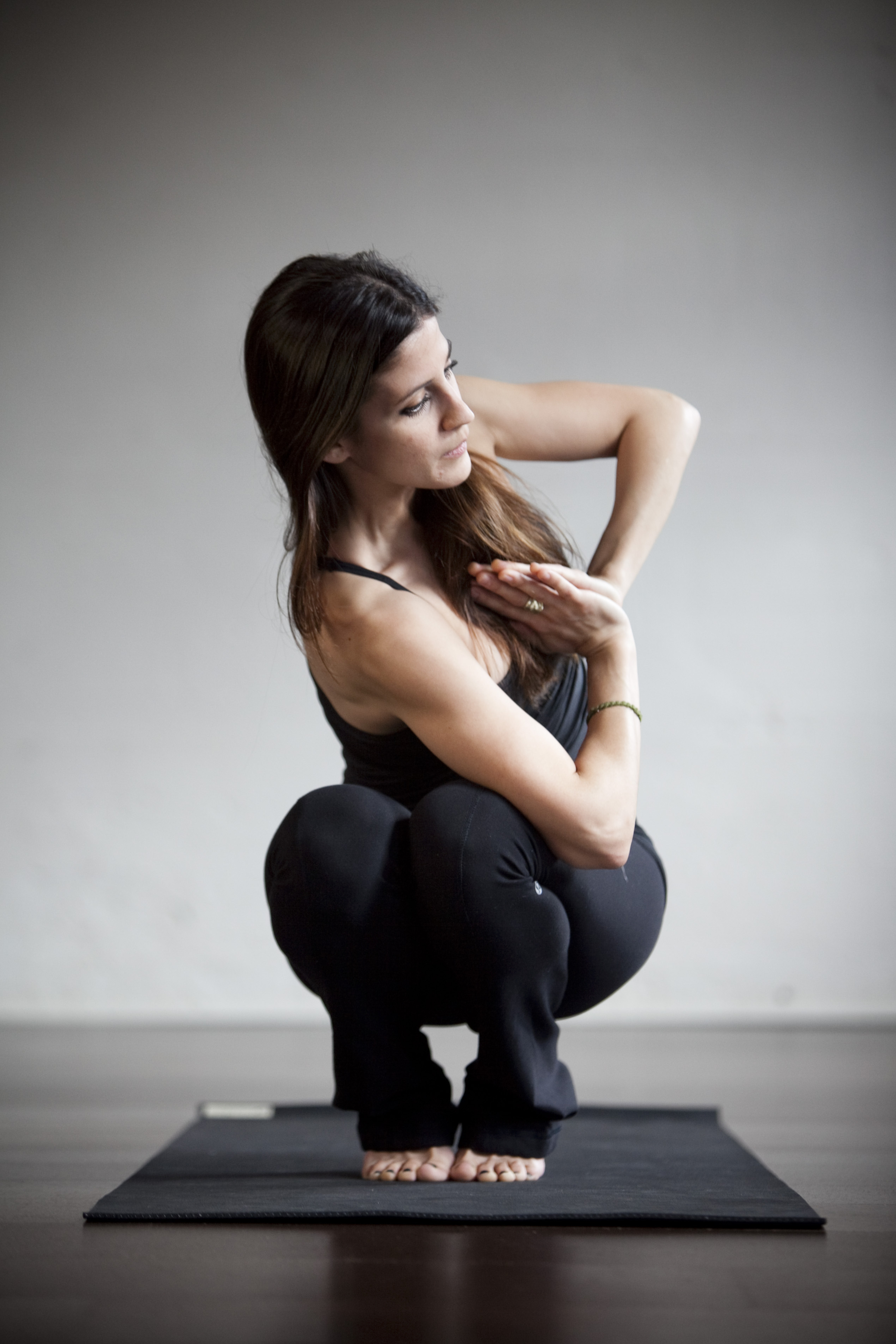
I am not saying it happens often. But, for example, back at the end of May, my friend Amanda and I made a pact to take one or two exercise classes at our gyms. I dove in headlong. I took a Zumba class, which was frustrating, exhausting, confusing, loud and sort of fun, in a where-is-my-inhaler kind of way. Then I took a “spinning” class and found out why padded bike shorts are a Really Good Idea. (“Stationary bikes,” Elaine, the instructor, confided in me afterwards, “really weren’t made for girl parts.”) Then I took my first yoga class. Enter Erica.

The classroom was maybe thirty feet long, with a mirror along one side. A student showed me where to get a purple mat and two big blue foam blocks. Then this small woman came in wearing a black tank top and black yoga pants. She adjusted the frigid air conditioning, connected her iPod to the room’s sound system and took a block to sit on at the front, quietly greeting the people she knew and introducing herself to the rest of us. She opened the practice with seated meditation and then we began.

The names of the yoga postures are interesting. Some are very old, like shavasana, Corpse pose, and katasana, Chair pose. Others, like Happy Baby and Airplane, must be new interpretations of ancient postures. Some are obvious, like Tree, and others not, like Half Pigeon. (I still don’t know if there is a full pigeon.) We moved from one posture to another to gradually stretch, bend and wake up the entire body, all the muscles, all the joints. And because yoga is meditative, we paid close attention to our breathing. (“Take a deep breath in, and a long breath out. Good job.”) I haven’t always been good at meditation, so I’d feared the yoga my friends raved about would be tedious. It was anything but. And though we only held each pose for five seconds, when the hour was up, I had stretched every muscle in my body. Such a simple set of exercises, yet my sweat dripped onto the purple mat. And Erica did them all with us, modeling the right alignment as she explained how to do each one and what to avoid.

My balance was not very good at the start and I frequently mixed up my left and right. But Erica’s voice was a golden thread calmly guiding us, saying things like, “This back stretch is a good counter-posture to too much texting” or “It’s nice to stretch your beautiful feet.” Or, towards the end, when she had us stretch out in shavasana (and I was thinking, “Sure, lie here like a corpse, that’s positive!”), she said, “Let your feet splay out and let your hands face palm-up, in a gesture of receiving. And relax, without needing to do anything, by means of shavasana.” That is when I realized there was more going on there than I imagined.

I took other classes with other yoga teachers (including one who kept us in postures for a long time but did not do them herself), but I kept returning to Erica’s class. She would say things like, “Gently stretch your forearms. So good! So healthy!” or “Let your heart open to the sky.” She could have said, “Open your chest up” or even “Open your heart to the ceiling,” but she didn’t. The idea that good posture could mean that my heart and the sky could have a connection is, to me, astonishing. I don’t think I have ever before met anyone who speaks poetry in real life, sincerely and without irony, to communicate to ordinary people about the beauty of their feet, their lives, their world. For me, that is a good portion of what poetry is for.


Ma, Kelvin. Erica Magro, Yoga Instructor. 2012. Kelvin Ma Photography. Web. 7 Aug. 2014. JPEG file.

Rhyming Poetry vs. Song Lyrics

hourglass table

Okay, so back around Christmas I indulged in a rant about rhyme. To my mind, rhyme in poetry is a lot like sex in movies. Often it is irrelevant, not really helping the plotline or character development. It is there because people expect to see it there. It makes them feel like they are getting the Real Thing, whatever the heck that means. But this is about rhyme in printed poetry, or in the annoying jingles on TV commercials. In other contexts, rhyme is appropriate and powerful.

Usually that is because the rhyme is original, not the moon/June/spoon pablum we get when we are kids. (Although, having said that, I must admit that a lot of Dr. Seuss and pretty much all of Shel Silverstein is pretty brilliant.) But often you get stopped in your tracks by an original rhyme. This happened to me Friday. I was in the Park Street subway station, on the Red Line waiting to go to MIT, and there was a female musician singing with her guitar. I had never heard the words to Anna Nalick’s “Breathe (2AM)” and the chorus mesmerized me. Here it is:


‘Cause you can’t jump the track, we’re like cars on a cable
And life’s like an hourglass, glued to the table
No one can find the rewind button, girl.
So cradle your head in your hands
And breathe… just breathe,
Oh breathe, just breathe…


This rhyme is awesome because the images are so original. That rhyming couplet has been stuck in my head for days. It sounds true even though I can’t entirely decide what it means.

In older and more traditional poetry, rhyme helped people to remember things. We still use this in the alphabet song. Other cultures developed other mnemonics. Old Scandinavian poetry used alliteration, the repetition of consonants. So, for example, from “The Seafarer”:

A song I sing                                     of my sea adventure

The strain of peril,                         the stress of toil,

Which oft I endured                         in anguish of spirit

Through weary hours             of aching woe. (Kennedy 19)

Now that we live in a world where people read silently and do not do a whole lot of performing for their friends at parties (or at least not that way), such mnemonic devices, which clearly still work as my experience shows, are no longer really necessary. I think this today. I reserve the right to change my mind tomorrow.

Kennedy, Charles W., ed. An Anthology of Old English Poetry. New York: Oxford UP, 1960

Every Rant Deserves an Exception: Muses I Have Known and Written…

Even before I finish my title, I have to start this blog entry because I can’t choose which preposition to use: for? to? about? All of the above? Over the years, I have had several people who have inspired me to write poetry. I don’t really count the men as muses, because to my mind love poetry is a different kettle of gummy bears. Knowing that people have been writing love poetry for 4,000 years or more is a lot of pressure, and I most often handle it by being a bit self-deprecating or funny. I see a lot of humor in romance. Let’s face it, being in love is a lot like being a little insane, and as Buffy the Vampire Slayer would say, “Love makes you do the wacky.” I am not talking about poetry like that, although it is a good idea for a future post.

I am talking about normal people in my life, friends, teachers, whose way of being in the world or the way they talk just triggers either imagery or juxtaposed ideas or a desire to unpack why they are unique to me. This is more like what poet Maggie Anderson calls “important excitements”: the (usually) short-term artistic obsessions writers and artists indulge in. Think of Monet’s 250 paintings of that lily pond. Like that.

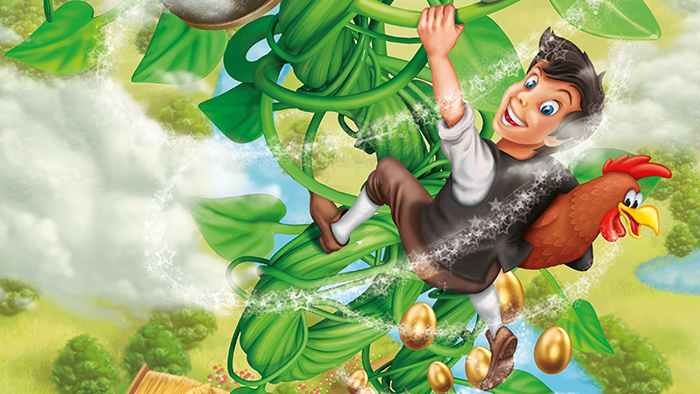
greatwave This happens to me a lot. Usually I get excited about things, rather than people. At some point I will write a post about why I so adore the ukiyo-e woodblock artists from Japan, especially Hokusai and Hiroshige. Or my obsession with writing about characters from popular culture, such as Raggedy Ann, Barbie, Xena, or Amelia Earhart. Or the two months I spent writing incredibly long poems about Jack of the Beanstalk.

Jack_700x394

Sometimes, though, I meet someone who snags my attention. Take one of my flamenco teachers, Malena. I started to study flamenco dance out of curiosity and stayed out of fascination. It should be said that at no time in those three years did any actual talent for dance on my part ever appear. I learned a lot about rhythm and can now clap in time, even when the time is complex, and I can twirl my hands elegantly (big life skill, that). I appreciate Spanish food and rough guitar music and I can still do a little of the footwork (it helps pass the time waiting in subway stations).

cotton-ruffle-tank-dress_7-hot-dresses-from-marc-jacobsBut more than anything, what I saw was a way women could be both feminine and strong. I normally always associated femininity with pink dresses, a lot of skin, some dumb chick simpering up to a man. Bleah. The women who took flamenco class weren’t like that, and Malena herself was (and is) one tough chick in command of her own body. Flamenco is a fiercely passionate kind of dance, noisy, and in some way very feminine. Empowering. So when I wrote more than a dozen poems about flamenco, whether or not Malena was the topic, she was in many ways the trigger, the inspiration. The following is an excerpt from “The Flamenco Teacher” (for Malena, who is “just a florist”):

Petal, pistil, stamen, stem and root:

beneath your hands, these blossoms toss

heads, moody, beautiful, game for anything.

When you dance, your wrists become veined stems.

Your hands,

like yellow irises,

opening,

close,

blossoming,

fall.
The key challenge was to express the visual images and the strong emotions with beautiful words, while also keeping with the kind of ropy uneven rhythm of the different dances, most of which are in 12, not 4/4.

I will leave you with a video of the legendary Carmen Amaya (1913 to 1963) dancing awesome flamenco.

Muses and Other Mythic Beasts: A Short Rant

Budding writers and poets sometimes talk about the muse, most often to complain about her absence. Although the urge to write can feel uncontrollable at times, I think the greater urge is not to write but to have written, to have a physical ream of paper with lots and lots of words, that you can wave around (literally or metaphorically) and say, “I did this!” And if more folks actually acted on that desire, then the Library of Congress would have to be a hundred times bigger. But mostly they don’t and in my professional opinion, based on working at the MIT Writing Center for almost twenty years, there is a really good reason why they don’t: writing is hard.

It is hard for students and professionals, for people who don’t think of themselves as “Writers” and for people who do. The difference is that experienced writers don’t sit around waiting for the Muse to show up with a big lantern to light their brains up with shiny ideas and pretty words. Experienced writers bitch and moan like everybody else, but then they sit down and write. Butt to chair is the only way, as NaNoWriMo (National Novel Writing Month) has clearly shown. (Google it if you don’t know. If I stop to explain it to you, I will get distracted and never finish my idea.)

I once wrote a poem titled “There Is No Muse” for a poetry reading at which I was going to be reading beside three poets whom I knew were going to read poems about the muse. They all did. Possibly not coincidentally, they were all male. Not sure what that’s about.

The Greeks believed in the Muses (three or four or nine, depending on which writer you look at) mainly to explain poetic, artistic and scientific inspiration, because let’s face it, it is pretty awesome when it happens to you. Divine spark? Nice way to wrap our brains around something that is pretty mysterious. Just don’t use it for an excuse not to do the work.

Humans believe in a lot of strange things, when you get down to it. Some of them we have let go of over the centuries. Take the unicorn, drawn to virgins, especially female virgins, the beloved objects of patriarchal desire and control. Teddy bears protect children with the ancient spirit of the bear. Most people in the modern world don’t believe in unicorns anymore. It is much harder to stop believing in teddy bears. Maybe the muse should be left somewhere in between those two.

I will leave you with a video that explains why I still kinda believe in teddy bears:

A Call for Solstice Carols

stonehengewinterThe dark has been darking too early, too often and too darkly this past month and I am here to say that I am heartily sick of it.

I don’t mind the cold. That is just weather, and cold is easier on my arthritic bits than heat is. I don’t mind Boston weather, whether that means snow or icy rain, although I could do without the slush in intersections after all that sort of melts. Wading through four inches of ice water just to cross the street is part of the price we pay for getting to live in New England, where my heart is happy much of the time, although not particularly lately.

One of these days, I will have to write an ode to my Verilux HappyLight box, but I probably won’t have the energy to do that until spring, which only really gets here in April anyway, by which time (Please God!) I hope not to need to use it anymore.

I like my brother’s tradition of celebrating the Winter Solstice for what it is: the end of the increasingly short days and long, dark nights. He lives in Maine, which should really be its own time zone, so his winters are longer, darker, and colder than mine. Building in a celebration like that makes sense to me. Usually I light a candle, pick up my cat, Musashi, and dance around singing, Happy Solstice! Happy Solstice! until Musashi politely lets me know that he is quite done with the dancing. Then I put him down, blow out the candle, and go on with what I was doing, which is probably being depressed about how damn dark it is.

Surely, people, we can do better than that. So I call on all the poets and songwriters out there to start writing, publishing, YouTubing, and concerting Solstice Carols. Spread them wide across the land. Give me something to build into my year that talks about the return of the light and not just how many toys we can get.

Thank you for your attention. Now go take a nap to avoid thinking about all that darkness happening.

We will now take a break through Christmas. See you again on Boxing Day!

More on Line Endings: Twofers

one_fish_two_fishSo I was thinking more about line endings while reading Nancy Willard’s book In the Salt Marsh and I came across some twofers (two for the price of one) in her poem “The Snow Arrives After Long Silence.” A twofer is what I call it when you read a line of a poem one way and then when you read the next line, you get a second meaning to the first line. For example, the poem starts:

The snow arrives after long silence

from its high home where nothing leaves

and you think that snow is coming from a place nothing can come from because nothing ever leaves there. But read those two lines with the third line:

tracks or stains or keeps time.

Then it makes sense that in the homeland of snow nothing leaves tracks, since snow covers tracks. This kind of careful writing invites equally careful reading to get all the possibilities. Here is another:

All day the snow sets its table

with clean linens, putting its house

in order. The hungry deer walk

on the risen loaves of snow.

So the first sentence is a simple image, but by enjamming the last two words of it with the beginning of the next sentence, we get a second image of the deer walking in order. Nifty, huh?

Willard, Nancy. In the Salt Marsh. New York: Knopf, 2004.Windsor_German_wiki_GNU-Martin_Morgenstern

Line Endings, Line Beginnings

cutting-in-line-01

I was first made aware of the importance of line endings in the mid-1990s, when a friend of a friend was taking a class with Bill Knott, a professor at Emerson College. Apparently, this young man was sitting in a workshop and Bill was reading his poem. Bill looked at him over his glasses and asked, “Why do you break your lines where you do?” Baffled, the young man just shrugged. Bill balled the poem up and bounced it off the young man’s head.

Whether or not that caused enlightenment for that student, the story of it sure did for me. I spent the next two years studying how different poets broke their lines. I read somewhere that the last lines of a poem should, on their own, sound like a poem. (Obviously, they were talking about free verse, since formal forms or even Hallmark Card Crap have their own logic for ending lines, whether with rhyme or with repeated words, etc.) Here is an example taken at random from one of my college textbooks, Beginning with Poems: An Anthology, the end words of Wallace Stevens’ “The Sense of the Sleight-of-Hand Man”:

baths soul clouds leaves gold white wind sky

suddenly rays myths gods grenadine occurs stars alone life life bronze

That is the easy part of line breaks. What took me much longer to realize is that, just perhaps, the first words of the lines might also be a poem, though they rarely are. Let’s take the first words from the same poem:

one’s one’s occur occurred of as came threw

could would around the to and and it has that that.

You see the problem. We get so caught up with our last word that our first words tend to be articles, auxiliary verbs, prepositions and conjunctions–grammar words, not sensory words. Now there is nothing wrong with grammar; we couldn’t very well communicate without it. But if I am going to put a word in a power position of a poem, I probably don’t want that word to be “of.” Or at least not often.

HOWEVER, having just looked at the few poems I have in a file on my computer here at MIT, I realize that I have not been paying very close attention to this lately. (Bad poet, go sit in the corner!) So I wrote a new poem.

“My cat is a poem with claws,” she said,

mopping up the blood that still spilled

from her arm where that fluffy ebony

ninja clung hard before leaping off the bed

and onto the dresser. “Most poems,” I said,

hesitantly, “do not draw blood.” But she

laughed and threw the tissue away. “Most

poems also do not eat kibble and poop in a small

sandbox. But some poems snuggle up to you,

tangled in the blankets of a Sunday morning. Some

poems see your hands resting on the keyboard and lie

down upon them, purring. Some poems will even

pat your face to wake you up at four in the morning

on a day when you didn’t need to rise early.”

Her cat watched me with narrowed, golden eyes.

Brower, Reuben A., Anne D. Ferry, and David Kalstone, eds. Beginning with Poems: An Anthology. New York: Norton, 1966. (Its date explains why the examples are mostly British with a few Americans and why, out of 62 poets, only 3 of them are women.)

Bonus points if you recognize the pun in the picture.

Assignment: How to Make a Poem out of a Blah Day

fallingletters

Okay, recently I was bored and depressed by the lack of sunshine while I was at work, and in between helping engineers and students with their writing, I wrote this, to redeem the day:

Begin by changing the title, so that the verb Make becomes Cut, something edgy and sharp to contrast with the soft grey of the sky behind the flurries as they fall to the parking lot tarmac and melt into puddles. Find one beautiful thing, like the shiny blue car or the dark-haired woman holding her brown coat closed against the cold. Imagine her destination, the cancer she will beat and the young man she will marry, whole futures you will never know. Return to your own office chair, twirling you from present to future as the desk alternately waves goodbye and hello. Shake crumbs out of your keyboard and see what words fall to join them: speculate, December, winter, winter, winter.

Okay, that is nice, but is it any less a poem than:

Begin by changing the title, so that the verb

Make becomes Cut, something edgy and sharp

to contrast with the soft grey of the sky

behind the flurries as they fall to the parking lot

tarmac and melt into puddles. Find one beautiful thing,

like the shiny blue car or the dark-haired woman

holding her brown coat closed against the cold.

Imagine her destination, the cancer

she will beat and the young man she will marry,

whole futures you will never know. Return to

your own office chair, twirling you from present

to future as the desk alternately waves goodbye

and hello. Shake crumbs out of your keyboard

and see what words fall to join them: speculate,

December,

winter,

winter,

winter…

They history of prose poetry as a subversive form suggests that this poem is probably not crazy and exploratory enough. The French poet Charles Baudelaire (1821-1867), who coined the term “modernity,” is one of the form’s great-grandfathers. He thought of it as a way to rebel against traditional formal uses of the line, which in that period of French poetry were very strict. He wrote:

“Who among us has not dreamt, in moments of ambition, of the miracle of a poetic prose, musical without rhythm and rhyme, supple and staccato enough to adapt to the lyrical stirrings of the soul, the undulations of dreams, and sudden leaps of consciousness.”            —Dedication of Le Spleen de Paris

More recent writers of prose poetry include Americans Walt Whitman, Gertrude Stein, Allen Ginsburg, Charles Simic and Mary Oliver, so it seems to have moved from the edges to the mainstream. A friend of mine recently attended a workshop on the lyric essay, so when I find out more about that, I may start trying that form too…

Meanwhile, out of a depressing morning, I got a little tiny piece of art. And that is another of the uses of poetry, in whatever form you write it.

Poem Made Out of Questions

Why, if trees arebluebottles grey, do we color them brown? Why, when the sea is green, do we color it blue? Why do whales, so lonely now, still sing? How is it possible that on the cold ocean floor there is lava flowing up and out, hot and fiery? Why do anvils love gravity so very much? How does a clock always know exactly what time it is, and why do its hands always use sign language to tell us? Where do fools fall in love and will someone give me a lift there? Has anyone ever been stranded like Gilligan on the Isles of Langerhans? Did they send a message in a bottle? Was the bottle blue like a bluebottle fly or green like Robin Hood’s hat? If whiskey from Scotland is Scotch, why isn’t whiskey from America Amertch? And if a very large truck is called a semi, what would we call one twice as big? These are not questions that keep me up at night. This is only a paragraph of prose that yearns to grow up to be a poem.

What Poetry Has Been & Could Be

During the 1960s, when the Civil Rights, Peace and Feminist Movements were all in full swing, protesters often read poetry as part of their protests. The American poets who came of age during that time are much more likely now to continue to write didactic poetry. People like Marge Piercy, Amiri Baraka, and Adrienne Rich, Allen Ginsburg, Denise Levertov and Nikki Giovanni are just a few noted for their poetry that takes on social issues. You might remember Nikki Giovanni’s poem that she recited at the end of the memorial for the victims of the Virginia Tech shooting in 2007. This is poetry in the service of people.

Right now, American is a difficult place, with the haves owning government and the have-nots working three jobs just to barely get by, with school shootings and police violence happening at home and a war we seem to have forgotten still happening on the other side of the world. It is no surprise that Suzanne Collins books turned movies are so popular now. Bread and Circuses, or fast food and reality shows, are failing to distract us from the real problems when they are so obvious and repeated every day.

So where are the protest poems? We need them. We need strong voices giving rhythm to the marching of peaceful warriors and concerned citizens.

voiceseducation.org