St. Patrick’s Day Concerns

12821401_1134043839963851_9148087521756240941_n

That moment when you look in your closet

For the only green shirt you own and even

Consider wearing all red and hoping to run into someone

Colorblind. That daft hope that someone, anyone

Will say, “Top of the morning to you!” just

So you can reply, “And the rest of the day to you!”

That memory of being able to wear a green sweater

To school instead of the uniform cranberry, because

Irish Americans are exactly that weird and yes, we did

Go to Catholic school. That craving for corned beef,

With or without the cabbage and Guinness. That dread

Of someone spelling it St. Patty’s as if the bishop was

Named Patricia. That memory of the one single time

You ever drank green beer, and that quizzical look

People give you when you have a Polish last name.


Illustration by Sandra Boynton.

Squirrel Revolution

Girl on the Contrary is predicting that the squirrels in her neighborhood may be plotting a revolution. Until I read this, I did not understand the Sandy Skoglund installation/photo entitled “Squirrels.” Now, however, I am beginning to get it…

Sandy_Skoglund_01

They are in fact everywhere, probably

Watching us through our windows, looking

Innocent and fuzzy as they scamper up and down

Trees in the park. Only the big black dog knows

What they are up to and chases them at top speed

Leaping easily over the fence and trying to follow

Them up the tree. But paws like his were not made

For vertical climbing. So the ides of March comes

Closer every day, the revolution comes disguised

In soft greys and browns, with beady black eyes and

Fluffy tails twitching in Morse code: Soon. Very soon.

Response to Robert Okaji’s “How to Write a Poem”

Response to Robert Okaji’s “How to Write a Poem”


How to Revise a Poem


Having learned to make a toast in nine languages

And setting aside the chainsaw with which I carved


This poem out of a block of fresh ice, I take up the scalpel,

Heated over the blue flame of the gas stove. I stand


For a moment like a conductor in white tie and tails,

Waiting for the crowd to fall silent, and make the first cut


Into the heart of the poem. Does it bleed? Do the words

Fall to the dirt among the pigeons? Do the courtesies


Sound hollow or sincere? The moon pulls at my arm

Like a cat in search of dinner or a playmate. I accept all:


Love, envy, ambition, and drive the wrong way down

One-way streets. They won’t catch me. They will


Park their Black Marias on the sidestreet, dig in

To the bowls of chili I provide for them while I steal


The bullets from their guns. Finally! At last! Just exactly

What I needed for the new ending to the poem.


Another Poem Commemorating My Writer’s Block

The block on my desk, gargantuan piece of

Imaginary marble, streaked through with veins

Of imperial purple to show the unwary


Just how important! how crucial! such a lack

Of ideas can be to a quarry artist, to a master builder,

To a poet with a tiny little bit of vacations time


On her hands and absolutely no topics

For potential discussion. Such is the way of the rhinocerous-

Skinned writer. Cut yourself. Write truth in blood.

Compressed Attention

One of my favorite poems that I didn’t write is “The Art of Blessing the Day” by Marge Piercy. It is framed in a way that uses some of the language of religion to talk about the beauty of the thing-ness of our lives and the events that don’t automatically get celebrated formally. It is in fact about poetry itself, in the widest sense, which is the sense I much prefer to the very narrow sense we get taught in school.


The Art of Blessing the Day


This is the blessing for rain after drought:
Come down, wash the air so it shimmers,
a perfumed shawl of lavender chiffon.
Let the parched leaves suckle and swell.
Enter my skin, wash me for the little
chrysalis of sleep rocked in your plashing.
In the morning the world is peeled to shining.

This is the blessing for sun after long rain:
Now everything shakes itself free and rises.
The trees are bright as pushcart ices.
Every last lily opens its satin thighs.
The bees dance and roll in pollen
and the cardinal at the top of the pine
sings at full throttle, fountaining.

This is the blessing for a ripe peach:
This is luck made round. Frost can nip
the blossom, kill the bee. It can drop,
a hard green useless nut. Brown fungus,
the burrowing worm that coils in rot can
blemish it and wind crush it on the ground.
Yet this peach fills my mouth with juicy sun.

This is the blessing for the first garden tomato:
Those green boxes of tasteless acid the store
sells in January, those red things with the savor
of wet chalk, they mock your fragrant name.
How fat and sweet you are weighing down my palm,
warm as the flank of a cow in the sun.
You are the savor of summer in a thin red skin.

This is the blessing for a political victory:
Although I shall not forget that things
work in increments and epicycles and sometime
leaps that half the time fall back down,
let’s not relinquish dancing while the music
fits into our hips and bounces our heels.
We must never forget, pleasure is real as pain.

The blessing for the return of a favorite cat,
the blessing for love returned, for friends’
return, for money received unexpected,
the blessing for the rising of the bread,
the sun, the oppressed. I am not sentimental
about old men mumbling the Hebrew by rote
with no more feeling than one says gesundheit.

But the discipline of blessings is to taste
each moment, the bitter, the sour, the sweet
and the salty, and be glad for what does not
hurt. The art is in compressing attention
to each little and big blossom of the tree
of life, to let the tongue sing each fruit,
its savor, its aroma and its use.

Attention is love, what we must give
children, mothers, fathers, pets,
our friends, the news, the woes of others.
What we want to change we curse and then
pick up a tool. Bless whatever you can
with eyes and hands and tongue. If you
can’t bless it, get ready to make it new.

***

I think Piercy gets to the heart of the matter when she says:

The art is in compressing attention
to each little and big blossom of the tree
of life, to let the tongue sing each fruit,
its savor, its aroma and its use.
The work of the poet (not unlike one of the tasks of the lover) is to pay attention to the details. God is in the details. We have only to look, and we have to look. We look at everything outside ourselves, and then, if we dare, we can start to look at all the things that are inside ourselves, and then we look out again.

And then we write.

Marge Piercy. The Art of Blessing the Day. New York: Alfred A. Knopf, Inc., 1999.

Should You Capitalize?

images

Unless you are e. e. cummings, the odds are quite good that you usually use capital letters for many things in your writing, but my question is how do you feel about the first letter of each line in a poem? Dropping the first letter to lowercase makes it feel to me as if you are simply talking as you would in a paragraph, and especially if you are rhyming (which as you know I normally avoid like the plague) hopefully keeps your readers from reading each line on its own, as if it had no grammatical connection the line that came before or the one after.

That is all well and good, but has anybody explained this to Microsoft Word? If you don’t want every line after a return to start with a capital, you have to go into some toolbar menu and unclick the default. And of course, with each new (usually worse, less convenient) version of Word, the Byzantine lengths to which you must go to achieve this get more annoying. For this reason, among others, I have been being lazy, and capitalizing.

Thoughts?

The Poetry of Mishearing

Waves-2


So yesterday as I was riding the train to work, the loudspeaker announced, “Destination: North Station.” But what I heard was “Fascination: North Station.” And I thought, “Yep, it’s true what they say. It’s not the journey; it’s the fascination.”


Simply fascination: the purr of the train as it glides

East, seaward, never to reach the ocean as it might

Desire to: our needs command the journey to end

Far short of the ebb and flow of tides. Our work

Calls us into the city that squats delicately on

The edge of the Charles River, but only that

River has the privilege of reaching the sea,

Joining its flow with the far greater fascination

Of the blue-green rolling, rolling, West, then

East, as we will eight hours from now, and home.

Narratives for Survival #2

Ferdinand_Keller_-_Scheherazade_und_Sultan_Schariar_(1880)

Scheherazade Speaks


For nearly thirty-three months, I told an unfinished tale

To the king who had promised to kill his wife each night

So that she could never be unfaithful, then marry again

The next night. I who had spent my youth in the library

Of my father’s home, knew many tales, a thousand

And one in all. I secretly vowed to bend him to my will.


Painting by Ferdinand Keller, 1880.

Unable to Tire of Sandwiches

So I had a Reuben at Grendel’s in Cambridge, MA today. Not as good as Mike’s Deli in Brookline, but the sauerkraut was quite tangy.

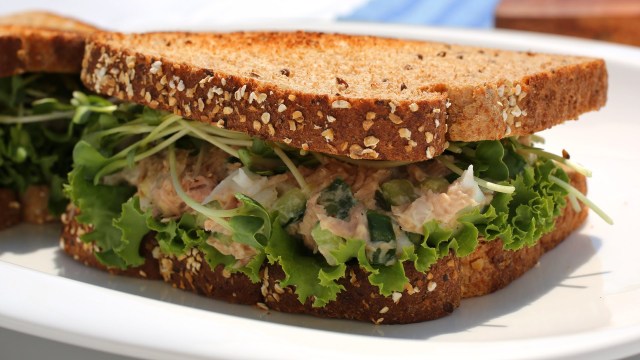
maxresdefault

“Too few people understand a really good sandwich.” — James Beard


A really good sandwich is a journey, not

A destination, a relentless pursuit of perfection,

Of smooth and rough, crispy and soft, of sweet

And salt and tangy. The sound your teeth make


When you chew, the way your eyes close,

Unintentionally, and just a hint of the drip, but

Never too much. The really good sandwich is

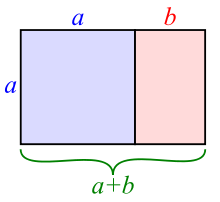
A golden rectangle, with one-half b on either side


Of the filling, a, whether tuna salad, say, with lettuce

And frozen peas, or roast beef, tomato, horseradish,

Carmelized onion… Myths of this ratio’s appeal

In nature, in the Parthenon, are overstated


Of course, if not completely fabricated, but what

Is a sandwich or any temple to the senses

But a fabrication? What separates humans from

Other animals? Our ability to measure and layer.

220px-SimilarGoldenRectangles.svg


Inventing the Poet

“In order to write poetry, you must first invent the poet who will write it.” — Antonio Machado

poet

In this year-long lab in Innovative Inventions, we shall experiment

With a variety of elements, chemical compositions, media (including bricks

And Legos, crayons, pen and ink, and the dreams of flightless waterfowl),

Books, of course, lots of books, starting with a dictionary, thesaurus, all

The Peterson’s Guides—for birds, trees, flowers, gems, and librarians of

All stripes. You never know when you will run into the need to identify

Friend or foe, ibex or oboe, atlas or armillary sphere. What kind of poet


Are you going to make? The kind with frilly cuffs or the kind with battered

Shoes and a flannel shirt? The kind with a black beret and a bicycle, or

The kind with cufflinks and a VW Bug? Will the poet write in Chinese

Characters all the way down the window shade, or type some beatnik

Manifesto on the back of small cards to slip into unsuspecting readers’

Pockets: sub rosa poetry. What kind of shamanic powers will you endow

Your poet with? Incense and Latin chant is good, as is a walk in the woods,


Or a picket line, a fife and drum parade; avoid public readings as they cause

An unfortunate increase in hatband size. The chemicals come last, cheap wine,

Margaritas, Gatorade, tea and much, much coffee, particularly if yours

Is a morning poet, trained to greet the day as soon as the birds declare it

Has begun. Add foam and cinnamon or a rim of salt. Add the tears of broken

Love, the sweat of labors performed to pay the rent, the blood of ancestors.

Stir carefully. Such ingredients are flamboyant and may explode.