Unable to Tire of Sandwiches

So I had a Reuben at Grendel’s in Cambridge, MA today. Not as good as Mike’s Deli in Brookline, but the sauerkraut was quite tangy.
maxresdefault

“Too few people understand a really good sandwich.” — James Beard


A really good sandwich is a journey, not

A destination, a relentless pursuit of perfection,

Of smooth and rough, crispy and soft, of sweet

And salt and tangy. The sound your teeth make


When you chew, the way your eyes close,

Unintentionally, and just a hint of the drip, but

Never too much. The really good sandwich is

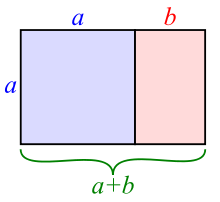
A golden rectangle, with one-half b on either side


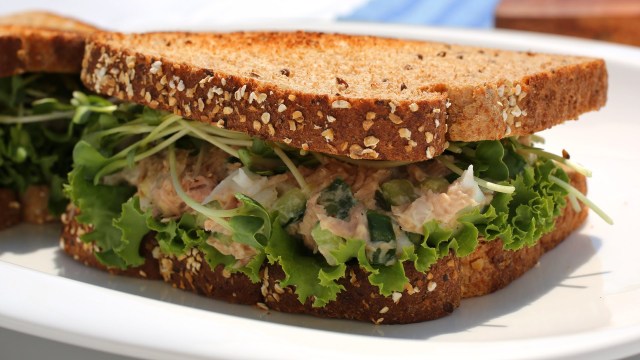
Of the filling, a, whether tuna salad, say, with lettuce

And frozen peas, or roast beef, tomato, horseradish,

Carmelized onion… Myths of this ratio’s appeal

In nature, in the Parthenon, are overstated


Of course, if not completely fabricated, but what

Is a sandwich or any temple to the senses

But a fabrication? What separates humans from

Other animals? Our ability to measure and layer.
220px-SimilarGoldenRectangles.svg


Inventing the Poet

“In order to write poetry, you must first invent the poet who will write it.” — Antonio Machado

poet

In this year-long lab in Innovative Inventions, we shall experiment

With a variety of elements, chemical compositions, media (including bricks

And Legos, crayons, pen and ink, and the dreams of flightless waterfowl),

Books, of course, lots of books, starting with a dictionary, thesaurus, all

The Peterson’s Guides—for birds, trees, flowers, gems, and librarians of

All stripes. You never know when you will run into the need to identify

Friend or foe, ibex or oboe, atlas or armillary sphere. What kind of poet


Are you going to make? The kind with frilly cuffs or the kind with battered

Shoes and a flannel shirt? The kind with a black beret and a bicycle, or

The kind with cufflinks and a VW Bug? Will the poet write in Chinese

Characters all the way down the window shade, or type some beatnik

Manifesto on the back of small cards to slip into unsuspecting readers’

Pockets: sub rosa poetry. What kind of shamanic powers will you endow

Your poet with? Incense and Latin chant is good, as is a walk in the woods,


Or a picket line, a fife and drum parade; avoid public readings as they cause

An unfortunate increase in hatband size. The chemicals come last, cheap wine,

Margaritas, Gatorade, tea and much, much coffee, particularly if yours

Is a morning poet, trained to greet the day as soon as the birds declare it

Has begun. Add foam and cinnamon or a rim of salt. Add the tears of broken

Love, the sweat of labors performed to pay the rent, the blood of ancestors.

Stir carefully. Such ingredients are flamboyant and may explode.

Voice

“What is the source of our first suffering? It lies in the fact that we hesitated to speak….it was born in the moments when we accumulated silent things within us.” ― Gaston Bachelard

Lately I have been playing with a metaphor for the changes I have been witnessing within myself: that certain people (human and furrier) have rearranged the furniture in my head (or possibly heart). What I had not really considered is that the different things inside me might have more or less import than others. Bachelard’s comment suggests that some of the things themselves are silent and equates that with our being unable to speak, so a silent thing inside leads to silence outside. So is the flipside of this idea that loud things lead us to speak loudly?

This makes a lot of sense, especially if you look at internalized oppression. In one person, that kind of institutional wrong could be held tightly silent on the inside and lead to a keeping-your-head-down kind of silence or a shame-filled silence; in another person, it could lead instead to rebellion, activism, or some other form of proud rejection of the wrong being done and the ideas behind it.

I think, though, that other “things” are a bit more like cats: sometimes purring, sometimes snoring, sometimes quietly patting us on the face to wake us out of a dead sleep or a crazy dream, pointing us in the direction of the cat food, the pragmatic necessities and the sweet varieties that life offers on a daily basis. These are generally not things that require yelling or even singing; they certainly do not demand our silence.

So then, if I return to my idea for this blog, that poetry can be sublime, ridiculous and useful, I also return to what sort of speaking poetry can do on a given day: give voice to the things that do not dare speak, tune the angry things to a frequency people will be able to hear, and hum simple tunes to keep our voices warm and ready to say the words that are still slowly making their way toward articulation.

Narratives for Survival #1

Screen_shot_2013-11-12_at_11.56.19_PM

So I found this meme on Facebook the other day, not long after Umberto Eco’s death, and I thought that it might just kick my writer’s block in the pants. “To survive, you must tell stories.” I tend to look at this blog as a “platform” for my books of poetry that I am going to be publishing in the next few years, a way to “build an audience,” and I imagine that many of my readers who are also bloggers feel a similar way.

But I often get dragged off course, usually by popular culture narratives with kickass women characters who lead, make choices and decisions, fight, kill, deal with the trauma, and work to balance the things and people they love with the things and people they have to deal with in often less than loving ways. These are the narratives I am magnetically drawn to.

Clearly, they are not the only important narratives. I have a shelf of books on World War II and the Holocaust because memory and testimony are crucial types of narratives for survival. I don’t write about these much because I don’t have firsthand knowledge, but I am going to be giving my writing students a speech by Elie Wiesel to read because they might take his thoughts on “The Perils of Indifference” better than they would take such thoughts from me.

There are also meta-stories: stories about how stories affected you, as we often hear when we start talking about representation in popular culture narratives. So Whoopi Goldberg has often talked about the galvanizing affect seeing Nichelle Nichols playing Lt. Uhura on Star Trek had on her when she was a little girl, suddenly realizing that a black woman could be a leader rather than just a servant. So clearly it is just as important to consider how we tell the stories we tell.

But there are other narratives too, the stories we tell ourselves when we are too tired to do the laundry or too hopeless to fall asleep at three in the morning, or too optimistic to consider consequences or too busy to separate the recycling. Sometimes they serve us well, reminding us to save our energy for the big things or to hold on to the small things until we have the resources to work for the bigger things. And sometimes they just get in the way. So maybe it is not only about what stories we tell and how we tell them, but also how we use them and how they serve us and others or do not.

Emergence

10274098_1320345484653126_8268387390674366604_n

Poetry puts language in a state of emergence, in which life becomes manifest through its vivacity. These linguistic impulses, which stand out from the ordinary rank of pragmatic language, are miniatures of the vital impulse.” ― Gaston Bachelard

As I have mentioned before, in science, emergence is the process/concept that/whereby a thing has characteristics that are not shared by its component parts. Hydrogen and oxygen do not necessarily glitter, gurgle or slake thirst by themselves, though when put together as water, they do. Mind is an emergent property of the physical brain and its chemicals and electrical impulses. Like that.

So words, which written in the dictionary and unread, do not have the power they have when we put them together, read them and speak them. Nothing about each word separately—and still less each letter separately—moves people to go to war, make peace, marry each other or even laugh when laughter seems impossible. All of this comes from the emergent nature of language. To take language a step further, we can talk about poetry.

(And I should make clear that we could just as easily talk about science writing, since it is kind of amazing that we can communicate the incredible microcosms and macrocosm of our universe, brain to brain, through language filtered through the scientific process. This is only different from poetry in that the beauty of the content is foregrounded; the beauty of the carrier of the content—language—is usually pretty dry, although I have heard lots of arguments for the aesthetic appeal of the math. Sorry, that bit is lost on me. But I believe these people because when they say it, they get all starry-eyed.)

I am not sure that Bachelard is using this particular definition of emergence in his statement above. I think he is saying something more, perhaps that while language shares in the magic of emergence, poetry puts language on steroids, and the emergence that is made possible through poetry is something more like the Big Bang, not just a universe but a universe full of universes may come into being, like Sir Terry Pratchett’s Multiverse. Similarly, poetry makes possible not simply beautiful images and ideas but the possibility of Beauty itself. Not to get Platonic here, but there is nothing inherent in a massive explosion of matter or words that should create sentience or souls or song.

It shouldn’t. But it does.

Psycho Sunday: Badass Women in Combat Gear #3.5

MV5BMzM3MTYxMDg4MV5BMl5BanBnXkFtZTgwMTMyMjU2MTE@._V1_UY268_CR16,0,182,268_AL_

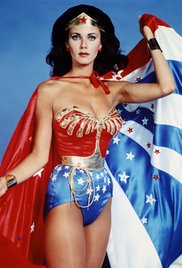
Raise your hand if you spent any part of the 1970s spinning around in your living room, hoping that this time, you’d gain superpowers, a golden lasso and maybe an invisible jet. Watching Diana Prince (Linda Carter) beat up the bad guys and save Steve Trevor (Lyle Waggoner) again was very fulfilling and set me up for two decades of disappointed TV watching until the mid-1990s came around and Wonder Women’s spiritual daughters, Xena and Buffy, appeared kicking ass and dusting their enemies.

And while Linda Carter will always be Wonder Woman to me, the new DC comics movie is coming out this spring, with Gal Gadot in Batman v. Superman: Dawn of Justice. Given that Gadot will be in the solo Wonder Woman film in 2017, I have hopes that the actor, writers and directors step up to the plate. I had always hoped for a Joss Whedon written/directed film with Lucy Lawless in the title role, but such vain hopes were not to be.

chris-pine-to-star-alongside-gal-gadot-in-dc-s-wonder-woman-686234

I still want some bullet-repelling bracelets in case I need to travel outside of New England, but I suppose if they were out there on the market, the NRA would try to make them go away.

How We Make the Road

road

So a while back I came across a few lines from the Spanish poet Antonio Machado, used them for an epigraph for a chapter in my theology thesis and then, as one does, forgot all about him. Then a few days ago, I was digging around on my desk and found another line I had written down and then presumably used as a bookmark until it worked itself loose and found me again, which I wrote about a few days ago. That made me look into him further and I found this bit of a poem.


Wanderer, your footsteps are

the road and nothing more;

wanderer, there is no road,

the road is made by walking.

Walking makes the road,

and turning to look behind

you see the path that you

will never tread again.

Wanderer, there is no road,

only foam trails on the sea.


Given that every writer of application essays EVER tends to use The Journey as their Metaphor of Choice (this is a professional opinion), I rather like the idea that there is no road, only the walking. And this guy Machado reminds me less of other Spanish poets like Lorca than of the French philosopher Gaston Bachelard for some reason.

And this is a bit odd, because Bachelard says, “What a dynamic, handsome object is a path! How precise the familiar hill paths remain for our muscular consciousness! “Oh, my roads and their cadence.” I don’t know what it means, but I like it.

Bachelard, Gaston. probably The Poetics of Space.

Machado, Antonio. “Proverbios y cantares.” Campos de Castilla, 1912.


Pinterest Poem

pin

I am not sure whether this is a cento or a found poem. I saw something crazy about lasagna on Pinterest and decided that my writer’s block merited strong measures and immediately stole it. Astute readers will also recognize lines from Ernest Hemingway, Emily Dickinson, and Patrick McDonnell’s cartoon Mutts.


Writers are desperate people, just the way we want

Them to grace the cover of Life Magazine: somewhere

Between torture and fun and blasting it out

With charges that will rock your readers’ world.

Ten rules fit women use to stay fit. One: Exercise

Hypergraphia, an overwhelming urge to write,

To truly rest up, to stop in at my favorite place

For drinks and comfort food that leaves me

Impressed without fail, in gender reversals

We need in our stories, a great example of why

This is absolutely true, in a slightly more mystical light.


I think it’s fairly common for writers to be afflicted

With two simultaneous yet contradictory delusions:

I can always live by my pen, until not writing

Makes you anxious. It’s the one and only thing

You have to offer. Well, that and nineteen lasagna recipes

That will change your life: so flavorful, everyone’s bound

To have seconds. Now, I’ll be unstoppable. Yahoo!

Yippee! Woo! Woo! To keep a love story from being

Boring, you need, when asked about romantic chemistry

On the show, to write about the things you wish

You had the courage to say. Only death can stop it.

Badass Women in Combat Gear: Valentine’s Day Edition, Or, Dorothy Parker Was Wrong

((For those of you who, like me, were not Math Majors in college, I apologize. But this particular blog post seems to need a ridiculous number of parentheses and a rather surprising number of braces {curly} and brackets [square]. Be warned.))

There is a fairly famous rhyming couplet by the 1920s Algonquin Round Table wit, Dorothy Parker, that has been widely anthologized (and it suddenly occurs to me that a whole slew [this is a technical literary term] of the editors anthologizing this were {white} men], which says, “Men don’t make passes/At girls who wear glasses.”

I have been thinking about this since Mike Allegra (heylookawriterfellow) asked me to add to my BWCG series some BWCGs who wear glasses. I thought of this most recently after viewing a teaser for this coming Tuesday’s Agent Carter, in which Agent Sousa (the delightful Enver Gokaj) says to (an injured and therefore unavailable-for-the-mission) Agent Peggy Carter (the even more delightful Hayley Atwell) that what they need for the coming mission is someone who can “blend in with the glamour and throw down in the gutter.” Damn, Spanky, I LOVE the writers on this show!

anigif_enhanced-buzz-28965-1428618090-11_preview

Any Gentle Reader who has spent any time at all reading this blog will recognize that this is not only the dual nature of what I look for in my Female Leads of TV, Film, and Life, but also a micro-blueprint of who I would like to eventually be. I have to admit that the second part sounds much less painful to me than the first part, because as Agent Dana Scully admits in the most recent New X-Files episode, running/fighting in three-inch heels is no country for really anyone, but absolutely not Women, Older Men or Sane People of any Gender. Okay, she didn’t say that.

But as Jane Austen might have said, “It was nowhere said, but everywhere implied.” Come on. Amy Acker has said that at one point her only “stunt ability was running in heels” (Citation, as Wikipedia would point out, desperately needed. My guess? A ComiCon. San Diego? Maybe. Who knows?).

ackerglasses

My point here is simply that Dorothy Parker was wrong and Mike Allegra is right. (Full disclosure: I wear glasses. So sue me. {Twenty-odd years at MIT’s Writing Center (some of them more odd than others) has made me as blind as my cat Musashi, if not as a bat or a possum. [If M. were a little boy, he’d be wearing Coke bottle glasses and a bowtie]}.

81-2dep+8aL._SY355_

So in honor of a Sunday-facing Valentine’s Day (black Tuesday meets the Lord’s day), I offer you some of my favorite female actors (Nope, don’t call me a teacheress, professoress, editoress or martial artistess; I avoid calling them actresses for the same reason) in glasses.


I tried very hard to chase down the pics I have seen online of Lucy Lawless as herself, rather than Xena, wearing glasses, to no avail. Similarly, her soul-grandmother, Linda Carter (the always-and-everywhere Wonder Woman, despite DC’s brilliant work with Gal Gadot).

And because I believe it is important to look back and forward at the same time, I also give you Ingrid Bergman and Scarlet Johansson.

Also, the classic, brilliant, unimitatable Katherine Hepburn on a skateboard, because duh.

katehepskate

To my pal, Mike Allegra, men and women who love women in glasses or, you know, on skateboards: YOU’RE WELCOME. HAPPY VALENTINE’S DAY. NOW WE WILL LET THE WEATHER BECOME WARM AGAIN.