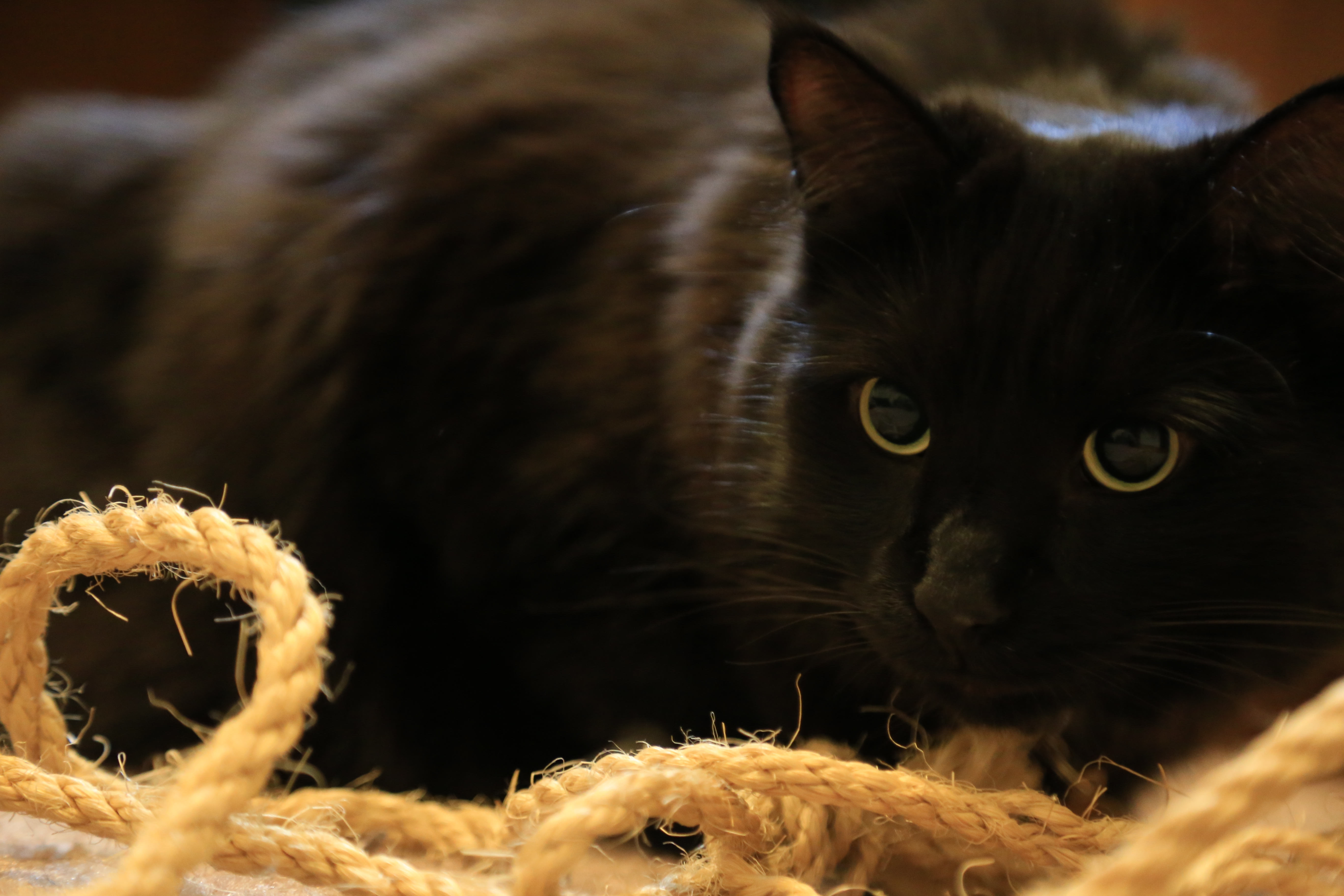
One of the problems with still kicking it old school and writing most of my poetry by hand is that when I have a huge project like this (50 poems in the last 33 or so days), my poor roommates cant even sit on the couch without finding bits of paper that say things like “Penelope, Embattled, Requests Aid” or “your heart lies on the road” or “like the fire spreading.” I guess I am thinking of this because of yesterday’s cento, the poem made from bits of other poems. I guess what I really feel like is a kind of bardic Pigpen: as I walk around I let fall a cloud of poems instead of a cloud of dust.
Monthly Archives: April 2015
Discovering the Cento
So the other day, I was reading Robert Okaji’s poetry blog and he gave an example of a form of poetry I had never before heard of, the cento, a patchwork poem made from the lines of other poems. Naturally, I immediately wanted to do this, and today I sat down and did. I picked out some of my favorite volumes by some of my favorite writers on my main poetry shelf (the one I can reach without a ladder or chair) and went to work. My cat jumped up on the table, settled himself under his tanning lamp with his feet on my wrist and watched. So here it is. I have listed the poem each line is from below. They are in reverse chronological order because I moved from A to Z and put the stack down backwards. Sigh. See what you think.
Cento
Ah, the shining pastures of salt:
Flames bouncing off the river’s back,
A photograph of an eagle just setting down,
Bright fog reaching over the beaches.
How poignant and amplified the world before me seemed.
In this condition I write extraordinary love poems,
Strengthening our embrace.
…
I mostly chose lines that had roughly similar rhythm and length and ended with a short line, as that feels more musical. I like it because it is sort of representative of the inner geography of my mind when I sit down to write: the inside reality is bigger and grander than the outside reality. And I have been writing love poems of a sort lately; I am not actually in love myself, it is only part of a project. Then again, May Sarton would say that all writing is a love poem because love is attention to details.
…
Willard, Nancy. Missionaries among the Heathen. Water Walker.
Troupe, Quincy. Snakeback Solo #2. Avalanche.
Piercy, Marge. What Goes Up. Stone, Paper, Knife.
Ursula K. LeGuin. Incredible Good Fortune, Incredible Good Fortune.
Collins, Billy. Marginalia, and Purity. Sailing Along around the Room.
Boland, Eavan. VII. First Year, Against Love Poetry.
OToole, Robert. Eagle Morning Strike. Photo.
The Magic of Emergent Creativity
Here I go again, letting my writing get in the way of my blogging about writing. Luckily, when I am in a big project like this, I also sit on my own shoulder to watch myself writing, and I learn stuff. What I have learned this week is not exactly new to me, but rather something I have known for a while but have not had the language for. There is a sense of trust that creative writers need to have to be really productive. We must trust that the writing wants to happen, that the story is out there somewhere trying to enter the world, and when we get really, really lucky, it finds us.
J.R.R. Tolkien called this process Subcreation, and talks about it with both fiction and nonfiction in his book Tree and Leaf. But I think today I would rather call it the emergent miracle of creativity or the magic of emergent creativity. In science, emergence is defined as characteristics of a material, say, that are not characteristics of the material’s cells or atoms. The human mind is an emergent characteristic of the human brain. Wetness, reflectivity, and splash are emergent qualities of water that have no clear source in either hydrogen or oxygen atoms. When we are creative, something happens that we do not really ever have complete control over. I throw words on a page, and sometimes they turn into clear or turgid prose and sometimes they turn into a failed poem or a poem of such beauty I reduce myself to tears. Yes, some of that is learned, some of that is my unique imagination applied to a particular subject. Sometimes it can come down to a word I came across the day before or an image from a dream, those tiny gifts the universe gives us, saying, “Take this. Make me more.”
But this thing we learn to trust is what Stephen Buhner, in his book Ensouling Language, calls the golden thread that we find and pick up and follow to the end. I like this metaphor because of the way it has mythic resonance, reminding us of Theseus getting through the labyrinth with his ball of thread, a story about order overcoming chaos, which is, after all, one of the duties of art.
I saw this today during my office hours, which I spent writing a poem about Love and the Epic Hero, which not surprisingly turned out to be very long, about 136 lines. After struggling with a piece at what I originally thought was the end, I finally realized that a different set of pieces in the middle Really Needed to be the ending, because of the pair of images those pieces ended with. One person ends the stanza saying:
I long for a map,
Even if much of it is blank and claiming
“Here be dragons.” At least then I would have
A chance to navigate this strange terrain.
Then the other speaker ends the next stanza with:
This is the territory of dragons. I dare not
Treat it instead as some kind of treasure map.
I love taking an image and using it in two different ways like that, and I did not see when I wrote the first image how I could use it until I wrote the next stanza, but I have learned to trust that I will know what needs to be done.
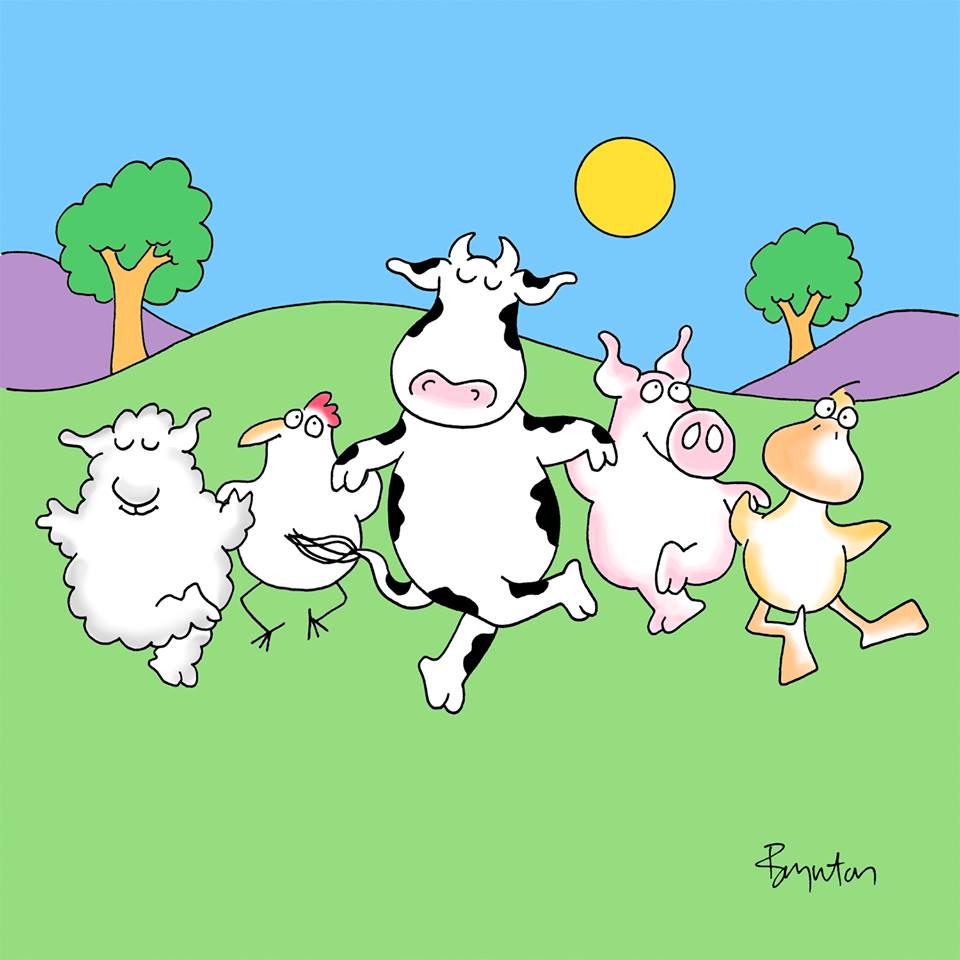
And now, for you, a small dose of Sandra Boynton.
The Stories We Tell and Live Into
As a writer who is also a Christian, I find I think about Passover and Easter as being about the Story. We tell the stories of Exodus and the Passion of Christ at this sacred time of year to remind ourselves of who we are. That is what ritual is for: we eat specific food and tell specific stories and sing specific songs and we know ourselves as a people descended from the people who chose those foods, stories and songs, gathered or invented them and gave them meaning.
I think of this in the context of the popular cultural narratives that have been occupying my thoughts these last few weeks, in particular, the two separate and very different first century CE localities of ancient Greece and Rome, brought to us by Renaissance Pictures, Rob Tapert and Lucy Lawless, Spartacus: Blood and Sand and Xena: Warrior Princess. The more recent Spartacus (2010 to 2013) was about men (and women) bound to the gladiatorial arena. It was about despair and meaningless death. In contrast, the earlier XWP (1995 to 2001) was about changing one’s way and rising from death into something better.
I have binge watched XWP more than once. I rented the DVDs of Spartacus once; while the half naked gladiators were nice, there is no way I would watch those shows again. They are too much like Quentin Tarantino’s Kill Bill, in that when blood sprayed across my computer screen, I automatically found myself throwing up my arms to keep the blood from splashing across my face.
Yep. That bad.
I think about all this now because of the two major interpretations of Christ’s death and resurrection. There are people who talk about Christ’s dying for our sins, as if God was so pissed off with humans that he (it is always he in these readings) needed to kill his own Son to make up for our sin. Weird shit, that. In contrast, a more liberal reading says that humans killed Jesus, but God the Father/Creator/Mother resurrected him to prove to us lame humans that death is not the end, that God can overcome this enormous problem.
So when I look at the stories I use to constitute my identity, I often choose the ones that are not about characters trying to see how much they can get away with but about characters engaged in rescue and redemption, rather like the Jewish idea of tikkun olam, the repair of the world. It is an ongoing project, a battle that never is entirely won. All you can do is stay on the road, take good friends with you for the journey, and keep telling yourselves the stories that remind you who you are, and how strong you can actually be.
Let Me Sing You the Song of My People
One of the downsides of having a very productive month is that Normal People do not understand how amazing this is and ignore you and Writer People, who do understand, yes, my pretty, they understand All Too Well, resent you. Some of this divergence comes out of a misunderstanding about the creative process. I believe that Sustained Creative Productivity (SCP) requires a shitload of work and self-discipline, for a given value/definition of self-discipline. The word disciple simply means learner. So the kind of self-discipline I am talking about is really learning about yourself and your rhythms, motivations, inspiration. It can be scary, when you identify as a Writer People, to fall into a period of writers block or creative constipation. Like real constipation, it is painful. What is worse, it also threatens your identity. Like a bad knock-knock joke, you ask yourself, How can I Be a Writer if I am not writing? And the only answer you have is either, “Oooh, ooh, I know this one! The sound of one hand clapping!” or “I guess I am not.”
It feels a bit like that moment in Superman II when Clark Kent, who has thrown off his superpowers to be with Lois Lane, suddenly realizes that without his power, he is nothing. It is a crap feeling. (And can I just point out here something I have learned from a friend: if somebody ever tells you that the only way you can have love is to give up your super power, that person is singing the song of Patriarchal Oppression. Invite them out of your life. Then carry on loving and using your super power. Thank you, Jenna Tucker.)
I have often found that I get to the end of the academic year and I am so burnt out from teaching all year that I have nothing to work with. It is so frustrating because I have generally great weather and lots of time and nothing to show for it. And given that I did not always get a lot done during the two semesters, since I basically grade student papers two weeks out of every three, it meant I was not getting much done for the whole frigging year.
But lately, I have noticed that I am getting more done during the semester. This is due to a few things. First, from 2008 to 2012 I was teaching at two schools and doing a second Masters degree at a third (cuz it turns out the Masters degrees are collectible: get the whole set!). Ironically, I was doing this because I had gotten so burned out teaching. It was often a gruelling process to balance all that stuff, but, much like getting hit over the head with a baseball bat, it felt GREAT when it stopped. Suddenly I had extra time to do things, like write, or like watch old TV shows or read novels or pop culture textual criticism (cuz as an English teacher, I nerd hard).
Second, all those papers? There is a trick to using the thing you would rather not be doing as a counterbalance to what you do want to be doing. I can get any amount of writing done if I am staring at a pile of 38 student papers. Grade some, write some, grade some, write some. Lather, rinse, repeat.
Finally, if next month turns out to be One of Those Mays, dry, barren, devoid of writerly hope, etc., I will try not to worry about it and just call it a vacation. Read some light novels. Kick back for a change. Failing that, I can sing you the Song of My People:
I am not writing!
I am not writing!
I will neeeeeeeeever write again!
Woe betide me!
As the block rides me!
I will neeeeeeeeever write again!
It actually sounds a lot like the Darth Vader theme, now that I think about it, or possibly Wagner…
In Which Our Hero Learns Nifty New Pop Culture Slang
I dedicate this post to my sister, Michelle Spilecki, whose birthday it is today.
So over the weekend I learned a catchy new abbreviation and the idea that goes with it: OTP, One True Pairing. Think about some of the TV pairs from the last twenty years. These are just the shows I watch. I am sure you could come up with plenty more yourself, especially if you are more of a Zombie Apocalypse kind of individual.
Scully and Mulder
Buffy and Angel
Booth and Bones
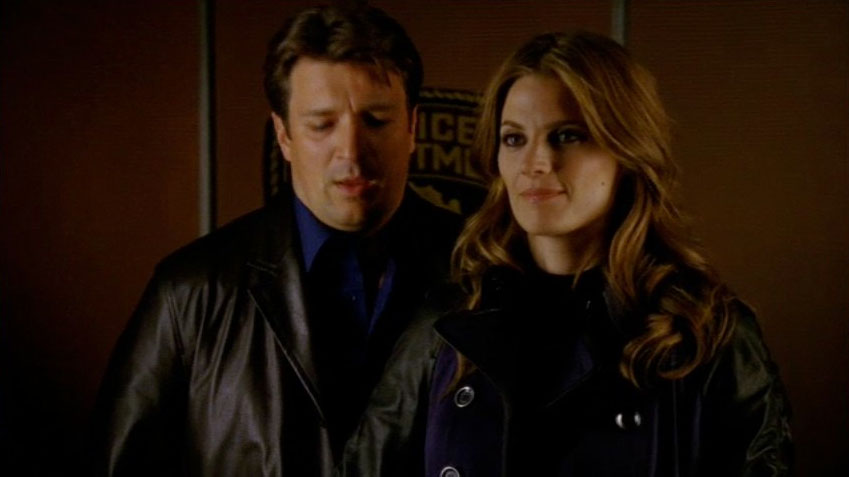
Castle and Beckett
Phil and Melinda
Carter and Martinelli (or Sousa, if you prefer)
Xena and Gabrielle
These are all pairings in which the chemistry between the actors almost immediately got conveyed to people who were prepared to see it. When I think about The X Files, Buffy, and Castle, in addition to Xena: Warrior Princess, I would argue that in the pilot of each series you see the kind of chemistry before the end of the episode.
I think one of the things that makes these shows so effective is that most of the pairs develop their relationship–their knowledge of each other, their professional and personal respect for each other, how they work together and when they give the other person space or slap them upside the head (usually metaphorically)–on the job, working to make the world a better place.
I have often observed that some of the solidest seeming marriages were between two people engaged in one or more complex, long term projects together: leading a church choir, producing community theater, things like that. Raising children together is not the ideal project for marriage building, simply because at some point your project learns to, for example, talk, and then express her/himself, and often what s/he might be projecting is disagreement with one or more of the aforesaid partners in the marriage. In comparison, plays and concerts don’t talk back (although to be fair, actors, singers and the like often do, although as they are not part of the marriage, even if they are part of the family, it does not matter as much). Anyhow, that is what it seems like to me.
So a friend was writing about OTP on her blog an I saw it and thought, as one does, Huh? So I asked her and she said:
One true pairing. As in, “Xena and Gabrielle are my OTP,” or, “Gabrielle and Xena are OTP more than any OTP in the history of fiction, and if you don’t see it, you’re crazy.”
Which makes sense. One of the big problems I see with all my favorite pairs is that they are never completely equal. One person, usually the man, is a little better, smarter, stronger, more… Part of that is how the star billing goes. Part of that is our culture. Part of that is our culture running how star billing goes.
But even on something like Buffy, whose two main squeezes were superpowerful vampires, well, Angel couldn’t be around her without problems, so their equality was made out to be impossible. And Spike was morally her inferior (that whole century of killing sprees thing not followed by a quest for redemption as Angel managed). So they were only equal at fighting not at being in the world and making decisions about good and evil, until really close to the end. And when Spike finally did something to redeem himself, he blew up hell and died with it. Whoops. One more sorta equal relationship bites the dust.
I think what they are doing on Castle is hopeful, with Stana Katic as Detective Beckett matching wits with Nathan Fillion and frequently taking on the more physical roles, but we will have to see how that goes. Hell, the fact that they are so much more often casting women who are five foot nine, and then putting them in four inch heels so they are as tall as the men, goes a long way toward changing how we see women as possibly strong and still lovable. But there is still a sense of women’s sphere and men’s sphere as different and probably not equal. Once Bones had her baby, she stopped going out into the field.
In comparison, what we see with Xena and Gabrielle is two people who start with a very uneven friendship, and end up, six years later with one of the most equal, solid friendships/ partnerships I think I have ever seen on television. I think we would all like a relationship like that. And to some extent I think one reason we often watch these shows is to try out what we think we want and see whether it works. Some writers serve their characters better than others, and we love best the ones that not only show the chemistry and respect between the pairings, but also resist the inorganic cultural forces that try to bend the relationship into an old familiar pattern at the risk of the relationship.
Because, you know, mystery babies are NEVER a good idea. And I would love to see more of Philinda…
How Line Lengths and Breaks Might Convey Voice
So the other day, I went back to a poem I had started about Callisto, Xena’s arch-nemesis. This one is about episode 2.7 Intimate Stranger, where Xena and Callisto get their bodies switched by one of the gods, primarily because Lucy Lawless had broken her pelvic bones in a fall from a horse she was practicing stunts on for the Tonight Show. It was a great choice, not only because it is always fun to see characters we know switch (Enver Gjokaj is a genius at this; check out the Joss Whedon series Dollhouse), but because it pointed out how similar these two women are. With the right (or wrong, really) set of circumstances, they actually could have been each other: Callisto the warlord who set a village afire that would turn the orphan Xena into a psychopath. We like them better as they are, because let’s face it, Callisto is the BDVE (Best Damn Villain Ever), with her creepy line delivery and spidery physicality.
So anyway, I wrote version 1.0 below and did not think much about it. But then I was looking at the previous poem I wrote about Callisto, with the first two lines:
“As children we come to experiences bone to bone,
with no kind skin to muffle the uproar. Imagine:”
I realized that the new poem was at least a full inch thinner, 2 1/2 inches, than the old one, which has line lengths of 3 1/2 inches. Well, the thing is, at 5’ 8” and 120 pounds, one of the first things you notice about Hudson Leick is how thin she is, an impression fostered by her costume being even more revealing than Xena’s, especially at her midsection.
Know Your Enemy, Know Yourself: X. Reflects on C., v.1.0
…
In the night season, I dream memories
Misremembered, death in the form of
My perfect nemesis, a woman born
In the fire that killed her family. She is
Me. And I did create her as she claims,
Though it was not my hand that lit
The spark that tore her world away.
She revels in her pain. I did that
Once, as she does, and spread it
Far and wide: if I suffer, so too must
Everyone. I will wring out the world
Like a map weeping blood. I am
Her now, our minds and bodies
Switched by the gods in their infinite
Unfairness. My enemy is me. I look
In the river and the body that I know
Does not look back. She promised
Once to take away everything
I loved, my friends, family, horse,
Reputation, everything it took me
So many years to win back.
Now in her body I must race
Against time, again, to stop her.
Both of us suffer from my monumental
Guilt. Like a crashing wave, once
It starts, there is no stopping it.
So then I thought about a poem I wrote many years ago titled Cancer Barbie, using the image of a Barbie whose hair as been loved off, a là The Velveteen Rabbit, to talk about cancer as I have seen friends experience it. Given that the image is Barbie, the shape of the poem really matters, so I tried to make a poem about Barbie look like Barbie, to wit:
Cancer Barbie
for Jackie, Anita, Judy
…
Some
little girl
has loved
this doll
completely, loved her
long blonde hair
right off
just the
way these
chemicals
coursing
through
your body
love you down
to the very follicle
love you right
all
the
way
down
to
your
roots.
…
At first, I thought I could do a similar thing by centering what I have here as version 2.0, but it ended up looking like, depending on how generous you want to be, a stubby gingerbread man or something my cat coughed up. So forget the centering. What the erratic breaks and short line lengths do is to make the voice of the speaker, in this case Xena inside Callisto’s body, sound more erratic. I can’t decide if the body you are in should decide your voice or if it is only the mind. In that case, I should go with Version 1.0 for this, but if I find a way to write a poem using Callisto’s voice, regardless of which body she is in, I will totally use this style. So let me know: which do you prefer, version 1.0 or 2.0 and why?
Know Your Enemy, Know Yourself: X. Reflects on C., v.2.0
…
In the night season, I dream
memories misremembered,
death in the form of
…
my perfect nemesis, a woman
born in the fire
that killed her family. She is
…
me. And I did create her
as she claims, though it was not
my hand that lit the spark
…
that tore her world away.
She revels in her pain. I did that
…
once, as she does,
and spread it far
and wide: if I suffer, so too
must everyone.
…
I will wring out the world
like a map weeping blood.
…
I am her now, our minds
and bodies switched by the gods
in their infinite
…
unfairness. My enemy is me.
…
I look in the river and the body
that I know does not look back.
She promised once to take away
…
everything I loved,
my friends, family, horse,
reputation, everything it took me
…
so many years to win back.
Now in her body I must race
against time, again,
…
to stop her. Both of us suffer
from my monumental
guilt. Like a crashing wave,
…
once it starts, there
is no stopping it.
…
Spilecki, Susan. “Cancer Barbie,” Midwest Poetry Review. Summer 2002.
The Ups & Downs of Giving My Brain a Home
We each have a unique brain, but my lately my own brain has been acting particularly unique. On Tuesday, as I was heading for work, I started thinking about what I would write in the next blog. When I got to the train, I dug around in my coat for a file card and wrote 24 lines in very tiny handwriting to capture my ideas before class. I do realize that a lot of you young whippersnappers, especially those born after the bicentennial, probably would have tippy-tappy typed yourself a text or email, but you would, I argue, be losing out. The e-world does not have the serendipity of the material world (Oooh, now there is an epigraph. Everyone: go write me a poem with this as its heart’s kernel! Report back.) It is hard to accidentally come across something you have put into the ether as I did yesterday when I found the file card my cat had knocked off the dresser, a file card scribbled last year when I was at a bookstore, remembered the book and the line in it and copied it down, knowing I would eventually use it to write something (which I had done a few years earlier when I first read the book, but I lost that particular note). Serendipity on top of serendipity.
Anyway, my brain. So as I was entering the building where I teach, looking at my notes, I suddenly started singing in my head:
Chicken scratch blogpost, I don’t care!
Chicken scratch blogpost, I don’t CAAAAAAAARE!
My master’s gone away!
Sigh. But there is also an upside to hosting my particular brain. On Monday afternoon, just as I was waking up from a nap, I could see, as if typed on the inside of my skull, the line, “As children we come to experiences bone to bone, with no kind skin to muffle the uproar.”
I know, right? Amazing!
I immediately knew that it was the beginning of a poem, at first I thought the poem about Troy but as I sat up and scrambled to get to the computer to write it down, I realized that instead it would enable me to write about the origin of the character I would argue is the Best Damn Villain Ever in popular culture, Xena’s nemesis Callisto, portrayed by the very talented Hudson Leick, who apparently now teaches yoga. That seems a trifle ironic, given that Callisto is a very likeable psychotic mass-murdering fiend. I even saw a short, 4 minute, YouTube video that explains with clips from the shows, just why Leick’s Callisto is the Best Villain Ever (so it is not just my opinion, huh!).
This is why, despite all my protests that There Is No Muse, GRRR!, I can absolutely understand why the ancients would make up the idea of the muse. Even I, after briefly minoring in psychology in college, have a hard time giving my own mind credit for such an unlikely phenomenon as the perfect gift of a perfect line after a damn fine nap. It is easier to give somebody else credit, whether that’s nine generous Greek chicks or God. The Greeks are the ones who handed us down the idea of hubris, the dangerous self-pride or arrogance that offends the gods. For writers, inspiration is a precarious thing, as illustrated by all the blogs on WordPress alone that focus on writers block. Even for me, the instinct is to be cautiously humble…
Epigrams, War, and Madness
You know how in wintertime, your hands grow rough, so that, when you go to pick something up, a sweater, say, it snags and forces you to look at it more closely? That is I think the usefulness of an epigraph, a phrase or sentence you come across in one place that then serves as a springboard for you, the writer, to go off in another direction with it. I have written before about how the poet Simon Perchik has frequently provided me with springboard lines of this sort, such as “or perhaps your shadow spilling over again,” which blows my mind every time I read it.
And while not all my epigraphs are about or lead me to write about mental health problems, the quote on the file card I came across this morning (thank you, Musashi, for walking across my dresser at 5 a.m.) is by Kaye Redfield Jamison, from her memoir about being a psychologist with bipolar disorder, An Unquiet Mind. (Yes, Amy Carleton, go read it. You will thank me.) I think her line will be my own Trojan Horse, a way into the set of poems about Troy that I have been contemplating writing.
The line comes from the end of a chapter about Jamison’s work at Bellevue Hospital’s psychological emergency room. Previously we have read about what happened when Jamison went off her meds and had to be hospitalized so she is humbly aware of the mirroring she feels when a bipolar patient in the grips of the manic state is wheeled in, fighting against the straps that cuff her to the gurney. As Jamison says, “We all move uneasily in our own restraints.” I can think of no better way to springboard into a series of small poems subverting an epic poem about a ten year long siege.
Siberine, Jack. Musashi with String. 2014.