Inspiration Tip: Revisiting Old Friends #3

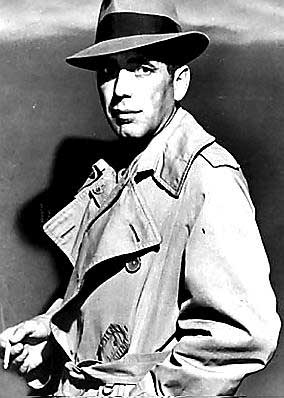
raggedy ann Sam_Spade

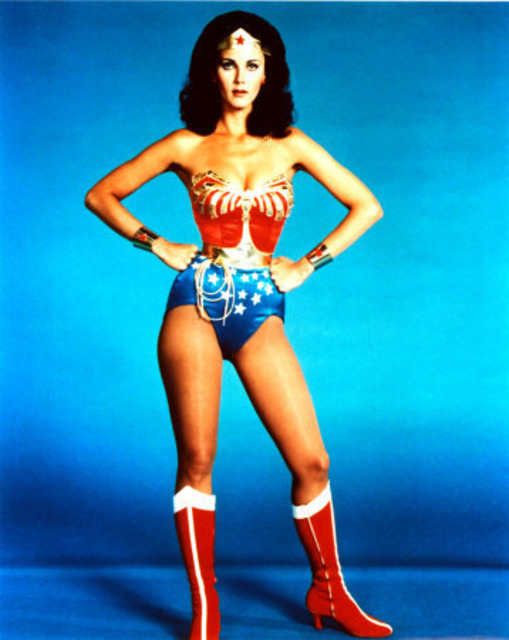
My upcoming book of poetry, Icons & Action Heroes (Batteries Not Included), contains, as you might imagine, a section of poems about figures from popular culture, including Ken, Barbie, Raggedy Ann, Sam Spade, Wonder Woman, Lucy Lawless, Salome, Icara and Daedala, and Amelia Earhart. I even matched Jane with Jack of the Beanstalk, describing their dialogues of seduction and conflict as they go to and return from the castle at the top of the sky, which belonged to the giant and his wife, Cinderella. Talk about feminist revisionist mythmaking!

I think I write about pop culture icons, whether actors or dolls or historical role models, because they have had an impact on me, and I use this word advisedly because it implies leaving a dent behind. It means I have been in contact with something and come away changed.

Lucy_Lawlessuhura

Lately, I have been enjoying reading the blog, iwantedwings: a geeky feminists musings on Visual & POP Culture. the writer has just started a series of analyses of how Disney movie princesses portray and affect women. She is doing the films in chronological order, starting with Snow White (1937), so I suspect the results for the next few weeks at least will continue to be: Negative.

This is one reason why I, like many feminist poets, engage in revisionist mythmaking. To turn Icarus and Daedalus into mother and daughter makes the trope of the glass ceiling more literal, and thus more visceral, especially for those in Our Studio Audience who are not women or think they are not feminists. To make Prince Charming the giant at the top of the beanstalk is to ask what assumptions we make about our hoped for princes, and what cost those assumptions might have. And although I am probably the only feminist poet who has not (yet) gotten around to rewriting the story of Penelope and Odysseus, I reserve the right to do so eventually.

But even more, I want to celebrate the cultural icons that have helped us see how we can be strong. People often talk about Star Trek in this vein. How many of us women, of whatever color, were inspired by Nichelle Nichols acting as Lieutenant Uhura? How many of us cheered to see Kate Mulgrew as Captain Kathryn Janeway? As Katharine Trendacosta says, “The ‘seeing yourself on screen’ thing is a cliché, but it really is important. It’s not just seeing people you can relate to, it’s seeing people you can relate to being successful. That’s the empowering part. That’s what Star Trek: Voyager meant to me.”
wonder-woman star-trek-uhura-nn

Since we are inevitably consumers of popular culture, I think we must be critical and intentional consumers, understanding that the images that we consume are also creating, reinforcing, undermining and transforming the world around us, and ourselves. I write these poems to do this kind of thinking for myself and to help others do it too.

Trendacosta, Katharine. “Why Star Trek: Voyager Meant The World To Me.” iO9.com. Jan. 16, 2015. Web.
Haiku and the Problem of English

snail-hope_o_1161914

Toodling around on WordPress for the past few days, I keep seeing people writing what they undoubtedly think of as haiku. I got taught what everybody else got taught about haiku in fifth grade English class: a haiku is a Japanese three-line poem, the lines having five, seven, and five syllables, for a grand total of seventeen syllables. Easy-peasy, right? Well, actually, no.

First of all, that description is a definition of a senryu, not a haiku. For the poem to be a haiku, it needs a kigo, a word that refers to the seasons and nature. Also there should be a kireji, a “cutting” word, that is like a caesura (pause) in English poetry. Often, translations of Japanese poems in English will use punctuation like a colon or a period to show the stopping and starting again. Often the first two lines set up an image and the last line pulls the rug out from under the reader or possibly gives the reader something new to appreciate.

Second, syllables in English are very different from syllables in Japanese. The word for teacher, sensei, looks like two syllables to an English speaker, but is in fact four in Japanese, se/n/se/i. This means that while you could feasibly have as many as seventeen words in a seventeen-syllable poem in English, Japanese poets are using very few words indeed.

One of the ways that the classical poets got around this problem was with a kind of poetic shorthand, phrases or tropes that everyone recognized. So, for example, the phrase “wet sleeves” implies the end of a love affair.

One of the uses of these shorter poems (we can talk about tanka, renga and haibun another time) is to write a final farewell poem at one’s death. Often a samurai would write such a poem before going off to battle, as presumably, one fights with more ferocity if one has accepted the possibility of one’s death and prepared oneself for it.

To the Western world, Matsuo Basho (1644-1694) is probably the most well-known and widely quoted Japanese poet. You probably had his frog haiku in your schoolbook just as I did: furu ike ya / kawazu tobikomu / mizu no oto

an ancient pond

a frog jumps in

the splash of water [1686]

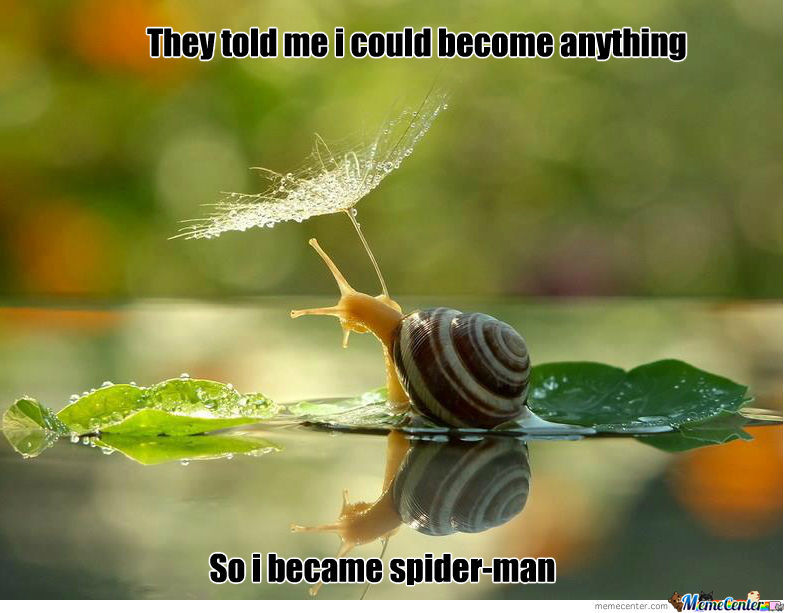
I also really like Kobayashi Issa (1763-1828). He is one of the four great haiku masters, along with Basho, Buson and Shiki. Here is one of his poems.

O snail

Climb Mount Fuji,

But slowly, slowly!

To Shock or To Seduce, or…

New York fashion week was recently shocked by designer Rick Owens, who put on his runway men, as the news sources quoted, with no pants. Now, while I would argue that fashion week, and quote fashion unquote in general, has absolutely no relation to what real people on planet Earth would ever consider wearing in public, I think there is more going on here.

First, the feminist argument. We exploit women without thinking much about it, but GOD FORBID we should exploit men. Exploiting women is business as usual; exploiting men is news. Second, I can only assume that Mr. Owens is gay, since the bit of these skinny models he was emphasizing is not the thing that most straight women want to see. Think about, maybe, but see? Not really. I turn to Facebook for support of my claim.

First a picture.

scot

Next a brilliant blog post: When Suits Become a Stumbling Block: A Plea to My Brothers in Christ*

I think a similar pattern can be seen in poetry. It helps to remember that many kinds of poetry that are now taken for granted were once revolutionary. I have talked before about those wild and crazy French poets writing prose poems, and the brave souls 100 years ago ditching rhyme and conventional rhythm patterns for free verse. The modernists, such as Gertrude Stein, tried to make their writing do for prose and poetry what Pablo Picasso was using Cubism to do for painting. The result depended largely on the talent of the writer, but ranged from revolutionary brilliance to word soup. I have met many students who think that poetry does not need to mean anything, which is harebrained if you ask me.

So the question is, as artists, when we want to shake things up, how are we going about it? Through shocking our readers or through seducing them? And actually, even seduction has its problematic characteristics even as a metaphor, since seduction usually requires, on one side, manipulation, and on the other side, ignorance, naiveté and a general lack of the conscious consent that we want to encourage as we attempt to turn the rape culture we live in into a culture of consent.

So if we want to win people over, ethically, whether it is to our physical selves or our ideas, perhaps a better word is romancing. I dunno. I just have a feeling that the language we use about everything matters, since we carry that language from one context to the next, often with very little thought about it. As the feminist post-Christian theologian Mary Daly said, “If God is man, then man is God. ”

So yes, fellow poets, let us stir things up and experiment with poetry. But for God/dess’s sake, let your poems keep their pants on.

More on Important Excitements

 30.1478.90_PS1

A while back I mentioned the term Maggie Anderson uses for poetic obsessions, important excitements, but I could not find where I had read her talking about this. Then, looking for something else, I picked up Robin Behn and Chase Twichell’s book, The Practice of Poetry. And there, nicely dog-eared on page 160, I saw Anderson’s contribution to the book: Important Excitements: Writing Groups of Related Poems. She suggests writing about a dozen poems that are related in either form, content or both. With the name, she takes a phrase from Gwendolyn Brooks and expands on it.

Anderson writes:

“The specific technical skills that an exercise like this can teach are as idiosyncratic as the choice of format and are intricately connected to each individual poets obsessions, whatever ‘importantly‘ excites you. If you choose, for example, to write a group of sonnets you will undoubtedly learn much about rhyme and meter through the consistent practice of it. If you choose to write a group of poems about seashells, you will probably learn some things about objects in space, about enclosures and coverings, about marine detritus, and about who-knows-what in yourself that has generated your interest in shells.”

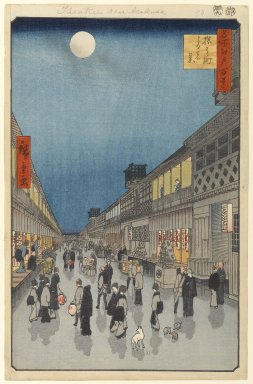
So, for example, I wrote about some of Hiroshige’s One Hundred Famous Views of Edo. I had noticed that several of them seemed to have an older woman and a younger woman walking together, and I decided to write a series of poems that would reflect the kind of mentoring that women of different ages often do for one another. So what follows is a story of women’s lives, told primarily through monologues by the younger woman, the newlywed, and the older woman, her neighbor. There is one about middle age that I still have not gotten around to writing, perhaps because I have been too busy living it, but there are the titles of the ones I have written so far, many of which have been published in the journal Ekphrasis.

The First Pilgrimage

Beneath Immovable Falls, the Neighbor Speaks of Birth

At the Theater District of Saruwaka, the Newlywed Speaks of Death*

The Neighbor Mourns Her Lost Sons

The Newlywed Considers Poetry

The Daughter Contemplates Time and Her Mother

The Mother Takes Her Teenage Daughter to Chiyo’s Pond

Two People, One

The Newlywed at 80 Looks Back

Writing these nine poems taught me about how to do ekphrastic verse (poetry about art) in a way that was not simply describing a picture. (Because of course that is not what Keats does in his “Ode on a Grecian Urn,” which conveys ideas about the momentary nature of love and life in contrast to the hopefully immortal nature of art.) Also, given that those landscapes are about 150 years old, set in a culture very different from the one I am writing from and to, I needed to both explain to my audience what they do not know about the culture, language and geography, preferably in a way that is unobtrusive, but I also had to try to draw universal truths/experiences out in a way that makes us feel like we are all in this human thing together without comodifying another culture.

Oh, and it should be pretty. No sweat.

Anderson continues, “In either case, you will almost certainly learn something about your own imaginative process: your habitual gestures, your extravagances, and your reticences; the places where you give up and the places where you push ahead.”

This understanding of your own writing process and the pushes and pulls going on behind it is, I believe, crucial for all working writers, whether poets, novelists, screenwriters or dissertation writers. The more we understand about what is going on beneath our mental hood, the more we can keep the spark plugs sparking and the engine running smoothly.

Behn, Robin and Chase Twichell, eds. The Practice of Poetry: Writing Exercises from Poets Who Teach. New York: Harper Perennial, 1992.

*Hiroshige. Night View of Saruwaka Machi. 1856. Woodblock Print. Brooklyn Museum, New York.

The Relationship between Emotion and Poetry

So a couple of days ago, a reader gave me this prompt for the blog: Percy Bysshe Shelley (1782 to 1822) wrote, “Poetry is the record of the best and happiest moments of the happiest and best minds.” Discuss!

Okay, Mr. Shelley, here goes. After reflecting on your thought, I respectfully have to disagree. While it may be true that some poetry by some poets comes out of happiness, I do not feel that the majority of my poetry does, and there is a lot of evidence that a lot of creative people, poets among them, write to handle their less positive emotions. In fact Kay Redfield Jamison has written a book about it, Touched with Fire: Manic Depressive Illness and the Artistic Temperament. Given that Jamison is an experienced psychiatrist with bipolar disorder herself, and a gifted writer and researcher, I think that we should listen to what she has to say. (And for those of you who like memoirs, her book, An Unquiet Mind: A Memoir of Moods and Madness, will widen your mind on the struggles of major mental illness. Eloquent and a little scary.)

Rather than beginning with emotions, even the negative ones, I think I more often begin with a phrase or an idea. Looking at the poetry coming in my first two books, one to be published later this year and the other next year, these are some of the patterns I see.

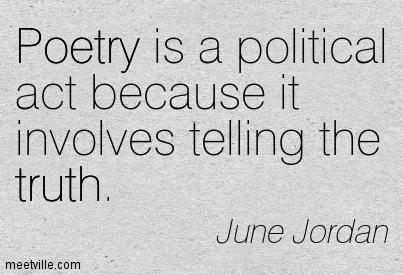
Quotation-June-Jordan-poetry-truth-Meetville-Quotes-196042

Didactic/Political Poetry, Serious or Funny: Because I read a lot of women poets, and poets who came to age during the Civil Rights/Anti War/Feminist Movements, I have never had a problem with political poetry, as long as it is good poetry. Neither singsong nor screeching will bring opponents around to be allies, nor potential allies to be activists. But beauty, good imagery, sometimes humor: those are the things that can turn hearts. So yes, I write about body image, domestic violence and war. Having traveled to both Hiroshima and Nagasaki while I lived in Japan, and having done so as an Obvious (Default) American (blonde and blue), I had to consider the damage my country had done to a people I respected and liked. Such reflections can lead to poetry, but it is unlikely to be happy poetry.

Popular Culture, both Appreciative and Satirical: Again, as a woman, I am constantly aware how the things around me, good and bad, affect my perception of myself and other women, and vice versa. And pop culture plays a huge role in that. So yes, I will write about Ken coming out of the closet, Raggedy Ann getting a heart transplant (from I Love You to Hotchacha) and changing into a different type of gal, Amelia Earhart, Lucy Lawless and other real women being general badasses: to me it is all fair game. I do not know that happiness per se is a part of it.

amelia-earharts-quotes-1

Environmental Poetry: Here I am probably lumping one strand of didactic poetry with the more general subject of nature poetry. Maybe I could keep them separate 20 years ago, but now? We are killing the planet, and I cannot ignore this, even when I am celebrating the beauty, generosity and wildness of Earth and Nature. So even when I am talking about bright yellow daffodils, there are likely to be other, darker colors lurking in the background.

Art/Zen Poetry: This is not the best name, but certainly when I look at a static piece of visual art, often in the quiet of my home or a museum, there is the feeling of movement in the people moving in the landscape, the dynamism of their stories, but also a sense, at the end of the poem I am using to capture that, of completeness and serenity.

zen-issa-o-snail-climb-mount-fuji

Occasional Poetry: Something happens, to me or friends and I write a poem to commemorate it. Once, a friend had a month of big trouble from a roommate, including a restraining order. After the judge threw the case out, and the roommate moved out, my friend had an Exorcism Party, and I wrote a series of poems for that, to create a ritual of getting the bad energy out and laying down the foundation for forgiveness and forgetfulness. Important work, I think, but not particularly happy.

There is undoubtedly more, Mr. Percy, but this is all just off the top of my head. Overall, I would say that happiness is necessary to the healthy person but it is not necessary to the working poet. Hopefully, we can be both.

Thoughts on Assignments as Inspiration

v1p003-foliated-initial-letter-s-q75-422x500

Well, when I arrived home yesterday afternoon, my film studies roommate asked if I would be willing to act in a video he and his friends were making. There would be no words, just actions and facial expressions. I thought, why not? While eventually the film will have copious voice-overs to cover our action, it did remind me of the classic drama/film exercise of the Scene Without Dialogue, which is wicked difficult to write and teaches writers a lot about body language and the unimportance of words, contrary to what most of us believe.

This reminded me of a poem that I wrote as a similar kind of exercise.


On the Difficulty of Avoiding S


There I am, trying to write a quiet

poem, trying to give the reader an idea

of what winter can be: the quiet

that can cover everything, the quilted

feeling of white hovering over, covering

everything. A mood. A moment.

A lifetime. But every word I look at

struggles and fights me. Verbs insist

on using that S, all the nouns bring

friends (not one, but several), and even

silence itself simply refuses to take this

kettle off the stove, and I am, not caught

but stuck, shedding S’s like snakes in spring.

Spilecki, Susan. “On the Difficulty of Avoiding S.” Byline. Oct 2002: 19.

A Turn in the Conversation

convo

Well, I have been rereading my previous posts and I feel a little like you sometimes do at a party when some poor innocent stranger asks what you do and, in your enthusiasm, you talk their ear off until that blessed point (from their point of view) when you suddenly notice the glazed look on their face and you turn the conversation to them (this also allows you to take a bite of your canape or a sip from your drink: enlightened self-interest).

So I know the things I would like to talk about in this blog and I have a list of other things I want to cover eventually, but here is a question for you, O GENTLE READERS: What questions do you have about poetry? What topics make you curious or annoyed? What forms are you interested in? What poets have you read? What kind of poets would you like me to recommend (or warn you about)?

Let me know in the comments section, and I will squeeze in requests between my small, humble, illustrated rants.

Inspiration Tip: Revisiting Old Friends #2

chiyo pond hiroshige

When I want to write and have no ideas for topics, I often turn to visual art, particularly, as I mentioned a while back, Japanese woodblock artists like Hokusai. A few days ago, as I was digging through old journals that I was published in, I found a poem I had forgotten about that was based on one of Hiroshige’s pictures that I could not remember. So I went and dug up my Hiroshige books, couldn’t find it and so, of course, requested some books from the library. And I fell in love again.

Ando Hiroshige (1797-1858) worked part-time for many years as a firefighter at Edo Castle, so those of us who are artists with day jobs shouldn’t feel too alone!

Greatly influenced by Hokusai, whose landscapes were wildly popular, Hiroshige produced Thirty-six Views of Mount Fuji and Fifty-three Stations of the Tokaido Road, but it is the series One Hundred Famous Views of Edo, that he did towards the end of his life, that I like best. (Edo is the old name for Tokyo.) In this series, he used bright colors and vertical orientation, often with some larger piece of what I would normally think of as background in the foreground and large, like a tree branch or a banner, so that you have to look harder to see the people and figure out the story that is playing out. The following poem appeared in Ekphrasis and was nominated for Pushcart Prize XXIII: Best of the Small Presses in 1997.

The Mother Takes Her Teenage Daughter to Chiyo’s Pond

(Hiroshige, “Chiyo’s Pond in Meguro,” 1856)

Little One, we fold too many stories

between silk and our hot skin, we coil

too many expectations in our hair,

pinning them with pointed lacquer hopes.

Long ago, Lady Chiyo made this pond

her final resting place, doused the coals

of love for her husband, killed in battle.

These cherry trees did not grow here back then.

Had their pink branches rustled above her

slow steps, they might have taken her to task,

displayed limbs wrapped in feminine hues,

and whispered, Here we stand in the bright air,

 …

resplendent and giving ourselves despite

the approach of wilting summer and the falling

rains. Look at their smoky reflections

on the pond’s surface, rippling cherry wisdom:

Night comes, soon enough, we disappear.

And you, with your young warrior now gone,

have lost, you think, your future blossoming.

Why not, you ask me, simply float and fade?

Look up! See the water throwing itself

down into its own wet element in steps

clear white and frothing as the very day.

Your aunt, walking behind us, would say, This

 …

water is your starting place. Begin

to wash out expectations, not drown hope.

Your brave one is dead, but another walks

somewhere, teeth flashing, not knowing he waits.

Still water does not suit you. Remember him,

but throw yourself, my daughter, into life.

Spilecki, Susan. “The Mother Takes Her Teenage Daughter to Chiyo’s Pond,” Ekphrasis (1997) 1:1.