Chin Up, Shoulders Back: How Marvel’s Agent Carter Inspired Me to Walk With Confidence 

Wow. This is what we are all trying to do. A great post by a young person learning to make her way in the world. As Peggy and Hayley would say, Know your value.

stephaniepaglia's avatarThe Typed Thought

There’s a lot to be said about the effect ‘strong female characters’* have on female audiences.

Women can inspire, teach, and lead a generation of viewers into a new appreciation of femininity.  When written well, female characters can show girls that they can break boundaries, and do it looking fabulous, if they want to.  They can show us women have flaws, and that’s okay.  Female representations are important because they can do all these things and more; from inspiring girls to become whatever they want, to showing a level of confidence girls can aspire to achieve.

I was reminded of this recently.

For a while now I’ve been interested in the way the gender’s inhabit space.  Sparked by a gender studies class in my first year of university, I became obsessed with observing people and their actions; the way they sat on trains, the way people walk in the city…

View original post 507 more words

How We Do What We Do

HJewxFT0l09gQ73XQ1ZaIXHHc7EwzODGcktRjIauUqTgMpFhOp0j-Or2_Gx_R99CXILRhn6upnxCe_I8eIxCih3Xw23VuryPjhpN6mC6pNM1q2n8Uio

So I had a physical recently and while we were going over the results of my bloodwork, my doctor mentioned how different he found handwriting and typing for production, on the one hand, and writing for publication versus speaking in front of an audience on the other. I agreed on both points. Being over 40, I still do a lot of handwriting, especially prose, until the arthritis in my hand kicks in and I have to stop. It is like my brain is wired to my moving right hand or something. It is a little different with poetry, in part because the amount of output is shorter and also if I suddenly decide to change line lengths or stanza breaks, it is simply easier on a computer to make those little changes without actually having to rewrite the text.

He also asked if I teach my students to read their work out loud. YES. I don’t know why it is but I find I hear problems that I can’t simply see reading quietly, especially clunkers and those small infelicities that get in the way of the brilliance that I frequently feel I could manage more if I could just get the 100% correct word in all the right places.

If You Mix a Selfie with a Foodie

5237-v2

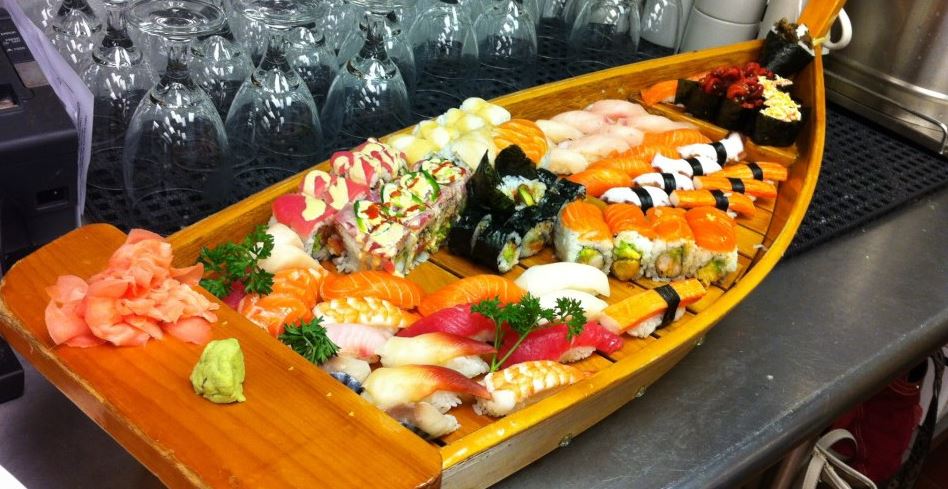
So I follow a bunch of blogs for the humor and some for the pictures of food. The Domestic Man is one that always makes me hungry, as does One Man’s Meat. But lately Art-Colored Glasses pointed out how it’s not always about making your food tastier as much as making it look tastier. I dunno. I have never made a meal that looked so good I just had to photograph it, and I feel like I am missing out. There is a poetry to pretty food, and I always recognize that at sushi restaurants, but normally I am so hungry that I just throw the food on a plate or in a bowl and nom, nom, nom. But maybe I am missing out?

Do You ever Just throw a Poem Out?

Ninja__s_Recycle_by_Chris_Remmey

So during one of those long conversations with my roommate Jack last month he asked me if I ever just throw a poem out. The short answer is: Yep!

The long answer is, well, not without trying to resuscitate it first. Code Blue! Usually there is a line or a phrase or an image that is solidly good and if I take that out and throw everything else away and take that little cutting and see if I can grow it into something larger. And sometimes I just leave the inadequate ones in a folder or drawer and wait a while and see later whether or not I still think they are inadequate or unsalvageable. It is easier now than it was many years ago, but that is true of many things in writing and life.

What You Always Cut

may

So yesterday I was talking to my MIT colleague Jane about–you guessed it–writing! I know you were expecting anything else from me, to wit:

  • My plan to join S.H.I.E.L.D. so I can learn to be a badass from Agent Melinda May
  • My cat, Musashi’s, plan to learn to play pingpong soccer like Pele
  • Our joint plan for world domination

It’s true, I have many plans. But mostly when I am not thinking about such things I am thinking about writing. One of the things I thought about quite a lot a while back was how annoying it is especially when I am writing nonfiction (insert loud sucking noise here), it always seems that there is a huge chunk that I end up having to cut before the end. Many writers I have worked with at MIT also experience this and they always want to know how to avoid what appears to be the wasted time of writing and then cutting this stuff.

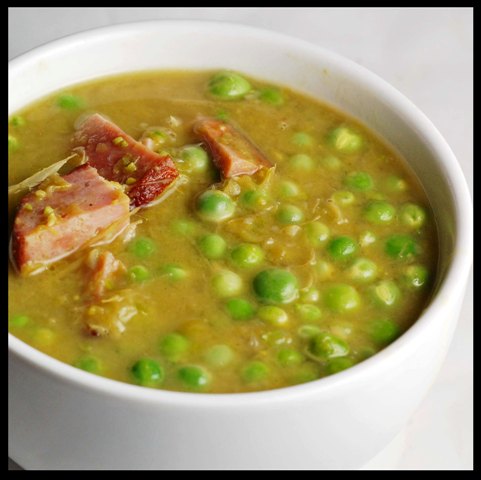
After a great deal of soul searching, cuz yeah, I apparently write at least in part with my soul, don’t know what that’s about, I finally realized that this part of the process, though it sucks in lo these many ways, is probably unavoidable. But then I think about my mom’s pea soup. See, she always puts a hambone in as it’s cooking. It adds a meaty, smoky flavor that I have never been able to replicate when I have made vegetarian pea soup. But when she serves the soup, she takes the hambone out. I figure that those annoying bits in the writing are like the hambone: they get you, the writer, to the ideas you need to keep but then no longer serve your readers and have to get cut.

????????????????????????????????????

That’s my two cents, anyway.

Words that only a writer could love

A brilliant set of fun words from Writer Chick! Which convenient, because I am short on ideas!

writerchick's avatarAnita Rodgers Mystery Writer

words
I’ve always thought that words were the coolest thing. As a kid (and now as an adult) my idea of a good time was reading dictionaries. For me, discovering new words – the weirder the better – was more fun than a box of bunnies.

I suppose that’s not much of a surprise – I don’t know any writer who doesn’t love words. Readers love words too. There’s a certain magic, a certain power in a well placed word – even if most your friends have no idea what you’re talking about when using it. In fact, maybe some of your friends and family have word shamed you – accused you of using a $20,000 word when a $3 word would do, right?

Following is a list of a few of my favorites:

Discombobulate: Don’t you just love the sound of that word? It conjures up pictures of machines deconstructing…

View original post 356 more words

The Myth of the Outline

cocktail_napkin

When I teach writing, I always ask my students, “How many of you hate outlines?” usually more than half of the students raise their hands, and well they should.

Most of us were taught to use outlines in fifth grade or so. We had an assignment and were required to turn in an outline with all the Roman numerals and capital letters and then Arabic numerals and lower-case letters—and if you got down to a fifth level of complexity, Greek letters. The teacher read your outline and gave it a checkmark and handed it back to you, with the assumption (stated or unstated) that your writing would follow that outline literally to the letter.

I point this out to illustrate the underlying assumption that our teachers unwittingly taught us: that it is possible to know what you are going to write before you write it. Depending on what kind of a writer you are, this assumption could appear to be anywhere from obvious to ridiculous. And you would be right.

If you are writing about something very concrete, say, the process of turning on a computer or making an omelet, an outline will serve you well. It does not matter how you say things or whether you tell readers to “Push the on button” or “turn the computer on,” to “crack the egg” or “de-shell the egg,” they are likely to understand and be able to comply. But when you start to write about more abstract or complex ideas, then the words you choose to describe idea A might change the content of idea B, and the more that happens, the further you can get from the ideas mapped out in your outline. Then you have a choice: do you follow the new ideas or follow the outline?

There is no single easy answer to this question. One way to decide is by considering your rhetorical situation. Does your audience expect or demand that you follow an agreed-upon path? Do you know enough about your topic to go in one or the other direction, or will you need to do more research? What will be most useful or interesting for you, the writer?

In the professional academic world, this happens all the time. Journals and conferences ask for a 250 word abstract of a 10-20 page essay you haven’t written yet, and no one admits that an abstract like this is a complete work of fiction, with the writer pretending to be able to predict the future. But that’s what you are being asked to do.

Having said this, I must also point out that outlines can be life-savers, especially when you have either very little or too much time to write. When you have very little time, a short outline will ensure that you cover all the needed points. In college, when we had “blue book” exams and had to answer, say, three essay questions in two hours, I would number the parts of each question and pace myself so that I covered all of them. When you have too much time, in contrast, the same thing applies. A student writing a research paper over the course of a semester is going to have lots of ideas and notes about different research sources as the months pass. An outline is a place to record those ideas so that they don’t disappear.

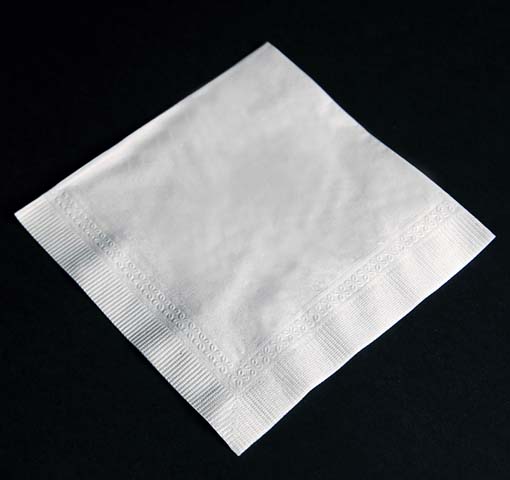
The point in both cases is that the outline is a tool primarily for the use of the writer. It is a working document written, metaphorically, in pencil not with a chisel on stone. It can and should change as your ideas change. Most of my outlines lately are written in two colors of ink on a piece of scrap paper or a cocktail napkin.

Tribal Connections

tribe

Somewhat appropriately for Mother’s Day, I was going back to something Writer Chick wrote in her blog a while back that interested me. She said:

“The idea here is that a writer or otherwise creative entrepreneur type person needs a tribe. A group of people so dedicated to them that they spread the word. Offer support. Pledge undying loyalty to the person, their products and/or their brand. Now aside from family, which I think is actually a tribe of sorts, isn’t this a little bit weird? Even your group of friends could be a tribe, I guess. Or your co-workers. But like total strangers?”

To my mind what she describes here is not a tribe. It is a fanbase. A tribe does not promote you; it supports and protects you, perhaps, or shares your particular brand of weirdness, or loves what you love or speaks a shared language. So Middlebury College alumni, who speak at least two languages and have traveled abroad and let it change them, broaden their minds, etc., are one of my tribes. Whedonistas (lovers of Joss Whedon’s prolific oeuvre) tend to be one of my tribes. Peaceful martial artists are one of my tribes.

For my money, your tribe is not there to promote you like a rock star. They are there to understand you when no one else does, to finish your sentences even when you think you are not communicating clearly, and to love you for your oddities, not despite them. Anyway, that’s what I think. What do you think?

How to Epic the Language

kingtsofsolamniaclanreq

So, as I continue to attempt to write about the Xenaverse, I keep coming across the problem of the different languages I need to show the things I think are happening across the episodes, from the mundane to the comic to the tragic, from the narrative of a story to the voice/character I choose to tell a story or part of it, to finding someway to convey just how epic all of this is. Thinking of such things, I let my fingers do the walking and I found two pretty disparate examples of language that is doing the sort of thing I want, the first from Tennyson (naturally) and the second from the fantasy world of Dragonlance.

Steep is the mountain, but you, you will

help me overcome it,

And stand with my head in the zenith, and

roll my voice from the summit.

Sounding for ever and ever thro’ Earth

and her listening nations,

And mixt with the great sphere-music of

stars and of constellations.

(Tennyson)

Return this man to Huma’s breast.
Beyond the wild, impartial skies.
Grant to him a warrior’s rest.
And set the last spark of his eyes.
Free from the smothering clouds of wars.
Upon the torches of the stars.


Let the last surge of his breath.
Take refuge in the cradling air.
Above the dreams of ravens where.
Only the hawk remembers death.
Then let his shade to Huma rise.
Beyond the wild, impartial skies.

(Funeral song for a Solamnic Knight by Michael Williams; Weiss & Hickman)

Now I just have to figure out how these two samples are doing what they are doing so that I can find a way to do it too. Thoughts?

Tennyson, Alfred Lord. “Parnassus.” The Poetical Works of Tennyson. Boston: Houghton Mifflin, 1974.

Weis, Margaret, and Tracy Hickman. Dragons of Winter Night. Lake Geneva, WI: TSR, 1985.