The First Rule Of Hillary Club — Wine and Cheese (Doodles)

A few words from our pal Dina Honour. I am also a proud member of the group she describes, which at last look had 151,755 members, after beginning only a week from yesterday.

Recently I was added to a secret group. It’s a group of women (and men) who are #WithHer. And by with her, I mean with Hillary. But even more than that, they are with every HER that is part of the group. Members run the gamut between long time Hillary supporters (raising hand) to those who […]

via The First Rule Of Hillary Club — Wine and Cheese (Doodles)

Writing Prompt #1: Challenge Accepted

14433194_914906161987407_1656441252957923289_n

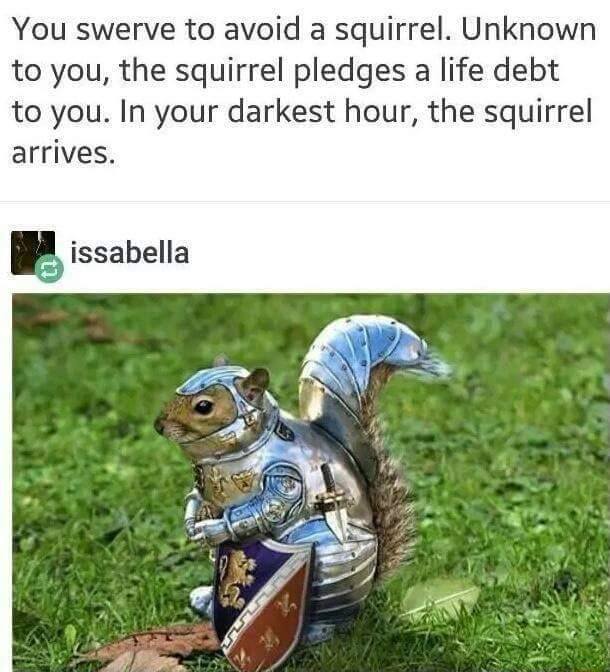
The Legend of Sir Chester Nutt

(or, Thank God for Karma, She’s Less of a Bitch than We Thought)


One day in your car for a whirl,

You swerved to avoid a squirrel.

He swore on his life

That he’d make it right,

Then he went off to train with the girls.


Xena taught him to use a sword,

And Wonder Woman her golden cord.

And he trained his might

To become overnight

The squirrel who quite loudly roared.


Then one night you are held up with knives

And you rightfully fear for your life.

You squirm and you struggle

With this frightful big muggle

And then suddenly, that squirrel arrives.


He’s a great sight for you where you cower

Defeating your foe with great power!

With a whack and a thrust,

He’s the hero to trust,

Defending you in your dark hour.

Auden Was Right: Orlando 2016

It feels strange today to read people’s Facebook posts about pizza and soccer, when I am reeling from the second largest massacre in US history (Wounded Knee was the first, folks). But then I was reminded of W.H. Auden’s poem about Breughel’s Icarus, both of which I reproduce here. Be kind to each other, children, and activate for control of automatic weapons.

Icarus

Musee des Beaux Arts

W.H. Auden


About suffering they were never wrong,
The old Masters: how well they understood
Its human position: how it takes place
While someone else is eating or opening a window or just walking dully along;
How, when the aged are reverently, passionately waiting
For the miraculous birth, there always must be
Children who did not specially want it to happen, skating
On a pond at the edge of the wood:
They never forgot
That even the dreadful martyrdom must run its course
Anyhow in a corner, some untidy spot
Where the dogs go on with their doggy life and the torturer’s horse
Scratches its innocent behind on a tree.


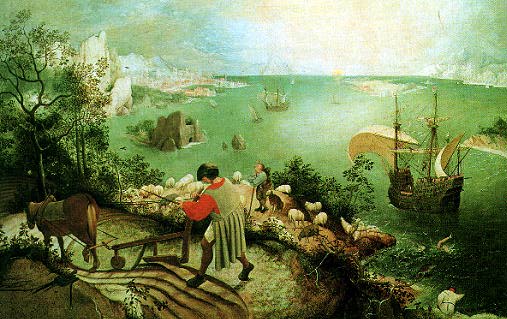
In Breughel’s Icarus, for instance: how everything turns away
Quite leisurely from the disaster; the ploughman may
Have heard the splash, the forsaken cry,
But for him it was not an important failure; the sun shone
As it had to on the white legs disappearing into the green
Water, and the expensive delicate ship that must have seen
Something amazing, a boy falling out of the sky,
Had somewhere to get to and sailed calmly on.

Blue Heart

2016-05-04-aos-21

“The heart is blue/it aches for its own fuel…” –Jeremy Nathan Marks


Blue as the sky on a day when the rain has run

Its course. Blue as the water beneath ice, cold and waiting

For spring to warm and melt. Blue as the jaybird

Perched among the lilacs fooling no one. We think


Of fuel as a motive force, a thing for dead machines

To use to rev and stutter to life. We think of fuel

As the gas in the stove, not the blue flame that warms

Our food, turns spices into vehicles of heat. We think


Of blue as a thing of ice and need, not the bringer of sun

And day. But the heart itself knows blue in all its shades,

From the jeans at the foot of the bed to the hydrangea

And morning glory out the window, from the dark distant


Mountains up to the pale sky framing clouds. Sorrow.

Loneliness. A loss for words. A lost friend. A lost love.

In one direction, purple like thistle in highland heather,

Reminder of battles lost and won. In the other, green


Like the spring’s first blades of grass, poking through

Snow, asserting the incipient end of winter, for now.

For now I will cling to blue as to peacock feathers, wild

Elaborate abundance, souvenir of past good fortune,


Blue as my eyes searching every other eye for a sign:

Is spring coming? Will the sun return to me? Will there be

Warm breezes, bees, robins, picnics, new love?

Are you the one to bring these things into being?


Image from Agents of SHIELD.

Psycho Sunday: Badass Women in Combat Gear

bidueller

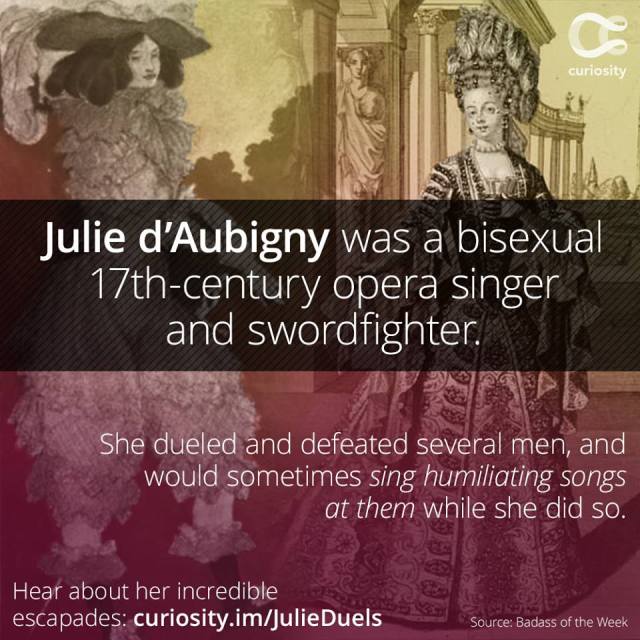
Julie d’Aubigny, AKA La Maupin, was an expert duelist and opera singer who garnered as much fame from her scandalous affairs as she did from her performances. She went on the run from the law with an assistant fencing master, posed as postulant to break a female lover out of a convent (using the dead body of a nun as a prop in the scheme), and once dueled three men in a row who challenged her after she kissed a woman at a ball. (She defeated, and perhaps killed, all three of them.) She would beat any man who threatened her or her fellow opera stars, and apparently had extraordinary powers of memory, as she could memorize an opera script in rapid order.

I am thinking this would be a good movie, if Scarlett Johansson could sing or Idina Menzel could do her own stunts…

Sources:
Clayton, Ellen Creathorne.  Queens of Song.  Smith, Elder & Co., 1863.
Cohen, Richard.  By the Sword.  Random House, 2003.
Gauthier, Theophile.  Mademoiselle de Maupin.  Trans. Helen Constantine. Penguin, 2006.
The Sketch Book of Character.  E.L. Carey, 1835

Narratives for Survival #3

hangg_heemskerck

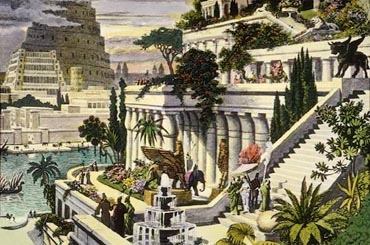
The first line of this poem comes from a poem by Trumbull Stickney. It got stuck in my head the other day, and since I was working on an oratorio or possibly musical about the Hanging Gardens allegedly built by Nebuchadnezzar, I thought I would play around with the ideas some more, and because I am a glutton for punishment, use blank verse (unrhymed iambic pentameter) to do it. If you are going to go classical antiquities, after all, go all the way.


“Be still. The Hanging Gardens were a dream,”

Just as Eden was a paradise

Where animals could frolic, never die,

And trees provided all the fruit for all

The hungry mouths who had not yet learned pain.

Such dreams are necessary for our hearts

To learn the blueprint of a truer world.


When Babylon, the center of the world,

Was young and shining in the desert sun,

The emperor, it’s said, once came upon

His consort, Amytis, just lingering

Alone and staring eastward toward her home

In far-off Persia–fair, beloved, and green–

And in that moment knew what pity was.


A moment only. (Though that moment was

Enshrined in history. Three thousand years

Have passed and carried with them this one tale,

The birthing of a wonder of the world.

We know such men as emperors do not

Amass empires in order to appease

The heartsick longings of a simple girl,


However regal her paternal price

In dowered lands.) A moment later, he

Envisioned legacy, his glorious name

Forever linked to this vast garden, tiered,

Wild, green and flower-blazoned (built by slaves

In exile, sons of Israel of old),

And fountains blossoming to ward off heat.


Herodotus recorded measurements–

How high the walls, how tall the topmost tree–

But archaeologists, who deal in truth,

The truth that lies in layers of dirt on dirt,

Tell us Herodotus did not see truth

The way we do, that history back then

Was story first and only afterward


A thing of facts. The poet was not wrong:

The Hanging Gardens were a dream. It’s true.

But then, what does it mean that this green dream

Has filled the sleeping minds of women, men,

A thousand generations sharing these

Wild, verdant tendrils of this single dream?

Through this, a need is answered, so be still.

Mary Chapin Carpenter, On the Other Hand, Is Right on the Money


How do we write poetry that seizes life with music? Denise Levertov says, “I think it’s like this: first there must be an experience, a sequence or constellation of perceptions of sufficient interest, felt by the poet intensely enough to demand of him [sic] their equivalence in worlds: he is brought to speech” (8). A few years back, I went to a Mary Chapin Carpenter concert in Boston and before she sang “Almost Home,” she described going through that drawer everyone has in their kitchen, the thingamajig drawer as my family refers to it, and feeling just amazed at all the weird stuff she had accumulated. That experience brought her to write this song. I include a link for your listening pleasure. It’s one of my favorite songs, halfway between folk reflection and anthem.

Almost Home                        by Mary Chapin Carpenter

I saw my life this morning
Lying at the bottom of a drawer
All this stuff I’m saving
God knows what this junk is for

And whatever I believed in
This is all I have to show
What the hell were all reasons
For holding on for such dear life
Here’s where I let go

I’m not running, I’m not hiding, I’m not reaching
I’m just resting in the arms of the great wide open
Gonna pull my soul in and I’m almost home

I saw you this morning
You were staring back at me
From an ancient photograph
Stuck between some letters and some keys

I was lost just for a moment
In the ache of old goodbyes
Sometimes all that we can know is
There’s no such thing as no regrets
But baby it’s all right

I’m not running, I’m not hiding, I’m not reaching
I’m just resting in the arms of the great wide open
Gonna pull my soul in and I’m almost home

But there’s no such thing as no regrets and baby it’s all right
I’m not running, I’m not hiding, I’m not reaching
I’m just resting in the arms of the great wide open
Gonna pull my soul in and I’m almost home

I’m not running now, I’m not hiding out, I’m not reaching here
I’m just resting in the arms of the great wide open
Gonna pull my soul in and I’m almost home

And I’m almost home


Levertov, Denise. The Poet in the World. New York: New Directions, 1973.

Some Internal Rhyme for You Heathens

Don’t take it personally, Gentle Readers. A good friend of mine refers to both her two large cats and her college students as the “little beasts.” It’s a term of endearment. Enjoy the poem.

Jack+Beanstalk-2-300dpi

Nightview from the Beanstalk, with Moon


I.

Up here, night clouds move like an ocean breaking

against the beanstalk, rolling into charcoal

horizonless shore as if racing to discover new worlds,

ferocious and green. But there are no new worlds

left to discover. There is no green; only heavy midnight

blue indistinguishable from eternity. Without moonlight,

this foliage is primal, reaching out. Jack says,

Navigate by touch as salmon do, heaving themselves straight

upriver, up waterfalls, up to invisible sky. It is easy to see,

here in the dark, how explorers of old could

convince themselves of destiny, cousin to destination,

of a magnet star calling to the magnet in the breast.

Quest is kin to conquest. Scaling these leaves, helmed

ghosts cry out in seven romance languages, Devil

take the hindmost! and flail their way into the surf

of sinuous vines. Like them, I navigate by clutching.

The shadows between my fingers chime

in recognition. No new worlds. No, now

we colonize each other’s bodies, plant flags

between each other’s eyes. Look at Jack. Unlike most

men, who brag of the last woman laid, he brags

of the last giant killed, lectures long into evening

how the storytellers got it wrong: he never chopped down

the beanstalk, he merely greased its leaves. Effective

enough. I stall his rehearsed glory, resume our dark climb.

Another hour, Jack calls back to me. Until the top? No,

until the moon. He laughs at the way it sounds, as if light

were a place one could climb to, or gloom were a path

to a door. The clouds roll in with a hush like high tide,

leaving their moisture to lick my face, muting my voice.

In the dark, every whisper is loud, every motion

endless. The tangled boughs bend and sway beneath me

like so much black lace. I pry my fingers open, pick

my way blindly upward, always upward, among vines

slicked by cloud, scrambled by breeze. Jack murmurs,

We could drown in all this wet air, these beans

the hue of stone weighing us down. I am glad I can’t see

the ground, justified in asking to climb here at night.

The last boundary, Jack says, lies above us,

in cumulus cliffs of lapis and glacial white

bigger than anybody’s fear of falling. Close your eyes.

What does verdancy mean now? What does height

signify? If beans tremble, but the night wraps

so close you cannot see them, do they fear?

Jack’s right about the beans. Their cool grey

leather strands hang like bits of bone: malleable

and waiting to be fleshed and shoved toward

birth. A terrifying change, that fall into chill

unknown, caught by too many dry hands, ferried into

this netherworld new life of pangs and urges,

blown into a crêche filled with straw and destiny–

that word again, whose syllables encompass end

together with beginning, doom with estimated

time of arrival. If I mapped this altitude, with its

webbed stems and stone lessons, if I charted these blue

fathoms where owls glide, curious as dolphins,

along the prow of this beanstalk, could I soon navigate

through cloudwracked straits to Jack, to a hidden country,

guided by owls as dolphins once were known to guide

ships past reefs, stars past the dark side of the moon?


II.

The white tiger moon crouches, tensed, then lacerates

the clouds and peels them back to reveal a new

beanstalk: both compass rose for a map, and waterfall

of black marble illuminated by blossoms like perfumed

gloves, phosphorescent and casting their own light

on my face, on Jack’s, on village and valley below.

The beanstalk spills from this incalculable height, spills in

ribbons of black ink that pool and trickle into boundaries,

lakes and vales, mountains and rolling roads, the soft

spread of forest–all drawn to scale, all shining like velvet

under moonlight. Soft laughter trails up to us

from the satisfied magician and his dry milkcow, no more

than stick figures in the corner below, near thatched

cottages strangling among the beanstalk’s tangled roots.

Perspective lies. From a distance, waterfalls appear

to pour upward the way the eye climbs from bottom

to shadowy top in the Chinese painting of this night.

From where the magician stands, I am not following

but chasing Jack, tracing his path through a garden

of moonbrightened blooms, up one side of this scroll.

The tiger moon rolls down the hill of clouds, gathering

white, only her eyes still bronze and reflecting our ascent,

her whiskers hoarding starlight, her musty breath

foregoing Confucian Analects to whisper, “Catch him,

catch him,” in the cold breeze. Daylight women have

chased Jack on land, to dig for his gold and fawn

over his beans in the hollows of tawny dunes. I follow

without such haste. Like him, I am an entrepreneur

of thinner atmospheres. I lure him as altitude does,

sew silver behind the clouds, knowing I will reap it again

before dawn, before its white heat scorches our hands to

flinders, tempts us to turn back from this endurance

climb in a vertical jungle gone wild, whose malachite

webs, only dimly seen, stir me until I could weep

from unspent passion, from the feminine ascendant and

racing in pale light. Nightingale song fills the leaves, says Jack.

But I am the silent roaring gale of this night, and my

fireflies flicker and cicadas chirr like the finger cymbals of

a dancer whose limbs twine and untwine as this

beanstalk does around Jack, even in the slightest of winds.


Spilecki, Susan. “Nightview from the Beanstalk,” Sow’s Ear Poetry Review 8 (Fall 1998): 3.

Robert Frost (Even If We Read Him Right) Was Wrong

Unknown

How many generations of high school graduates have been misled into thinking that it’s always good to do things the hard way because Robert Frost is popular and many valedictorians and civic leaders have poor close-reading skills?

If we read Frost’s “The Road Not Taken” correctly, he is saying that neither of the two paths would have made a difference because the paths were functionally the same, but the speaker will claim to have been a pioneer when he is old and bragging to his grandchildren in a rocking chair on the porch, who will believe him, the little nitwits, because he will have so much darn gravitas, so who’s going to say he’s wrong?


The Road Not Taken                        by Robert Frost


Two roads diverged in a yellow wood,

And sorry I could not travel both

And be one traveler, long I stood

And looked down one as far as I could

To where it bent in the undergrowth;


Then took the other, as just as fair,

And having perhaps the better claim,

Because it was grassy and wanted wear;

Though as for that the passing there

Had worn them really about the same,


And both that morning equally lay

In leaves no step had trodden black.

Oh, I kept the first for another day!

Yet knowing how way leads on to way,

I doubted if I should ever come back.


I shall be telling this with a sigh

Somewhere ages and ages hence:

Two roads diverged in a wood, and I—

I took the one less traveled by,

And that has made all the difference.


But are two paths ever the same? And if they are, are we ever the same walking down them? How much is the ground we are walking on and how much the weather and the clothes we chose to wear? How much the terrain itself and how much our choice of footwear? It occurs to me that this could be leading us into philosophy—gaah!—and it might be safest for us all if I just put my head down until the feeling goes away.

But I think it’s never only two roads, the right one and the wrong one. It’s about the million roads, all of them well trodden, and we simply have to figure out how to choose the one most likely to lead us home. Which of course necessitates how the hell to figure out what we mean by “home.” And it’s about how, when we look back, we reinterpret the past to make it look more coherent, more intentional, more like we planned the good outcomes. Yes, I meant to do that! (Suuuure you did…)