Sticking the (Stylized) Landing

the landing

So the other day I wrote about my poetry midwife, Pamela, and how she has helped me, particularly in learning to pay close attention to the endings of my poems. I remember being at the Bread Loaf Writer’s Conference way back in August 1988, back when I was just a Writer Niblet, the poet Nancy Willard said, “Poetry is like bread. You can smell when it is done.” That may very well be true. But that is also assuming that you mixed the dough correctly and that all you need to do is add heat for a specified amount of time. Sometimes the ending comes out messed up because you messed up the start, so you can’t simply do a closure-style ending like a circle. Or you messed up the middle, which I think of as the Airplane Mistake, because if an airplane pilot is only one degree south of where she should be on her trip from Boston to Oregon, she may well end up in Los Angeles or worse.

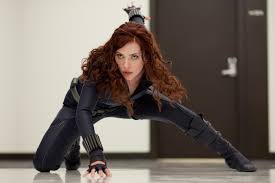
I think of this in particular because I have been watching Agents of SHIELD lately and awaiting Joss Whedon’s Avengers: Age of Ultron. One thing I have noticed about the Marvel Cinematic Universe is how stylized a lot of the action is, in particular the dramatic landings. The person you see this most clearly with is Scarlet Johansen’s Black Widow, but you also sometimes see Agent May do this too.

may landing

The Urban Dictionary defines sticking the landing as meaning to “execute flawlessly from the beginning through the end. Follow through.” (“Stick”). The phrase originates from gymnastics. “When a gymnast lands a tumbling pass, vault, or dismount without moving his/her feet, it is called a stuck landing. The aim of every gymnast is to stick–if the gymnast moves his/her feet at all it is a deduction” (Van Deusen). More generally, it has come to mean “to finish an athletic, gymnastic, or other sports performance with an ideal pose or stance, especially after a jump or leap; (hence, also outside of sports) to do or finish well; to win” (Barrett).

I like the idea of an ending that is stuck solid to its foundation, unwavering. I also think that finishing well should not by necessity entail winning. Think about the 35,000 people running the Boston Marathon last month. Four won and 34,996 did not, but I imagine the goal for all but 100 was simply to finish well.

For a poem, this may mean you have an ending that quivers in the air in front of you shimmering with beauty. That is, often, the goal. But more often I think it is that you learned something from writing the poem and perhaps your readers have learned something from reading it.

Barrett, Grant. “Stick the Landing.” A Way With Words. 3 Feb. 2006. Web. 1 May 2015.

“Stick the Landing.” Urban Dictionary.com 21 Dec. 2006. Web. 1 May 2015.

Van Deusen, Amy. “Stuck Landing.” About.com. 2015. Web. 1 May 2015.

Velcro, Cottonballs, Muse

EMC over Boston

Okay, so I know I have written before about my yoga teacher, Erica Magro Cahill, and how she says things that get stuck in my mind like a cotton ball clinging to Velcro, which then leads to a poem. Or ten. Usually about yoga, because, duh, yoga teacher. But not always. One turned out to be about Odysseus and two are meta, being about the ways in which the things she says end up with me writing and/or changing. Here is the beginning of a sestina; note the end words, which come from something she said back in December:

In the crash and tumult of the year’s end, hearing the heart’s

Voice is difficult, especially if it is a shy, halting voice

Unused to asserting itself. So many other things are louder:

Car engines, sirens, the mind insisting it’s more important than

Everything else. As in an echo chamber reverberating, the mind’s

Insidious messages bounce back and forth against the bony walls

Of the skull.

And here is part of the Odyssey poem based on her phrase: “The intimacy of a beating heart inside your beautiful skin…” The phrase “muscle hugging to bone” also comes from her.

The percussion of the human heart, its calm

And agitation, how it pushes blood through

The body, emotions through the mind. Just as

The x-ray bypassed skin to show muscle hugging

Bone, to introduce me to my trembling heart,

So too, sometimes, do the songs we sing

Bypass the outer shell, however beautiful,

To speak quiet comfort to the fearful, feral

Cornered self within another body contained

In skin, the reverse of Siren song.

And this, which I wrote last week:

Because of You, I Carry the Sky Everywhere with Me

for EMC

your phrases like cirrus clouds

belie the true weather

grey, it may be, and

cold or raw or wet

and roaring

but inside my head the weather is

clear, the sky robin’s egg

blue, traced with fragile willow

buds and yellow and

clean, like early summer

almost a year I have listened to

your wisdom, your poetry

scudding across my wide blue

mind, chased by gulls

who also desire

outside, everything vibrates, frantic,

tidal: few sail through serene,

sails up, prow unwavering

few speak of these things

clearly, or at all

I have tried to learn to speak of that

particular wind that drives me

how to sail through

the roar, not

your way, but mine

to offer the wisdom and passion

I have for this one

thing: the words

and the heart facing

sky, our only ship’s compass

Or Maybe Growing a Poem

cecropia moth to send

So I know that the language I often use for this blog to talk about writing is architectural for the most part, but I have not always thought of it this way. On the one hand, I see students and other writers who see a piece of writing, a paragraph, say, as a brick wall that cannot be changed without actually breaking it apart and making a mess and then getting new bricks and more mortar, and it all seems to be much more work than they are willing to do. And I tell them, well, okay, if it must be a wall, make it out of Legos not bricks, because then you can change the size and color and try to do it a whole bunch of different ways quickly and easily and with some sense of fun.

And they often respond, “Huh.”

I do tend to think of words as small varicolored toys of varying sizes and infinite complexity, but that is more often when I feel that either I am in control of a piece of writing or, at the very least, or perhaps best, the writing is in control of the writing and I just have to let it come through my hands.

Alas, as we know, most writing doesn’t work that way, even for a bloody productive writer like me (last count: 48 days, 79 poems, 100 pages). Sometimes a piece of writing, or a part of it, kicks your butt for days, weeks, even months. In this case, where I can’t see a way in to simply take out pieces and replace the working parts, I start to think of the poem as being more organic, something that needs to grow, without me doing the growing. All I can do is water and weed and wait.

That is when it helps to have a writing buddy to kick back for you, or if you are very fortunate, a midwife. For years, my Poetry Midwife, Pamela read my poems when I was stalled out. Usually her answer to my dilemma, though phrased much more diplomatically and kindly, was basically, “The ending sucks.” Over and over, I just couldn’t end the thing right. Either I was overwriting or underwriting (which sounds like I was selling insurance) or just not, well, right-writing.

The beauty, however, of having the same problem over and over is that once you have finally figured out how to fix it, you have practically no problems left, until the next one comes along. So I got to the point where, when I was stuck on a poem and ready to pass it to her for help, I said to myself, “Self, I bet you she is going to say (nicely) that the ending sucks. So fix the ending first, self, before you send it to her.”

And somewhat magically that left her saying things like, “I really like this one.” Period. Success! And in my gratitude for all she did for me, I wrote her the following poem.

The Midwife’s Poem

for Pamela

Rub your hand across this mound

of words. Do they kick? Does the rhythm

move your hand? How fast does that

counter-rhythm heartbeat flutter behind?

Does it fly in time? What kind of moth

child trembles under your hand, under

the skin of the poem? Is it drawn to the heat

of your palm? Does it hear yet another counter-

rhythm, the heartbeat that you bring

to your silent, mulled questioning?

Every few weeks, I come to you for this

questioning, this touch you have for rhythms

and the reasons behind them. Without you, yes,

I might gestate properly, but anxiety, the ache

in the night, might slow this mothchild’s growth

in me. You have a touch, softer than feathers

on a warm breeze, for the unborn delicate grey

wings, for the dark hot blood pumping, pumping

into each phrase, each stanza. You deliver

them, living, into the pale papery light.

Robert Okaji Is the Bomb

okaji

So I just bought the pdf version of Robert Okaji’s chapbook of poetry, If Your Matter Could Reform, and as my southern friends would say, y’all should too. Look at the elegant sparseness of his verses, as in this example from “Wind”:

that it moves, that it blends,

that it withdraws and returns without

remorse, without forethought, that it

increases, expands, subtracts,

Or the important comment on our current racist moment in America from “If We Burn”:

change I can’t breathe from epitaph

to actuated plea for help?

Are words ever enough?

Can we stack our indifference and fear

into a mile-high pyre, and torching it

watch them rise to nothingness,

Or the quiet confidence that sets up an image and lets it do what it needs to, as in the end of “Ashes”:

Today the rain spells forgive

and every idea becomes form, every shadow a symptom,

each gesture a word, a naming in silence.

Scatter me in air I’ve never breathed.

I mean, fuck, people! I have seen the rain spell forgive, a very long time ago, to be sure, but I have seen it. And he just lays out this beautiful little impossible thing for us, a gift like a tiny origami crane in your open hand and walks quietly away.

The way I look at it, a man who can say, “In the marrowbone of night,/your song parts the fog” deserves your two or six bucks (pdf/paper). And as you know by now, that is a professional opinion.

In Which I Learn a Newish Thing, Possibly Again

Coiled_Wire_or_Machined_Springs_Making_the_Right_Choice-Mechanisms_Systems_and_Devices-hero

So I was over at interestingliterature.com reading about Gerard Manley Hopkins, the great Jesuit poet, and one of the interesting facts about him that was mentioned was this rhythm he invented. According to Encyclopedia Brittanica:

Sprung rhythm, an irregular system of prosody developed by the 19th-century English poet Gerard Manley Hopkins. It is based on the number of stressed syllables in a line and permits an indeterminate number of unstressed syllables. In sprung rhythm, a foot may be composed of from one to four syllables. (In regular English metres, a foot consists of two or three syllables.) Because stressed syllables often occur sequentially in this patterning rather than in alternation with unstressed syllables, the rhythm is said to be “sprung.” Hopkins claimed to be only the theoretician, not the inventor, of sprung rhythm. He saw it as the rhythm of common English speech and the basis of such early English poems as Langland’s Piers Plowman and nursery rhymes such as: Ding dong, bell,/Pussys in the well.

Sprung rhythm is a bridge between regular metre and free verse. An example of Hopkins’ use of it, from “Spring and fall to a Young Child,” is: Margaret are you grieving/Over Goldengrove unleaving?

I think this is what I have been doing without knowing it when I say that I am using a loose version of iambic pentameter in the poetry project I have been working on. Gosh, and here I thought I had invented something. Who knew?

Sprung Rhythm. Encyclopedia Brittanica. 2015. Web. 20 April 2015.

The Object is the Thing. No, Literally.

large-navajo-wedding-vase-signed-by-ella-morgan

Fifteen years ago, I wrote a poem to commemorate the wedding of two friends. I based it on the traditional Navajo wedding vase, and tried to use internal rhyme to give it movement, and to say All The Things I think about marriage, have witnessed quite a few over the years. The irony: the poem first appeared in To Love One Another, a book of poetry about marriage by an assortment of poets, of whom I am probably the only one who had never been married. I also read this a few years back at the wedding of another set of friends, which was a great compliment and honor. I feel like it has held up well over the years.

Now You Have Become One

Pitcher Pouring out Water from Two Sides

reflection on a Navajo wedding vase

for Andrew and Cathy

A difficult trick, requiring cooperation

and grace, like a three-legged race

where you hop and kick your way

to the finish line. Such a pitcher is full

of contradiction. No more can you

say of the water, “This is mine,” or

of the pitcher, “I.” Now you learn

to say “we,” take turns pouring out

on the dry ground around you—

for desert will always surround you,

awaiting clean water to awaken the green,

the flowering red and blue, from the baking,

cracked ground. Now you will practice

togetherness mopping floors and grouting

tile, opening doors in yourselves and leaving

them open, like the spouting lip of this

pitcher on each side. Now, man and bride,

woman and groom, you will cleave

like clay braided together, reaching around

to embrace. But first, you will need

to leave room in your day to pour out

over one another’s faces, to quench each

other’s thirst. And in your trade-off

for closeness, you must give up those

crabby mornings, easy freedoms, blithe

old habits. Sometimes you must give away

what you most treasure. You must give

water in due season. You must give to

each other, the world, in equal measures.

“Now You Have Become One Pitcher Pouring out Water from Two Sides” first appeared in To Love One Another, published by Grayson Books (Ginny Lowe Connors, ed.).

The Magic of Emergent Creativity

here_be_dragons

Here I go again, letting my writing get in the way of my blogging about writing. Luckily, when I am in a big project like this, I also sit on my own shoulder to watch myself writing, and I learn stuff. What I have learned this week is not exactly new to me, but rather something I have known for a while but have not had the language for. There is a sense of trust that creative writers need to have to be really productive. We must trust that the writing wants to happen, that the story is out there somewhere trying to enter the world, and when we get really, really lucky, it finds us.

J.R.R. Tolkien called this process Subcreation, and talks about it with both fiction and nonfiction in his book Tree and Leaf. But I think today I would rather call it the emergent miracle of creativity or the magic of emergent creativity. In science, emergence is defined as characteristics of a material, say, that are not characteristics of the material’s cells or atoms. The human mind is an emergent characteristic of the human brain. Wetness, reflectivity, and splash are emergent qualities of water that have no clear source in either hydrogen or oxygen atoms. When we are creative, something happens that we do not really ever have complete control over. I throw words on a page, and sometimes they turn into clear or turgid prose and sometimes they turn into a failed poem or a poem of such beauty I reduce myself to tears. Yes, some of that is learned, some of that is my unique imagination applied to a particular subject. Sometimes it can come down to a word I came across the day before or an image from a dream, those tiny gifts the universe gives us, saying, “Take this. Make me more.”

But this thing we learn to trust is what Stephen Buhner, in his book Ensouling Language, calls the golden thread that we find and pick up and follow to the end. I like this metaphor because of the way it has mythic resonance, reminding us of Theseus getting through the labyrinth with his ball of thread, a story about order overcoming chaos, which is, after all, one of the duties of art.

I saw this today during my office hours, which I spent writing a poem about Love and the Epic Hero, which not surprisingly turned out to be very long, about 136 lines. After struggling with a piece at what I originally thought was the end, I finally realized that a different set of pieces in the middle Really Needed to be the ending, because of the pair of images those pieces ended with. One person ends the stanza saying:

I long for a map,

Even if much of it is blank and claiming

“Here be dragons.” At least then I would have

A chance to navigate this strange terrain.

Then the other speaker ends the next stanza with:

This is the territory of dragons. I dare not

Treat it instead as some kind of treasure map.

I love taking an image and using it in two different ways like that, and I did not see when I wrote the first image how I could use it until I wrote the next stanza, but I have learned to trust that I will know what needs to be done.

And now, for you, a small dose of Sandra Boynton.

Boynton

How Line Lengths and Breaks Might Convey Voice

tumblr_lxdwjjKKUr1r9gjy7o1_500

So the other day, I went back to a poem I had started about Callisto, Xena’s arch-nemesis. This one is about episode 2.7 Intimate Stranger, where Xena and Callisto get their bodies switched by one of the gods, primarily because Lucy Lawless had broken her pelvic bones in a fall from a horse she was practicing stunts on for the Tonight Show. It was a great choice, not only because it is always fun to see characters we know switch (Enver Gjokaj is a genius at this; check out the Joss Whedon series Dollhouse), but because it pointed out how similar these two women are. With the right (or wrong, really) set of circumstances, they actually could have been each other: Callisto the warlord who set a village afire that would turn the orphan Xena into a psychopath. We like them better as they are, because let’s face it, Callisto is the BDVE (Best Damn Villain Ever), with her creepy line delivery and spidery physicality.

So anyway, I wrote version 1.0 below and did not think much about it. But then I was looking at the previous poem I wrote about Callisto, with the first two lines:

“As children we come to experiences bone to bone,

with no kind skin to muffle the uproar. Imagine:”

I realized that the new poem was at least a full inch thinner, 2 1/2 inches, than the old one, which has line lengths of 3 1/2 inches. Well, the thing is, at 5’ 8” and 120 pounds, one of the first things you notice about Hudson Leick is how thin she is, an impression fostered by her costume being even more revealing than Xena’s, especially at her midsection.

Know Your Enemy, Know Yourself: X. Reflects on C., v.1.0

In the night season, I dream memories

Misremembered, death in the form of

My perfect nemesis, a woman born

In the fire that killed her family. She is

Me. And I did create her as she claims,

Though it was not my hand that lit

The spark that tore her world away.

She revels in her pain. I did that

Once, as she does, and spread it

Far and wide: if I suffer, so too must

Everyone. I will wring out the world

Like a map weeping blood. I am

Her now, our minds and bodies

Switched by the gods in their infinite

Unfairness. My enemy is me. I look

In the river and the body that I know

Does not look back. She promised

Once to take away everything

I loved, my friends, family, horse,

Reputation, everything it took me

So many years to win back.

Now in her body I must race

Against time, again, to stop her.

Both of us suffer from my monumental

Guilt. Like a crashing wave, once

It starts, there is no stopping it.

So then I thought about a poem I wrote many years ago titled Cancer Barbie, using the image of a Barbie whose hair as been loved off, a là The Velveteen Rabbit, to talk about cancer as I have seen friends experience it. Given that the image is Barbie, the shape of the poem really matters, so I tried to make a poem about Barbie look like Barbie, to wit:

Cancer Barbie

for Jackie, Anita, Judy

Some

little girl

has loved

this doll

completely, loved her

long blonde hair

right off

just the

way these

chemicals

coursing

through

your body

love you down

to the very follicle

love you right

all

the

way

down

to

your

roots.

 …

At first, I thought I could do a similar thing by centering what I have here as version 2.0, but it ended up looking like, depending on how generous you want to be, a stubby gingerbread man or something my cat coughed up. So forget the centering. What the erratic breaks and short line lengths do is to make the voice of the speaker, in this case Xena inside Callisto’s body, sound more erratic. I can’t decide if the body you are in should decide your voice or if it is only the mind. In that case, I should go with Version 1.0 for this, but if I find a way to write a poem using Callisto’s voice, regardless of which body she is in, I will totally use this style. So let me know: which do you prefer, version 1.0 or 2.0 and why?

Know Your Enemy, Know Yourself: X. Reflects on C., v.2.0

In the night season, I dream

memories misremembered,

death in the form of

my perfect nemesis, a woman

born in the fire

that killed her family. She is

me. And I did create her

as she claims, though it was not

my hand that lit the spark

that tore her world away.

She revels in her pain. I did that

once, as she does,

and spread it far

and wide: if I suffer, so too

must everyone.

I will wring out the world

like a map weeping blood.

I am her now, our minds

and bodies switched by the gods

in their infinite

unfairness. My enemy is me.

I look in the river and the body

that I know does not look back.

She promised once to take away

everything I loved,

my friends, family, horse,

reputation, everything it took me

so many years to win back.

Now in her body I must race

against time, again,

to stop her. Both of us suffer

from my monumental

guilt. Like a crashing wave,

once it starts, there

is no stopping it.

 …

Spilecki, Susan.   “Cancer Barbie,” Midwest Poetry Review. Summer 2002.

Epigrams, War, and Madness

krj

You know how in wintertime, your hands grow rough, so that, when you go to pick something up, a sweater, say, it snags and forces you to look at it more closely? That is I think the usefulness of an epigraph, a phrase or sentence you come across in one place that then serves as a springboard for you, the writer, to go off in another direction with it. I have written before about how the poet Simon Perchik has frequently provided me with springboard lines of this sort, such as “or perhaps your shadow spilling over again,” which blows my mind every time I read it.

And while not all my epigraphs are about or lead me to write about mental health problems, the quote on the file card I came across this morning (thank you, Musashi, for walking across my dresser at 5 a.m.) is by Kaye Redfield Jamison, from her memoir about being a psychologist with bipolar disorder, An Unquiet Mind. (Yes, Amy Carleton, go read it. You will thank me.) I think her line will be my own Trojan Horse, a way into the set of poems about Troy that I have been contemplating writing.

The line comes from the end of a chapter about Jamison’s work at Bellevue Hospital’s psychological emergency room. Previously we have read about what happened when Jamison went off her meds and had to be hospitalized so she is humbly aware of the mirroring she feels when a bipolar patient in the grips of the manic state is wheeled in, fighting against the straps that cuff her to the gurney. As Jamison says, “We all move uneasily in our own restraints.” I can think of no better way to springboard into a series of small poems subverting an epic poem about a ten year long siege.

Mu with String

Siberine, Jack. Musashi with String. 2014.

Inhabiting the Xenaverse

Prometheus_hercules_and_xena

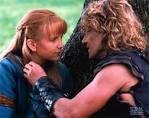
So I did not make it quite as far as Troy this week, alas and alack. Instead I found myself working on FanFic or perhaps FanEpicPo instead. These two poems comment on Xena Episode 1.8 Prometheus. The first speaker is Hercules and the second Gabrielle. It is a start.

Reconnecting: Hercules Speaks

“You‘re not much for girl talk, are you?

Of course, you‘re not like most girls.” –G. to X.

Your friend is right. You are not like most, whether

Girl or epic hero. Your rage still lies close

To the surface, a tool to be saved, and used

When the time of danger comes, and returns,

And returns, and returns. At a moment’s notice,

You turn it outward, with glee, a strange set

Of companions to hold in your heart. We made

A pretty good team once, too, the son of a god

And the daughter of an innkeeper, turned warlord,

Then reformed. I hear you’ve been helping people

To find your purpose. So yes, I do believe

The world needs you at least as much as me.

I will not see you sacrifice the life I helped turn

To the service of the world, not now. You mean too much

To me. It is easier to hold up a wall of rocks

On my back than to change your mind when you

Have made it up. Any other time I would find that

Admirable, but now you are risking your one, sweet

Life when I could do it for you, save the world

Without your cold corpse haunting my days.

Selfish? Yes, but sometimes I wonder if

We shared a soul once. And if I can do

Anything to prevent your untimely death,

That would be a labor worth undertaking.

What We Might Regain: G. Contemplates

Sometimes I wonder what she sees in me.

Sometimes I think of that story Plato wrote

About the people with four legs and two heads

That Zeus got all upset about and split

With lightning bolts, leaving us all asunder:

Only two legs, one head, and half a soul.

If, when Prometheus was rebound and doomed

To have his liver eaten by foul birds,

Day after day, mortals lost his gifts:

Fire and healing. Then what would it mean

If some heroes saved him? What does it mean

That she lets me travel with her, unable

To help with her adventures? It is intimidating,

Sometimes, watching her work like she is

A female Hercules. The sword is one thing,

But backflips and double kicks? I have begun

To write it all down, as Homer did for Achilles

And Odysseus. More people should know of her

Brilliance. Too, I sometimes wonder, if

Saving Prometheus will bring us back our fire

And ability to heal ourselves, what would we

Gain if she ever found that hero, the one

Who somehow in another human body holds

The other half of her enormous soul?

gi