In Which My Dreams Are Far More Interesting Than My Actual Life

messy-bed

Or, that thing in which I keep waking up with fragments of love poems in my head even though I am not in love or even, for that matter, actually dating anybody.


If I could only hold you for an hour

Or three, and feel the contours of your face

Against my hands, I would learn not to fear

The terror of my heart beating its drum

For the world to hear, or feel your heart

Beating against mine, chest to chest

In the tangle of the night.

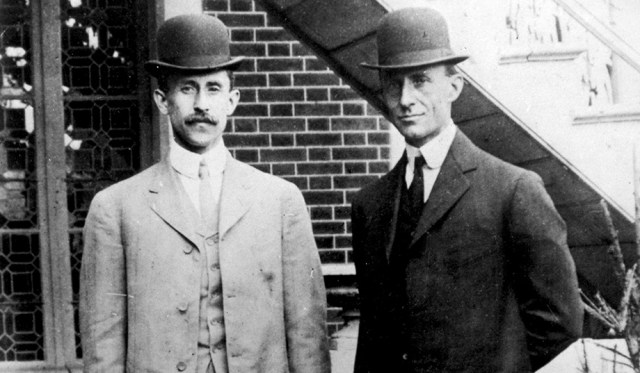
My Boys, Wilbur and Orville

pic_giant_052715_SM_Orville-Wilbur-Wright

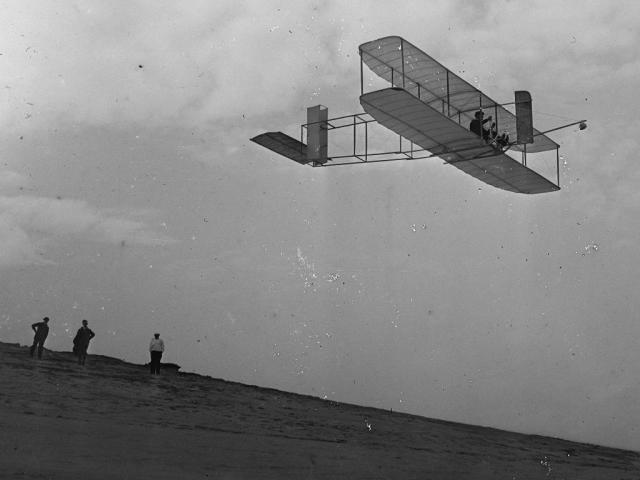
So 112 years ago the Wright Brothers made the first successful airplane flight near Kitty Hawk, North Carolina. A while back I wrote an oratorio about their process and I even had a composer who was working on it, but then we kept having our planned meetings go strangely awry—buses that were an hour late and the like—so I have actually never heard the music she wrote for it. Anyway, here is a taste of my attempt to capture their voices.


Finding Wind/Kitty Hawk Tango Baritone/Wilbur


When I sought for a safe place to practice

To learn the aeronautic riddles of flying,

They sent me to stand on a stretch of sandy land

In Kitty Hawk, North Carolina.


The abode of mosquitoes and buzzards,

A clime either roasting or raw,

A suitable location

Fraught with vexation:

I found it at Kitty Hawk.


I desired to make tests meticulous

In winds exceeding fifteen miles an hour,

Even quicker gales are here ubiquitous,

Enough to make a bold man cower.


The sand drives forth like an army

Over the hills and the flat.

The winds that rattle the tent

Are grand for experiments

But you’ll want to hold onto your hat!


If you desire a wind continual,

A place for vying with your flying machine,

The unbroken wind of the Kill Devil Hills

Will shrill and splinter your dreams.


I pity you, sir, for a coward,

If you dislike the picture I draw:

A land riddled with erosion

Betwixt Sound and Ocean:

Where I build my camp at Kitty Hawk?

1911_Wright_Glider

How the Birds Rise Tenor/Orville


Consider the owl,

The predator of night,

Who glides through the darkness,

Keeping the field mouse in his sight.

And then he dives down

Without disturbing the air.

The mouse is carried aloft

And never knew the owl was there.


And I am left to ponder

Mother Nature’s wonders:

How the owl glides,

How the stars sing,

How the birds rise.


Now consider the gull,

The scavenger of day,

Who sails across the morning

And her flying is play.

How she turns on a wingtip!

How she soars without a care,

Calling out her jubilation

Carried on ascending air.


And I am left amazed

At Mother Nature’s ways:

How the gull soars,

How the sand stings,

How the birds rise.


Now with the wind I sing,

I will learn to fly

As the owl glides,

As the gull soars,

As the birds rise.

Summer of 1816, or, Who Knew?

MTIwNjA4NjMzOTUzMDkzMTMy

My officemate at MIT has on her wall a call for papers about the Summer of 1816: Creativity and Turmoil. As she is, among other things a Shelley scholar, that year is right up her alley, so to speak, since in 1816 Percy and Mary Shelley were doing exciting things, most notably telling each other horror stories that eventually led to Frankenstein. Apparently major volcanic activity in 1815 caused major global cooling that led to a huge agricultural disaster, leading 1816 to be called the Year Without a Summer.

To put this in some kind of perspective, Jane Austen’s novel Emma came out in 1815. In the following year, Rossini’s The Barber of Seville premiered in Rome. Also the stethoscope was invented. I think of this now in part because I have been thinking about what we get taught in history, and how the Great Man Tradition of history is still running the show, even though social history (how people lived) and material history (what things people lived with) are lively trends in historical studies.

But I have looked at my high school world history textbook, and it segues from World War I to the Depression to the things that led to World War II without ever mentioning the Spanish flu that killed 500 million people worldwide between January 1918 and December 1920. But apparently that is less important to know about than World War I which only killed 10 million or so in twice the time, because it’s not political.

There’s a lot goes on we don’t get told. Or perhaps it is more apt to say that some of the things we get told are wrong. Think about the poem, “Paul Revere’s Ride” by Henry Wadsworth Longfellow.

.

Listen my children and you shall hear
Of the midnight ride of Paul Revere,
On the eighteenth of April, in Seventy-five;
Hardly a man is now alive
Who remembers that famous day and year.

He said to his friend, “If the British march
By land or sea from the town to-night,
Hang a lantern aloft in the belfry arch
Of the North Church tower as a signal light,–
One if by land, and two if by sea;
And I on the opposite shore will be,
Ready to ride and spread the alarm
Through every Middlesex village and farm,
For the country folk to be up and to arm.”

Then he said “Good-night!” and with muffled oar
Silently rowed to the Charlestown shore,
Just as the moon rose over the bay,
Where swinging wide at her moorings lay
The Somerset, British man-of-war;
A phantom ship, with each mast and spar
Across the moon like a prison bar,
And a huge black hulk, that was magnified
By its own reflection in the tide.

Meanwhile, his friend through alley and street
Wanders and watches, with eager ears,
Till in the silence around him he hears
The muster of men at the barrack door,
The sound of arms, and the tramp of feet,
And the measured tread of the grenadiers,
Marching down to their boats on the shore.

Then he climbed the tower of the Old North Church,
By the wooden stairs, with stealthy tread,
To the belfry chamber overhead,
And startled the pigeons from their perch
On the sombre rafters, that round him made
Masses and moving shapes of shade,–
By the trembling ladder, steep and tall,
To the highest window in the wall,
Where he paused to listen and look down
A moment on the roofs of the town
And the moonlight flowing over all.

Beneath, in the churchyard, lay the dead,
In their night encampment on the hill,
Wrapped in silence so deep and still
That he could hear, like a sentinel’s tread,
The watchful night-wind, as it went
Creeping along from tent to tent,
And seeming to whisper, “All is well!”
A moment only he feels the spell
Of the place and the hour, and the secret dread
Of the lonely belfry and the dead;
For suddenly all his thoughts are bent
On a shadowy something far away,
Where the river widens to meet the bay,–
A line of black that bends and floats
On the rising tide like a bridge of boats.

Meanwhile, impatient to mount and ride,
Booted and spurred, with a heavy stride
On the opposite shore walked Paul Revere.
Now he patted his horse’s side,
Now he gazed at the landscape far and near,
Then, impetuous, stamped the earth,
And turned and tightened his saddle girth;
But mostly he watched with eager search
The belfry tower of the Old North Church,
As it rose above the graves on the hill,
Lonely and spectral and sombre and still.
And lo! as he looks, on the belfry’s height
A glimmer, and then a gleam of light!
He springs to the saddle, the bridle he turns,
But lingers and gazes, till full on his sight
A second lamp in the belfry burns.

A hurry of hoofs in a village street,
A shape in the moonlight, a bulk in the dark,
And beneath, from the pebbles, in passing, a spark
Struck out by a steed flying fearless and fleet;
That was all! And yet, through the gloom and the light,
The fate of a nation was riding that night;
And the spark struck out by that steed, in his flight,
Kindled the land into flame with its heat.
He has left the village and mounted the steep,
And beneath him, tranquil and broad and deep,
Is the Mystic, meeting the ocean tides;
And under the alders that skirt its edge,
Now soft on the sand, now loud on the ledge,
Is heard the tramp of his steed as he rides.

It was twelve by the village clock
When he crossed the bridge into Medford town.
He heard the crowing of the cock,
And the barking of the farmer’s dog,
And felt the damp of the river fog,
That rises after the sun goes down.

It was one by the village clock,
When he galloped into Lexington.
He saw the gilded weathercock
Swim in the moonlight as he passed,
And the meeting-house windows, black and bare,
Gaze at him with a spectral glare,
As if they already stood aghast
At the bloody work they would look upon.

It was two by the village clock,
When he came to the bridge in Concord town.
He heard the bleating of the flock,
And the twitter of birds among the trees,
And felt the breath of the morning breeze
Blowing over the meadow brown.
And one was safe and asleep in his bed
Who at the bridge would be first to fall,
Who that day would be lying dead,
Pierced by a British musket ball.

You know the rest. In the books you have read
How the British Regulars fired and fled,—
How the farmers gave them ball for ball,
>From behind each fence and farmyard wall,
Chasing the redcoats down the lane,
Then crossing the fields to emerge again
Under the trees at the turn of the road,
And only pausing to fire and load.

So through the night rode Paul Revere;
And so through the night went his cry of alarm
To every Middlesex village and farm,—
A cry of defiance, and not of fear,
A voice in the darkness, a knock at the door,
And a word that shall echo for evermore!
For, borne on the night-wind of the Past,
Through all our history, to the last,
In the hour of darkness and peril and need,
The people will waken and listen to hear
The hurrying hoof-beats of that steed,
And the midnight message of Paul Revere.

.

“Historians say Longfellow probably knew most of this when he wrote his poem. He had access to Revere’s written recollections, but he seems to have ignored them. “I think he told it the way he did because it’s simpler and more dramatic,” says Patrick Leehey, research director at the Paul Revere House in Boston.” (qtd. in Ewers)

.

“1918 Flu Pandemic.” Wikipedia. 3 Sept. 2015. Web. 1 Oct. 2015.

Ewers, Justin. “Rewriting the Legend of Paul Revere.” U.S. News & World Report.

27 June 2008. Web. 5 Oct. 2015.

The Weirdness of Precipitation. Also Umbrellas.

8d6781cf937172027dee33d74d831c33

So a friend has pointed out that I have been veering from the straight path of poetry and investigating all kinds of apparently nonpoetic things, and she is not wrong. At first I thought this was simply a result of my writer’s block, again, and to some extent it is. Then I thought about how I started this blog in part to figure out my poetics, that is, what the Princeton Encyclopedia of Poetry and Poetics defines as “a systematic theory or doctrine of poetry” (Preminger 636). What do I think counts as poetry and where do we draw the line? Is it enough to “not be prose,” i.e., to have lots of short lines, some of which may happen to rhyme? Is it likely to have more elegant language and imagery than non-literary prose generally uses? Must it be beautiful? And what do we mean by beauty?

And then I realized that some of what I have been unconsciously doing is figuring out my aesthetics, which oddly enough, Preminger does not define, although he does include aesthetic distance and aestheticism, this last of which he seems to define as art for art’s sake, although he takes several pages to do it. I think for me defining one’s aesthetics is about defining what one as an individual, artist and nonartist, find beautiful and not. What draws you, as the bagpipes drew me before my mind had realized that my legs were moving? What repels me, as the sonorous, groaning organ does, even though it has great symmetry and harmony and All The Things, and can move other folks to tears for Very Different Reasons?

And I have been fascinated by our recent popular culture projects, because they have been drawing me in a similar fashion. Some of what I like is the smart juxtaposition between apparent opposites that we often get, the mixing of deadly serious and light wit, or dark, almost Gothic environments mixed with warm companionship. Or just high school students reading 500-year-old texts in an actual library to learn about the demons they are about to face. These tinctures in the story-telling of our time fascinate me, and I hope are teaching me about how to tell a more beautiful story, whether I do it in poetry or prose or some other way.

But for those who came for the poetry, here is a poem from last Monday when I got soaking wet about three different times.

.

Suddenly the air

is awash front to back

with water, which once,

before today, used

to be ocean or cloud.

.

And walksign people

scurry and slosh across

sidewalks become rivers

for a moment or two

too long for dry shoes.

.

Only the dry ones, those

who planned ahead,

stay anywhere near dry

carrying their nylon roof

on a stick.

.

Preminger, Alex, ed. Encyclopedia of Poetry and Poetics. Princeton, NJ: Princeton UP, 1974.

The Onionicity of Dolls and Drafts

images

I thought I had two different translations of Nobel Prize winning poet Wyslawa Szymborska’s poem, “The Onion.” But what I have is two books by her, neither one of which has the poem. I love the poem for the way it interrogates the complex and ordinary Onion, impoverished baronet of vegetables.

Translated by Stanislaw Baranczak and Clare Cavanagh

the onion, now that’s something else
its innards don’t exist
nothing but pure onionhood
fills this devout onionist
oniony on the inside
onionesque it appears
it follows its own daimonion
without our human tears
our skin is just a coverup
for the land where none dare to go
an internal inferno
the anathema of anatomy
in an onion there’s only onion
from its top to it’s toe
onionymous monomania
unanimous omninudity
at peace, at peace
internally at rest
inside it, there’s a smaller one
of undiminished worth
the second holds a third one
the third contains a fourth
a centripetal fugue
polypony compressed
nature’s rotundest tummy
its greatest success story
the onion drapes itself in it’s
own aureoles of glory
we hold veins, nerves, and fat
secretions’ secret sections
not for us such idiotic
onionoid perfections

I often suspect that my college freshman writers think of writing a paper as starting with a tiny nub of an idea and gradually building their argument, layer by layer, along with blood, sweat, and tears, until they have a fat little paper with lots of impressive words like “plethora,” “utilize” and “myriad.” Sometimes it even begins with a layer the size of a pumpkin: “Since the beginning of time, man has…”

In such cases, I am the one with the stinging eyes, who stands to clear my head.

In contrast, I feel like writing a paper for me is starting with a big-ass onion and peeling it down, layer by layer and draft after draft, until I have a small, beautiful thing: a pearl of bittersweet onioniciousness to convey my complex ideas. Generally my first completed draft of an essay is 35-40 pages long, but since folks rarely publish anything over 15-20 pages, my revision process generally involves me in the drawing room with a machete.

But, since onions, over time, are either eaten or they rot, I do not in fact have an onion at my office at MIT to serve as an object lesson in the layering and unlayering that is the process of writing. Instead, I have a matryoshka, a Russian nesting doll. Another benefit in addition to unrottability is that if I pick it up to make a point to my students, neither of us will end of crying.

Probably

For Lynda Carter’s Birthday

wwlc

And for That Writer Fellow, I give you a portion of a poem from the upcoming book:

Postcards from the Amazon

a celebrity correspondence

I.

My exercise routine?

I practice on

the parallel bars of I am

woman and hear

my golden lasso roar.

I beat Superman

at arm-wrestling, every time.

II.

And oh, the boys,

my colleagues: tights

bulging, faces half-hidden,

capes cracking in the breeze.

Their voices deep as a well.

Their jaws so straight and sharp

you could shave with them.

VI.

All women are gymnasts,

swinging

themselves from one necessity

to the next,

swinging, like Jane, from vines,

like me

from golden lassoes. Women hurtle

themselves

over every obstacle made by nature

or man,

break free from steel-forged chains

or do not.

This last is why women have

sisters.

Liebster Award!

I am honored to have been nominated for the blogging Liebster Award by Nicole from How to Fangirl for Adults. Go check out her blog! The Liebster Award is an award by bloggers for bloggers that is passed forward, and it has some other cool bells and whistles too!

liebster_zpsa4w1efp9

The Rules:

  • Thank the person who nominated you and post a link to their blog on your blog
  • Display the award on your blog–by including it in your post and/or displaying it using a “widget” or a “gadget”. (Note: The best way to do this is to save the image to your own computer and then uploading it to your blog post)
  • Answer 11 questions about yourself, which will be provided to you by the person who nominated you.
  • Provide 11 random facts about yourself
  • Nominate 5 – 11 blogs that you feel deserve the award, who have less than 1,000 followers (Note: You can always ask the blog owner this since not all blogs display a widget that lets the readers know this information!)
  • Create a new list of questions for the bloggers to answer
  • List these rules in  your post (You can copy and paste from here).
  • Once you have written and published it, you have to inform the people/blog that you nominated that they have been nominated for the Liebster award and provide a link for them to your post so that they can learn about it (they might not have ever heard of it!)

Nicole’s Questions

  1. If you had unlimited resources and time, what would be your dream cosplay or costume? Buffy the Vampire Slayer. I’d have said Xena: Warrior Princess but I am way to short to carry it off.
  2. Your current favorite song? “On the Road of Experience”
  3. Do you have any pets? If not, what kind of pet would you like to have? Yes, a tuxedo cat named Musashi.
  4. What is a movie everyone needs to have seen in their life? The Princess Bride. Crazy quotes for ever occasion.
  5. When did you write your very first blog post? Late last November.
  6. Do you write outside of blogging? If so, what do you write? If not, what do you like to do outside of blogging? Mostly poetry these days.
  7. Where is your favorite place to write? Coffee shops.
  8. What is your guilty pleasure TV show? Like that really bad reality TV and TLC type of stuff? Xena: Warrior Princess and anything Joss Whedon does.
  9. What is your number one fandom? (yes, you have to pick one) Xena, but I really want to BE Agent Carter.
  10. In one word how would you describe your blog? Diverse.
  11. What is the absolute best type of ice cream out there? Starbucks coffee almond.

11 Facts about Myself

  1. I lived in Japan for two and a half years, teaching English and studying kendo.
  2. On a good day I can write a sestina in one sitting.
  3. I have a mini Stonehenge in my office at MIT.
  4. I never know what to do with Kale.
  5. I still have a dumb phone.
  6. I went on Pottermore and got put into Ravenclaw.
  7. I alternate months of ridiculously productive writing with months like a vast Desert of No Writing Ideas.
  8. I have almost four octaves when I sing.
  9. I have never owned a car.
  10. I have never had a cavity.
  11. I looooooooves Boston.

My Questions

  1. What is your favorite book to reread?
  2. If you could be any hero, who would you be?
  3. What is the hardest part of writing for you?
  4. How do you avoid writer’s block?
  5. What movie would you watch if you were feeling down?
  6. Do you speak/read a second language? Which one?
  7. What do you like best about blogging?
  8. Spartans or Ninjas? Why?
  9. Captain America or Ironman?
  10. What is your favorite summer drink?
  11. What weird writing rituals do you have, if any?

My Nominations

  1. The Insightful Panda
  2. Bookminded
  3. Pop Cultured Randoms
  4. Pop Cult HQ
  5. Like Mercury Colliding

Haters Gonna Hate

The_Great_Wave_off_KanagawaSo about a week ago Optional Poetry posted this: “July 8, (or, a response to the request that I stop writing poems about the ocean).”

Okay, so I am here to say that nobody, no friggin’ body has the right to tell you what to say or not say, and I do not care who they are. They could be your thesis advisor and they do not have that right. Not. Not. Not.

As Marge Piercy says somewhere, “I never don’t say what I came to say.” Say it diplomatically. Say it kindly. But say it. Say what only you can say about whatever it is that moves you so strongly to speak.

My Apparent Thing for Rhetorical Questions in Poetry

xena+meme

So I am still working on my epic poetry about Xena: Warrior Princess, and I have started to notice some patterns, which I have noticed in my work before, but since this is (so far) a 260+ page project on a single subject, I am noticing them more now. One of these patterns is the use of rhetorical questions, which I think I use to show how the character of the speaker of a particular poem is either wrestling with a problem or coming to a solution, or just my capturing their voices. These I took just from the (so far) 54 pages I have written about Season 5.

.

Eli (Read: Jesus/Gandhi)

You let me heal the broken,

But what good is that gift if I cannot stop them from being

Broken in the first place? How does fixing the problem

Afterwards solve the problem? Why did you give me this

Troubling gift and what do you expect me to do?

.

Gabrielle

How can we live in a world in which

Fear is stronger than love? But how can we protect love

Without fighting for it?… She says, “Why don’t we all

Just walk away?” But is that even an option anymore?

.

Ares

Remind you of any particular Roman warlord? Yes, I do use this

Line on all my warlords, but it’s true I used it on you first.

.

Talia

Why are we never prepared for the surprise,

For the consequences of dalliance or domination?

Why are we never prepared for love and its confusion?

.

Xena

Her easy smile, her trust, how will I win those back?

.

Xena

I could pretend to be humble, but

What purpose would that serve?

.

Xena

What is it about rabbits?

What is it about her and these young men?

.

Gabrielle

You don’t think after four years as her sidekick

I would not recognize the heroic moment when it comes?

How many times now has her soul left her body?

How many times have I had to fight to keep her safe?

.

Athena

But how could a single god take care of all your needs?

How can a god that preaches love manage a world

At war? How can a foreign god come to our Greek soil

And reign over our people?

.

Ares

Mongolia? The Battle of Corinth?

I was always a fan.

.

Athena

Hestia, as always, focuses on the wrong

Thing, muttering in despair, “Isn’t anybody a virgin?”

And the family, as always, ignores her.

.

Xena

Why not fruit? Why not my body?

Why can’t I use both as weapons of opportunity?

suicidal

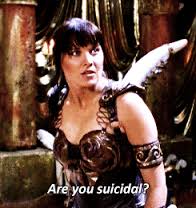
So talk to me, peoples, how do you feel about rhetorical questions in poetry? And also, this, because it’s one of Lucy Lawless’s cuter expressions.

dowhat

Do You ever Just throw a Poem Out?

Ninja__s_Recycle_by_Chris_Remmey

So during one of those long conversations with my roommate Jack last month he asked me if I ever just throw a poem out. The short answer is: Yep!

The long answer is, well, not without trying to resuscitate it first. Code Blue! Usually there is a line or a phrase or an image that is solidly good and if I take that out and throw everything else away and take that little cutting and see if I can grow it into something larger. And sometimes I just leave the inadequate ones in a folder or drawer and wait a while and see later whether or not I still think they are inadequate or unsalvageable. It is easier now than it was many years ago, but that is true of many things in writing and life.