The World Arranging Itself

1912718

“It is not everyday that the world arranges itself into a poem.” –Wallace Stevens


Yes, yes, it does, this spinning marble of a rock, watery

Outside, fiery inside, hurtling through ice-cold space

As if nothing could stop it. And somehow the oceans,

Waxing blue as the sky, waning green as an emerald,

Flashing in the sun, foaming–fiercely, furiously—

Never peel off and sail away into the dark and sparkling

Blanket of space. Why not? Beauty holds together

The way life, once it has ended, keeps on beginning,

Day after day, century after century, aeon after aeon,

And if that’s not poetry, Mr. Stevens, I don’t know what is.

More on Formatting in Poetry

sjoukjebierma_fashionillustrations_makeup

Concrete poetry is the practice of making a poem look, on the page, like its topic. In the days of the typewriter, this took a lot of time, but when published, it has great appeal. On the interwebs, where everything has to be left justified, concrete poetry is pretty much just a silhouette. But there are ways to get around that, if all you are going for is the idea of the topic rather than an actual illustration. Here is one from a group of poems I am trying to put together about the dailiness of my life.

7:40 a.m.

BASE   BASE

color    color

liner    liner

lashes lashes


BOTH

LIPS


coffee coffee coffee

coffee


coffee

More on Voice, and Also Why I Hate Rhyme

Everyone-you-meet-is-fighting-a-battle-you-know-no

“Man, sometimes it takes you a long time to sound like yourself.” –Miles Davis

So I was thinking about this line from Miles Davis (because it turns out that epigraphs are a great way to overcome your writer’s block), and I thought about how we constitute the self. And then I had that last stanza from Philip Larkin’s poem “This Be the Verse” go through my head, one of the very few pieces of poetry I have memorized:

This Be The Verse

They fuck you up, your mum and dad.
They may not mean to, but they do.
They fill you with the faults they had
And add some extra, just for you.

But they were fucked up in their turn
By fools in old-style hats and coats,
Who half the time were soppy-stern
And half at one another’s throats.

Man hands on misery to man.

It deepens like a coastal shelf.

Get out as early as you can,

And don’t have any kids yourself.


Now, I will admit that this is more than a bit cynical and that I have been relatively lucky in my upbringing, but there is also some good sense to it, as when people have pain, they tend to spread it around like manure, but generally without the benefit of nourishing anything. Still the eight-syllable line and abab rhyme scheme together make for a catchy (and therefore more memorizable) poem, even if does get a little sing-songy, which maybe takes away from the seriousness. So I adopted some of this to create my own bit.


The Tri-fold Self


Three things make up the self, I think:

The mind, the body and the voice.

Such things are passed on down to us

Without our say-so or our choice.


First comes the mind, the wandering wit

That tilts at windmills, fights through mazes,

Eats the words served up in books

And dreams the world in smoky hazes.


Next comes the body, old workhorse

That carries Mind from place to place.

We exercise to keep it fit

And use makeup to gild its face.


Last comes the voice, through which the mind

Speaks from this body to that.

And other minds judge what they hear

And call us either sharp or flat.


It takes long practice to learn how

The mind best works itself to learn,

Itself a cosmos hidden deep

Within the body, there to burn.


And longer still it takes to see

The beauty in the body aging,

Aching, creaking, fighting, winning,

Singing, all while life engaging.


But longest yet it takes the ears

To love the sound the tongue releases

From the moment we, born, wail

Until our last, when all breath ceases.


And so it is, all of us struggle

To be ourselves: voice, body, mind.

You know the struggle all too well,

So as you walk the world, be kind.


Inventing the Poet

“In order to write poetry, you must first invent the poet who will write it.” — Antonio Machado

poet

In this year-long lab in Innovative Inventions, we shall experiment

With a variety of elements, chemical compositions, media (including bricks

And Legos, crayons, pen and ink, and the dreams of flightless waterfowl),

Books, of course, lots of books, starting with a dictionary, thesaurus, all

The Peterson’s Guides—for birds, trees, flowers, gems, and librarians of

All stripes. You never know when you will run into the need to identify

Friend or foe, ibex or oboe, atlas or armillary sphere. What kind of poet


Are you going to make? The kind with frilly cuffs or the kind with battered

Shoes and a flannel shirt? The kind with a black beret and a bicycle, or

The kind with cufflinks and a VW Bug? Will the poet write in Chinese

Characters all the way down the window shade, or type some beatnik

Manifesto on the back of small cards to slip into unsuspecting readers’

Pockets: sub rosa poetry. What kind of shamanic powers will you endow

Your poet with? Incense and Latin chant is good, as is a walk in the woods,


Or a picket line, a fife and drum parade; avoid public readings as they cause

An unfortunate increase in hatband size. The chemicals come last, cheap wine,

Margaritas, Gatorade, tea and much, much coffee, particularly if yours

Is a morning poet, trained to greet the day as soon as the birds declare it

Has begun. Add foam and cinnamon or a rim of salt. Add the tears of broken

Love, the sweat of labors performed to pay the rent, the blood of ancestors.

Stir carefully. Such ingredients are flamboyant and may explode.

Voice

“What is the source of our first suffering? It lies in the fact that we hesitated to speak….it was born in the moments when we accumulated silent things within us.” ― Gaston Bachelard

Lately I have been playing with a metaphor for the changes I have been witnessing within myself: that certain people (human and furrier) have rearranged the furniture in my head (or possibly heart). What I had not really considered is that the different things inside me might have more or less import than others. Bachelard’s comment suggests that some of the things themselves are silent and equates that with our being unable to speak, so a silent thing inside leads to silence outside. So is the flipside of this idea that loud things lead us to speak loudly?

This makes a lot of sense, especially if you look at internalized oppression. In one person, that kind of institutional wrong could be held tightly silent on the inside and lead to a keeping-your-head-down kind of silence or a shame-filled silence; in another person, it could lead instead to rebellion, activism, or some other form of proud rejection of the wrong being done and the ideas behind it.

I think, though, that other “things” are a bit more like cats: sometimes purring, sometimes snoring, sometimes quietly patting us on the face to wake us out of a dead sleep or a crazy dream, pointing us in the direction of the cat food, the pragmatic necessities and the sweet varieties that life offers on a daily basis. These are generally not things that require yelling or even singing; they certainly do not demand our silence.

So then, if I return to my idea for this blog, that poetry can be sublime, ridiculous and useful, I also return to what sort of speaking poetry can do on a given day: give voice to the things that do not dare speak, tune the angry things to a frequency people will be able to hear, and hum simple tunes to keep our voices warm and ready to say the words that are still slowly making their way toward articulation.

How We Make the Road

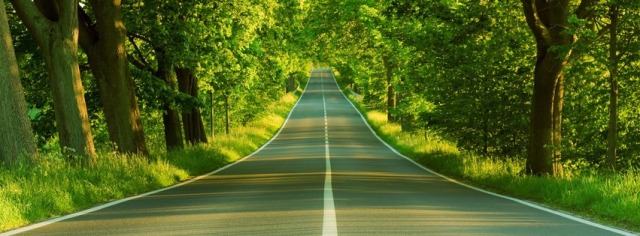
road

So a while back I came across a few lines from the Spanish poet Antonio Machado, used them for an epigraph for a chapter in my theology thesis and then, as one does, forgot all about him. Then a few days ago, I was digging around on my desk and found another line I had written down and then presumably used as a bookmark until it worked itself loose and found me again, which I wrote about a few days ago. That made me look into him further and I found this bit of a poem.


Wanderer, your footsteps are

the road and nothing more;

wanderer, there is no road,

the road is made by walking.

Walking makes the road,

and turning to look behind

you see the path that you

will never tread again.

Wanderer, there is no road,

only foam trails on the sea.


Given that every writer of application essays EVER tends to use The Journey as their Metaphor of Choice (this is a professional opinion), I rather like the idea that there is no road, only the walking. And this guy Machado reminds me less of other Spanish poets like Lorca than of the French philosopher Gaston Bachelard for some reason.

And this is a bit odd, because Bachelard says, “What a dynamic, handsome object is a path! How precise the familiar hill paths remain for our muscular consciousness! “Oh, my roads and their cadence.” I don’t know what it means, but I like it.

Bachelard, Gaston. probably The Poetics of Space.

Machado, Antonio. “Proverbios y cantares.” Campos de Castilla, 1912.


A Made Thing before Valentine’s Day

“My Foucault-friend, who is now an ­anthropologist, observes that in the West we tend to think of made things as being false” (Biss).

Anti-Valentines-Day-Metal-Playlist

If the poem I make is a false thing, as made as my house,

As false as your eyelashes that you also made this morning,

As thing-like as your car that falsely carried you

To work yesterday and just as falsely, eventually,

Carried you home last night, then how am I to cultivate

Truth like a garden of earthy, homegrown delights?


If my poem, made from words, which presumably also

Have been made, in this case by our ancestors

Who agreed what the grunt would mean, and the hiss

And the slow accumulation of consonants, then how

Can beauty be real, since there too we simply have to

Agree on the symmetry and style of another face?


If the song you made from notes just lying around

The universe is false, if the story you told yourself

Of love and loss and, eventually, redemption and love

Again, if that too is made and therefore false, what hope

Do any of us have to find the real thing, the true and

The beautiful thing, the unmade heart beating to ours?


Biss, Eula. “‘The Folded Clock,’ by Heidi Julavits.” Review. New York Times. 27 Mar. 2015. Web. 10 Feb. 2016.

34 Years of Poetizing

ice-dam-icicles

On or about January 20, 1982, I officially started writing poetry. I had written a few poems before that, either at school or at a small library writing class one summer, but on this day off from school for a teacher in-service day (whatever that means), I looked something up in the dictionary and found my attention snatched by the illustration of an “irregular octagon.” Those two words sounded so good together that I wrote a long poem about them, which is, thankfully, lost to the ages. Then I wrote a few more poems. Then I decided I was a poet.

Some of those high school poems were good in terms of imagery, although I was unsurprisingly addicted to rhyme. I started experimenting with free verse in college, often to good effect. But it was not until the 1990s that I started actually reading poetry that was written by other people. This progression is very common in beginning poets.

One of the great values in reading other poets is figuring out why they made the kinds of choices they made. Was it the sound and taste of the words? Was it laziness? So I am going to offer you two new poems and see if I can trace my own choices.

Yesterday was ridiculously cold, so I started thinking like this:


My toes are become wild icicles, shedding

Heat with every beat of my muffled heart,

The cold sidewalk so lonesome it must steal

A degree at every step I take. I do not think

About the heaviness of my bag, my watering eyes,

Or how dark the night was. I only feel the absence

In my boots, the negative space like a Vulcan greeting…


Well, now this has gone in a direction I did not expect, especially since the wildness is the interesting part of that first line. But “wild” to me tends to bring the connotations of jungles and passion, heat and brightly colored birds, which is the opposite of icicles and lonely sidewalks. How do I bring the poem around? Also the structure “I do not think of X, Y, and Z” is one I often use—is this laziness? It is a way of pointing to other details of the scene that we expect, what I might call the “pedestrian” details, literally, the details of being a pedestrian in a cold city. The darkness of the previous night takes the potential physical heaviness and tearing up and shifts to a more abstract negativity, possibly connected to the loneliness of the sidewalk.

Then things changed. I did feel like my middle toes were missing, but I don’t know if that works here. Also it takes me much farther from the wildness of the first line, which is frustrating. What are wild icicles? I love the sound of the phrase but I don’t know what it means or how to get back to it. Let’s try a complete 180.


Or how dark the night was. The wild icicles,

Hiding in the darkness of my boots, predict

Summer brightness, glorious jungle greens,

Toucans, monkeys, flowers like explosions

Of feathers and alien stars, which, this morning,

Are difficult to believe in.


Somehow I have to get back to the fact that I can’t feel about a third of my toes, and don’t expect to anytime soon (noon? March?).


Are difficult to believe in. Faith is hard

In winter, as hard as the long and deadly

Icicles hanging from the eaves of every house,

Waiting to pounce and pierce. Today, only

My forward momentum drags me stiffly

Toward the possibility of spring and the hope

Of something hereafter.


Now I’ve got to figure out how to end this sucker that doesn’t sound either too depressing (winter will never end) or too optimistic (four months of winter will go by in a flash! You’ll see!). We could go for closure, repeating shedding or muffled heart, but I don’t know what to do with that. Something about faith? Or the seven cardinal virtues? I have always quite liked fortitude.


Of something hereafter. Perhaps fortitude is

What we need: the will to withstand the cold,

Hard days and long, thin dark nights, fortitude

And the patience of burrowing, hibernating animals.


So we are left with this. I am undecided about whether I like it or not or how much. Thoughts?


My toes are become wild icicles, shedding

Heat with every beat of my muffled heart,

The cold sidewalk so lonesome it must steal

A degree at every step I take. I do not think

About the heaviness of my bag, my watering eyes,

Or how dark the night was. The wild icicles,

Hiding in the darkness of my boots, predict

Summer brightness, glorious jungle greens,

Toucans, monkeys, flowers like explosions

Of feathers and alien stars, which, this morning,

Are difficult to believe in. Faith is hard

In winter, as hard as the long and deadly

Icicles hanging from the eaves of every house,

Waiting to pounce and pierce. Today, only

My forward momentum drags me stiffly

Toward the possibility of spring and the hope

Of something hereafter. Perhaps fortitude is

What we need: the will to withstand the cold,

Hard days and long, thin dark nights, fortitude

And the patience of burrowing, hibernating animals.
 

Elevating Experience avec Tous Les Mots Justes

I just had half a discussion about why we read poetry and I am thinking at the same time about why I write poetry. I think during the Teenage Angst Years, I wrote for the same reasons a lot of kids write: to Express My Inner Turmoil. This is not a bad reason for writing, and if you can also make money off it (which some novelists and pop singers do manage to do), that’s even better.

Sometimes I write to experiment with sound, as I did when I wrote a dozen poems about Jack of the Beanstalk with tons of internal rhyme to get a bit more of a constant rhythm going, or when I wrote twice that many about flamenco, using staccato short lines to try to convey the percussion’s feeling.

Sometimes I write to tell stories, as I do when I unpack what I think is going on in a Japanese woodblock. Sometimes I write to take a story that already is out there—Jack of the B, Xena Warrior Princess, the Wright brothers—and go deeper into it, looking at it from a few sides.

But sometimes it seems just a matter of elevating experience, giving dignity to our joys and sorrows as Marge Piercy might say, through finding all the exactly right words to make Truth happen.