Getting To Know Characters

firefly cast 364700

So I have been rewatching Joss Whedon’s brief, lamented TV show Firefly and I started to notice how, especially in the pilot, one of the primary ways we get introduced to the characters and find out who they are is by watching their interactions/relationships with the other characters. This may seem obvious, especially for folks who are more used to reading/watching/writing for stage and small and big screens, but my background is primarily in poetry, stories and novels. In poetry what you primarily have to show your characters is their language. Do they talk like Tennyson’s King Arthur or like Popeye? In prose fiction, you get narrative description and internal monologue in addition to dialogue. But in more cinematic stories, all you get is what you can see and hear: costumes, dialect, and interactions that show, for example, affection or power or the like.

So we see the disillusioned Captain Mal Reynolds keeping a lid on the man he relies on for muscle and automatic weapons, Jayne, who is not a bad guy, just pragmatic and occasionally a little mean, when he teases the innocent mechanic Kayley for her obvious crush on the upper class doctor, Simon Tam. Mal has a love/hate relationship for the stylish Companion (read: courtesan) Inara, as in, he loves the woman and hates her job. Kayley and Inara, although seemingly opposites, clearly share an affectionate friendship, in part because they are two out of three women on a ship full of Manly Men, and in part precisely because they are opposites: each woman sees in each other relief from the day-to-day reality of their lives. Inara provides vicarious excitement for Kayley and Kayley has the innocence that Inara lost long ago.

And, sure the costumes help, but even if this were a radio play, I think we would very quickly see who these characters are—in themselves and to each other—and why we should care about them.

Landscape and Identity

It’s hard to believe it has been fourteen years since the events of 9/11. The college freshmen I was teaching that semester are now in their early thirties, and one can only wonder if that event was formative for them. Certainly for the kids from New York and New Jersey, I imagine they were. I remember one student describing looking out her window at home, over the river to see Manhattan’s high rises, and then going home for Columbus Day weekend and her crucial landmarks were just gone.

It is unnerving when our landscape just disappears. It robs us of our anchors, the margins of our world that tell us which way is up and down and left and right. Perhaps that is one reason the Budweiser tribute to the victims of 9/11 from five years ago is so affecting.

An even more powerful example of this is the Japanese tsunami four years ago, when the sea rose up and ate whole towns and villages, leaving over 15,000 people dead, 340,000 people displaced and 24-25 million tons of rubble and debris. I cannot imagine returning home to see only barren broken land, shorn of natural and built environment, stranded in rubble and mud.

The flip side of all this loss are the barely visible landmarks by which we make our way through our familiar environments. I remember coming home to New England after spending more than two years in Japan and being amazed at all the church steeples everywhere I looked (or so it seemed). Although I started out Roman Catholic, the ubiquitous white wooden Congregational church steeples were like architectural punctuation telling me that this geography is a sentence I understand how to read.

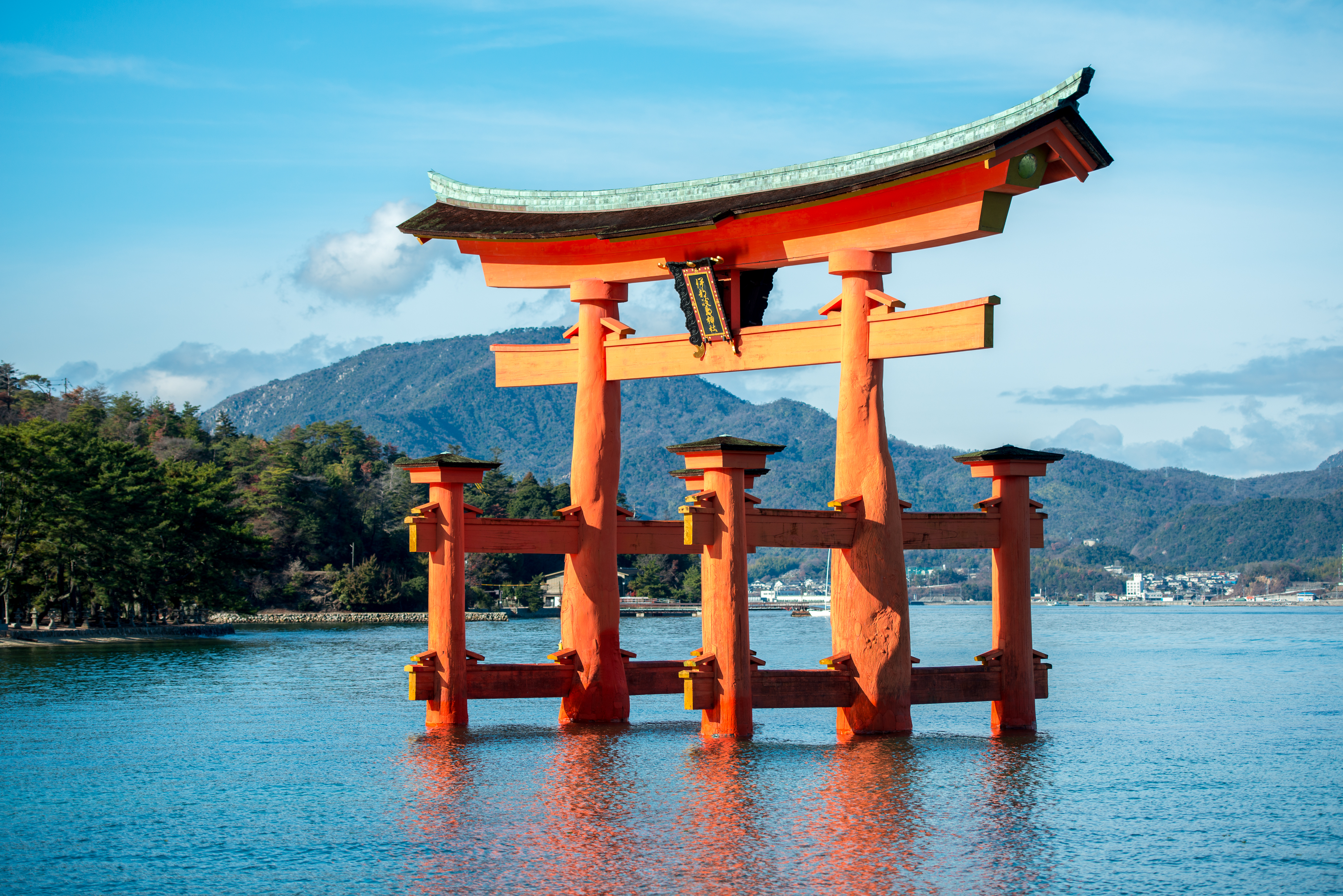
And now, working at Massachusetts Institute of Technology after my time in Japan many years ago, I cannot pass under an apparently nameless concrete gate next to the Wiesner Building without thinking of all the torii gates I saw in Japan, particularly the most famous on out on the water near Miyajima. You can leave a place, but it doesn’t always leave you.

Itsukushima_Gate

More Refrigerator Poetry

See incredible sweat blowing from my winter

chimney to shine and sleep and illuminate

incohate zeal in the delirious frantic ocean.

Watch me make a picture with language,

ephemeral in the hold of angels.

My need is wild, brazen, cunning,

and yet the urge for blood moans through.

maxresdefault

I just put this together on my refrigerator. And now I have the voice of the little boy from The Sound of Music in my head saying, “But it doesn’t mean anything!”

Snoopy and the Elephants

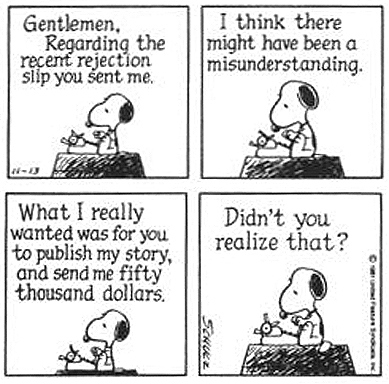
snoopy-on-rejection

Well, apparently August 10 was Snoopy’s 63rd birthday. He’s lookin’ pretty good for his age, isn’t he? There are many reasons to love Snoopy: his Walter Mitty personalities, his absolute Teflon response in the face of rejection letters for his novel, his dance. But, like the newly revived Bloom County character Binkley (and his human companion, Charlie Brown), Snoopy often worried about the future. Admittedly, in the next panel he might be flying off as the valorous World War I fighter pilot, but still.images

I think of this today because it is World Elephant Day, and Elephants, like so many wild animals are endangered by poachers who kill these gentle giants for their ivory tusks. One way people have been forestalling this evil is by putting money dye on their tusks to turn them pink, leave the elephants unharmed, and make the ivory useless to the poachers.

scared-little-baby-elephant

The increased interest in palm oil is threatening other elephants, whose habitats are being bulldozed, but you can help sign the petition here: http://a.ran.org/r2i

Hiroshima and Nagasaki, 70 Years Later

450px-Nagasaki_Peace_Park_01

The funny thing about traveling through Japan, as a Caucasian, is that you are automatically assumed to be American, whether you are or not. Normally, that simply translates into children waving at you and shouting, “Haro! Haro!” (i.e., Hello! Hello!), but in some places it is extremely uncomfortable, primarily in Hiroshima and Nagasaki. On the one hand, nowhere else have I felt so visibly and problematically American. I walk around the peace parks, looking at the dioramas of the damage done and the absolute nothing that was left in so many places, and I think, “My people did this.” On the other hand, the people of those two cities have so internalized the need for world peace that they are powerfully forgiving. They know that their government did some fairly unforgivable things also during World War II. One of the elderly women I met when I lived in Japan, 1990-1992, told me of the kindness of the American GIs during the occupation, and how one even managed to get eggs and flour so she could make her sister a birthday cake. War. Humans. Ridiculous acts of violence and tiny acts of kindness.

.

Pilgrim

.

Something about this breeze

damply fresh at 4 a.m. touching

my face as I stand on the concrete

platform, sway slightly, wait

for a train to take me, oh, anywhere

really, but especially south, southwest

to Nagasaki, international city,

city of the other bomb, city of pigeons

masquerading as doves.

.

Every bird is a dove

in a place like that, every

recreated building a monument

that looks you right in the eye.

I know. I have walked

Hiroshima’s busy streets. I’ve walked

where apocalypse burned

and was defeated, for now.

.

For now, I stand

on the platform, swaying with sleep

unrealized. Where I am going,

I will feel eyes all over: me,

blond, gaijin, outside-person, American.

Eyes like black rain remember

when a cool breeze could scald

a face beyond recognition.

The breeze that keeps me upright

while fluorescent lights battle

the darkness is filled with possibilities.

All roads lead from this one.

.

This one train could begin taking me

anywhere, measuring out the miles

with its laddered tracks. It will take me south

to a park filled with cherry blossoms

and monuments. A wall and,

perched on it, a weathered bronze dove.

A pigeon filled with love

by the damp bright air, who will land

and kiss the green dove,

beak to beak. The kiss of peace.

.

It is peaceful here on the platform,

alone and swaying, fighting

to open my eyes. The train will come soon.

The city will be filled with people,

jostling and contrary. I must remember

something then, when I arrive,

something about this breeze.

.

Spilecki, Susan. “Pilgrim.” The Kerf. May 2001.

The Lovely Blog Award!

one-lovely-blog-award

I was just nominated for the Lovely Blog Award by the lovely Writer Chick! Thank you for that, Annie.

The instructions are simple:

  1. Thank your nominator, if you’d like.
  2.  List 7 facts about you
  3. Nominate 15 blogs for the award

So here goes:

Seven facts about me:

  1. I once played the trumpet, but I never practiced enough.
  2. My cat is named after 16th century Japanese swordsman extraordinaire, Miyamoto Mushashi.
  3. My Musashi has had a blog for years, http://musashiguide.blogspot.com/, but has been oddly lazy about writing for it since I took up writing this blog…
  4. My party trick is writing sestinas, or, failing that, stealth refrigerator poetry.
  5. I have over 900 books, even with a yearly culling.
  6. I can pretty much identify Buffy the Vampire Slayer quotes by season and episode.
  7. I can still read some French and speak some Japanese, so basically, I have 1.8 languages.

+8. BONUS: This picture is what I did on Saturday: Boston ComicCon 2015!

P-FMT-09G-W5J

Here are the blogs I will nominate:

  1. How to Fangirl for Adults
  2. Art-Colored Glasses
  3. FEMINI
  4. rachelmankowitz
  5. BY LAUREN HAYLEY
  6. annemichael
  7. Wine and Cheese (Doodles)
  8. Thomas H Brand
  9. writingtutortips
  10. heylookawriterfellow
  11. Meredith With Her Mouth Open
  12. Emily is an adult
  13. Alycat
  14. Luna, the Little Chomper
  15. Author Matt Bowes and the Dog’s Breakfast

And in Honor of Amelia Earhart’s Birthday Last Week

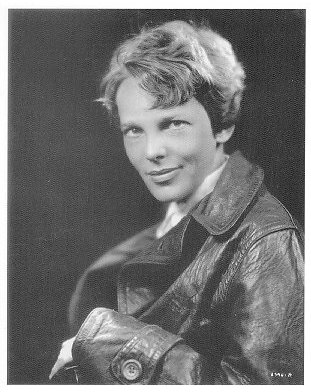
 amelia

So I wrote this admittedly brilliant little poem in a white heat on the train in to my summer job many years ago. It is one of the few poems that I only sent out once before it got published. Sometimes the magic just happens. I originally wrote it as a prose poem and that is how it was originally published. In the coming book it will appear as free verse. I like it better this way. There is more nuance with real line breaks. It is rare that I get chills reading something I wrote, but this one is special.

.

Flying Lessons with Amelia

.

I met her the day of her first crash.

The stars in my eyes reflected the flash

of the cameras, the sun kissing her

silver pocket compact. The photos,

shades of grey, didn’t do her justice.

Storm clouds only capture spring

by reversing its leaves, tearing them

away. At all altitudes she eluded capture.

In her plane, the cockpit hot with her

concentration, she parsed the spectrum for me.

You will be flying through

the chandelier of heaven. The crystal is blinding.

You must fly with eyes open. You must

be prepared for any hue. We began

with asphalt, the grey of landings and rebirths,

aged embracing arm of the runway,

creased by time, that cumulus indigo

umbrella holding us down.

Someday I will fly right through.

.

I was not her navigator. I did not drink.

I did not charm or exude animal scents

the pink of tongues and inner ears. I did not

read the stars for her. I read only the lessons

she gave me: airship lessons, the silk grey

skin of a winged beast she knew intimately,

silk white lessons of sky. But white had to wait.

Green followed grey, kelly pine jasper,

the mustard green tips of leaves

pawing at our uplift, the midnight green of dusk

landings, verdancy so gloomed there was no telling

landing strip from the shadow of the ship,

our wings jet branches gathering darkness in.

Ebony comes later, she laughed at my awe

as my mouth opened on this night,

whalecub learning to swallow sea.

First you must finger gold.

.

I never fathomed the depths of my avarice

until we flew into sun, the goggles she despised

shielding us only from its molten grasp,

not from its flames licking the edges

of things, our gauges and leather gauntlets,

the straying lock of her hair peering out

from the leather helmet. Both our noses shone,

two bloodhounds following bullioned muzzles

to the end, flying west, into noonday, solarium

studded with citrine, topaz, blinking Midas tears.

The sun veered off our wingtip, my voracity

seeping away into the stratified marble, in

to its aquamarine veins. Her wrists

when the sleeves of her leather jacket rode up.

The struts of this plane when the ivory spider

sky wove us new, a web for wind to climb

all the way into the center. Sometimes

we flew into cloud, that turbulent nothing

clawing at our wings, hissing hushed threats

to fling us down against the serrated curve of earth

She was never afraid of falling.

Another kind of flight. Another airstream

leading to another place.

Some days the clouds refused to end, pure

immortality billowing about us

like anger. But purity is illusion, she said,

a wall of water you could pierce. Open your eyes

wide. Wider. Fly right through.

.

Blue was her forté, azure stones

seen from distances, purple mountaintops

from above. But purple is imprecise.

Say rather, the ache that seeps into everything

unbendable. Clouds and grass lose hue

and youth as they lose the sun, growing brittle,

vanishing. When each lesson ended, she too

vanished, after paying me a smile and a slap

on the back. Alone in the hangar, I rested

my hands like wings on the Electra’s wings,

imagined myself wind, the ever-present

hand of air flinging her through space. I became

the airship singing, “I am her destiny, spinning

propeller pulling her forward. If she moves

too slowly, she will break upon my invisible blades.

If she is quick enough however—

O if she is quick—she will fly right through.”

.

Each time she crossed an ocean, I prayed

in glasses of water, gulping down waves, dreaming

desert. I prayed by inhaling headlines, whole

paragraphs of storm. I prayed the grey

asphalt arm reaching out to catch her.

Shallow sea. Fair winds. Safe landing.

I told her my desert dreams, the cracked argent

lips of summer singing unspeakable endings.

What does it mean, O my master?

You have not known silver until you’ve soared

between desert and a full moon. Tongue falls silent.

Music falls in sheets to the dunes, arpeggios of sand.

.

Nightflight was the last lesson,

a leisurely voyage down corridors of unlit coal

rubbing itself off on our wings. To become night,

you must let go of everything. Every time

you embrace it, you must empty your pockets

and hands. Plunging into cold volcanic depths of

sky requires valor, resolute defiance of the grip

of blindness pressed against your eyes, of the lure

of the stars you cannot fly to. Nothing.

Nothing can save you here, nothing

but the Electra beneath her tan hands

with their raised blue veins, nothing but

the changing tint of grey in the curtained cloud,

penumbra lightening in blinks of tired dark eyes.

Night was not time but distance, an endless road

winding through itself and more of itself,

narrowing as I nodded and fought to wake.

You sleep from fear, but someday you will keep

this vigil too, in the long tunnel toward morning.

.

Never in her lifetime could I keep that vigil

whole, a faithful watchman, never

until her last flight, without me,

when she slammed into sea

the way I always slammed into quartz white

day, facetted and sparking seed-suns to burn

and stab our eyes. There is a place called horizon

where gold and deep blue lie down together, fuse.

The nose of my Electra aims to be a point

upon that line. When I fly now, years later

without her, I am always flying right through.

.

Spilecki, Susan. “Flying Lessons with Amelia,” Quarter After Eight 5. Fall 1998.

For Lynda Carter’s Birthday

wwlc

And for That Writer Fellow, I give you a portion of a poem from the upcoming book:

Postcards from the Amazon

a celebrity correspondence

I.

My exercise routine?

I practice on

the parallel bars of I am

woman and hear

my golden lasso roar.

I beat Superman

at arm-wrestling, every time.

II.

And oh, the boys,

my colleagues: tights

bulging, faces half-hidden,

capes cracking in the breeze.

Their voices deep as a well.

Their jaws so straight and sharp

you could shave with them.

VI.

All women are gymnasts,

swinging

themselves from one necessity

to the next,

swinging, like Jane, from vines,

like me

from golden lassoes. Women hurtle

themselves

over every obstacle made by nature

or man,

break free from steel-forged chains

or do not.

This last is why women have

sisters.

Just the Annoying Sidekick? Hardly!

jaynes hat

Here at San Diego Comic Con, the creator of Buffy, Firefly, Dr. Horrible and Dollhouse, and the director of two Avengers movies, just told us the nature and purpose of existence. He also revealed one of his next projects: a “Victorian female Batman” called Twist.

So during Joss Whedon’s big one-man show panel here at Comic Con, a fan dressed in a Jayne hat and a Sunnydale T-shirt asked what was the meaning of life, what was the nature of reality, and how we could be sane and happy in the world. And Whedon responded:

“You think I’m not going to, but I’m going to answer that. The world is a random and meaningless terrifying place and then we all—spoiler alert—die. Most critters are designed not to know that. We are designed, uniquely, to transcend that, and to understand that—I can quote myself—a thing isn’t beautiful because it lasts.”

Whedon added that “the main function of the human brain, the primary instinct, is storytelling. Memory is storytelling. If we all remembered everything, we would be Rain Man, and would not be socially active at all. We learn to forget and to distort, but we [also] learn to tell a story about ourselves.”

And Whedon said, “I keep hoping to be the hero of my story, [but] I’m the annoying sidekick. I’m kind of like Rosie O’Donnell in that Tarzan movie.” He keeps hoping to be Tarzan, but finding that he’s that weird monkey that nobody can tell if it’s a girl or a boy.

“My idea is that stories that we then hear and see and internalize—and wear hats from and come to conventions about… We all come here to celebrate only exactly that: storytelling, and the shared experience of what that gives us.” The shared experience of storytelling gives us strength and peace, Whedon added. You understand your story and everyone else’s story, and that “it can be controlled by us.” This is something we can survive, “because unlike me, you all are the hero of your story.”

Anders, Charlie Jane. “Joss Whedon Just Explained the Meaning of LIfe to Us.” io9.com. 11 July 2015. Web. 12 July 2015.

agent-carter-value-240x300

Icons & Action Figures

crane38

Every once in a while, I remember what this blog was supposed to be about: poetry. How to make it, how to fix it, how to think about words and lines and tropes and all that stuff. Somewhere along the way, my recent obsession with American popular culture has kicked in, in part because, duh, Joss Whedon, but also because I am fascinated with how we construct identity and community through interacting with symbols, whether the symbols be our clothes, as my friends Meredith and Amy have recently discussed in their blogs, or music, interior decoration, or their particular fandom.

It’s not just the Greek Orthodox Church that uses icons. We all carry around in our heads the picture of a grandparent, a teacher, a college friend, a movie star, and in different ways we refer back to them at different times. Whenever I write a long piece of nonfiction, I remember my high school English teacher, Sr. Kevin White, talking about conciseness.

In my first book, which is coming along eventually, I have poems about Barbie and Ken, Raggedy Ann and Dapper Dan, Amelia Earhart, Wonder Woman, Lucy Lawless, Sam Spade, and my friends at GreenFaith. In our modern world icons and action figures are increasingly interchangeable, for better or for worse. So I don’t have to write my poetry about some incredibly high culture narrative like Paradise Lost or the Ancient Mariner. Shakespeare was popular culture once; hence all the bawdy jokes even in the tragedies. And I’m not alone in writing about women warriors: Edmund Spencer’s The Faerie Queene uses the character of Britomart, the virgin knight, to stand in for Queen Elizabeth I and British might (painting by Walter Crane). This reminds me of a folk singer who came to Middlebury College a million years ago. I still remember one of her original songs (in addition to the one about the Shrewsbury Moose):

A doll is someone who loves you,

Someone who hugs you when you cry.

I know a doll when I see one

And Rambo could be one

If he would only try!

So tell me peoples, who are your icons and action figures?CIMG1675