Psycho Sunday: Badass Women in Combat Gear #3

Aung San Suu Kyi.

Once again, I am interpreting “combat gear” as loosely as I interpret “poetry.” Here is a Badass Woman I have admired since I first learned about her in the 1990s.

Aung San Suu Kyi is a politician in Burma/Myanmar. Because of her disagreement with the military government that took over in 1989, she spent 15 of the 21 years between 1989 and 2010 under house arrest. She had the opportunity to go into exile with her family, who were living in Europe at the time, but she chose house arrest to stand with the Burmese people instead. She wrote, “It is not power that corrupts but fear. Fear of losing power corrupts those who wield it and fear of the scourge of power corrupts those who are subject to it.” [3] ― Aung San Suu Kyi, Freedom from Fear

Aung San Suu Kyi was awarded the Nobel Peace Prize in 1991. The decision of the Nobel Committee mentions:

“The Norwegian Nobel Committee has decided to award the Nobel Peace Prize for 1991 to Aung San Suu Kyi of Myanmar (Burma) for her non-violent struggle for democracy and human rights….Suu Kyi’s struggle is one of the most extraordinary examples of civil courage in Asia in recent decades. She has become an important symbol in the struggle against oppression….In awarding the Nobel Peace Prize for 1991 to Aung San Suu Kyi, the Norwegian Nobel Committee wishes to honour this woman for her unflagging efforts and to show its support for the many people throughout the world who are striving to attain democracy, human rights and ethnic conciliation by peaceful means.”— Oslo, 14 October 1991

St. Patrick’s Day Concerns

12821401_1134043839963851_9148087521756240941_n

That moment when you look in your closet

For the only green shirt you own and even

Consider wearing all red and hoping to run into someone

Colorblind. That daft hope that someone, anyone

Will say, “Top of the morning to you!” just

So you can reply, “And the rest of the day to you!”

That memory of being able to wear a green sweater

To school instead of the uniform cranberry, because

Irish Americans are exactly that weird and yes, we did

Go to Catholic school. That craving for corned beef,

With or without the cabbage and Guinness. That dread

Of someone spelling it St. Patty’s as if the bishop was

Named Patricia. That memory of the one single time

You ever drank green beer, and that quizzical look

People give you when you have a Polish last name.


Illustration by Sandra Boynton.

Rooting for Root

Great thoughts by Cassandra on one of my favorite pop culture heroines! Thanks, Geeky Voyage!

Ms Buffy Buff (Cassandra)'s avatarGeeky Voyage

Over the summer, I discovered a television series that blew my mind and changed my perception on modern television. Said series is Person of Interest.

Until I had subscribed to Netflix back in June, I hadn’t heard much about the series. I knew of the two main female characters, Root and Shaw (their portmanteau pairing name being the apposite “Shoot”) and that was as far as my knowledge on POI stretched. Sadly, the series receives next to no promotion in the UK so it is largely unknown to the majority of British audiences.

I had been fresh off an Angel binge at the time and I was dying for some more Amy Acker in my life. So when I saw an advertisement for POI on Netflix—its title card blown up in all of its deceptively subtle glory— I bit the bullet and loaded it up.

The first thing that I…

View original post 1,325 more words

Psycho Sunday: Badass Women in Combat Gear #3.25

Reposted from The Guardian 26 Feb. 2016:

3936

“The Black Mambas are winning the war on poaching,” insists Siphiwe Sithole. “We have absolutely zero tolerance for rhino poaching and the illegal wildlife trade. The poachers will fall – but it will not be with guns and bullets.”

Sithole and Felicia Mogakane are members of South Africa’s Black Mambas, the world’s first all-female anti-poaching unit that has captured the public’s imagination. But it’s their success in reducing rhino deaths and breaking down the barriers between poor communities and elite wildlife reserves that is their most powerful weapon in the war on poaching, and has seen them pick up their second international conservation award this week.

The two women have travelled to London to receive the inaugural Innovation in Conservation award from UK charity Helping Rhinos. The award recognises projects “with an inspiring and innovative approach” that have shown positive results in protecting rhino populations.

Since forming in 2013, the Black Mambas have seen a 76% reduction in snaring and poaching incidents within their area of operation in Balule nature reserve in the country’s north-east. As well as the famous big five of rhino, lion, elephant, buffalo and leopard, the 40,000-hectare private reserve is home to zebra, antelope, wildebeest, cheetah, giraffe, hippos, crocodiles and hundreds of species of trees and birds.

In the six months before the Mambas were set up, 16 rhinos were lost in Balule, one of several private reserves bordering Kruger national park. In the 12 months after, fatalities were reduced to just three rhinos.

Narratives for Survival #1

Screen_shot_2013-11-12_at_11.56.19_PM

So I found this meme on Facebook the other day, not long after Umberto Eco’s death, and I thought that it might just kick my writer’s block in the pants. “To survive, you must tell stories.” I tend to look at this blog as a “platform” for my books of poetry that I am going to be publishing in the next few years, a way to “build an audience,” and I imagine that many of my readers who are also bloggers feel a similar way.

But I often get dragged off course, usually by popular culture narratives with kickass women characters who lead, make choices and decisions, fight, kill, deal with the trauma, and work to balance the things and people they love with the things and people they have to deal with in often less than loving ways. These are the narratives I am magnetically drawn to.

Clearly, they are not the only important narratives. I have a shelf of books on World War II and the Holocaust because memory and testimony are crucial types of narratives for survival. I don’t write about these much because I don’t have firsthand knowledge, but I am going to be giving my writing students a speech by Elie Wiesel to read because they might take his thoughts on “The Perils of Indifference” better than they would take such thoughts from me.

There are also meta-stories: stories about how stories affected you, as we often hear when we start talking about representation in popular culture narratives. So Whoopi Goldberg has often talked about the galvanizing affect seeing Nichelle Nichols playing Lt. Uhura on Star Trek had on her when she was a little girl, suddenly realizing that a black woman could be a leader rather than just a servant. So clearly it is just as important to consider how we tell the stories we tell.

But there are other narratives too, the stories we tell ourselves when we are too tired to do the laundry or too hopeless to fall asleep at three in the morning, or too optimistic to consider consequences or too busy to separate the recycling. Sometimes they serve us well, reminding us to save our energy for the big things or to hold on to the small things until we have the resources to work for the bigger things. And sometimes they just get in the way. So maybe it is not only about what stories we tell and how we tell them, but also how we use them and how they serve us and others or do not.

Psycho Sunday: Badass Women in Combat Gear #3.5

MV5BMzM3MTYxMDg4MV5BMl5BanBnXkFtZTgwMTMyMjU2MTE@._V1_UY268_CR16,0,182,268_AL_

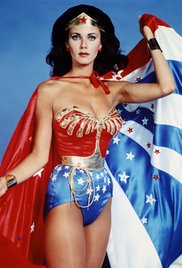
Raise your hand if you spent any part of the 1970s spinning around in your living room, hoping that this time, you’d gain superpowers, a golden lasso and maybe an invisible jet. Watching Diana Prince (Linda Carter) beat up the bad guys and save Steve Trevor (Lyle Waggoner) again was very fulfilling and set me up for two decades of disappointed TV watching until the mid-1990s came around and Wonder Women’s spiritual daughters, Xena and Buffy, appeared kicking ass and dusting their enemies.

And while Linda Carter will always be Wonder Woman to me, the new DC comics movie is coming out this spring, with Gal Gadot in Batman v. Superman: Dawn of Justice. Given that Gadot will be in the solo Wonder Woman film in 2017, I have hopes that the actor, writers and directors step up to the plate. I had always hoped for a Joss Whedon written/directed film with Lucy Lawless in the title role, but such vain hopes were not to be.

chris-pine-to-star-alongside-gal-gadot-in-dc-s-wonder-woman-686234

I still want some bullet-repelling bracelets in case I need to travel outside of New England, but I suppose if they were out there on the market, the NRA would try to make them go away.

Badass Women in Combat Gear: Valentine’s Day Edition, Or, Dorothy Parker Was Wrong

((For those of you who, like me, were not Math Majors in college, I apologize. But this particular blog post seems to need a ridiculous number of parentheses and a rather surprising number of braces {curly} and brackets [square]. Be warned.))

There is a fairly famous rhyming couplet by the 1920s Algonquin Round Table wit, Dorothy Parker, that has been widely anthologized (and it suddenly occurs to me that a whole slew [this is a technical literary term] of the editors anthologizing this were {white} men], which says, “Men don’t make passes/At girls who wear glasses.”

I have been thinking about this since Mike Allegra (heylookawriterfellow) asked me to add to my BWCG series some BWCGs who wear glasses. I thought of this most recently after viewing a teaser for this coming Tuesday’s Agent Carter, in which Agent Sousa (the delightful Enver Gokaj) says to (an injured and therefore unavailable-for-the-mission) Agent Peggy Carter (the even more delightful Hayley Atwell) that what they need for the coming mission is someone who can “blend in with the glamour and throw down in the gutter.” Damn, Spanky, I LOVE the writers on this show!

anigif_enhanced-buzz-28965-1428618090-11_preview

Any Gentle Reader who has spent any time at all reading this blog will recognize that this is not only the dual nature of what I look for in my Female Leads of TV, Film, and Life, but also a micro-blueprint of who I would like to eventually be. I have to admit that the second part sounds much less painful to me than the first part, because as Agent Dana Scully admits in the most recent New X-Files episode, running/fighting in three-inch heels is no country for really anyone, but absolutely not Women, Older Men or Sane People of any Gender. Okay, she didn’t say that.

But as Jane Austen might have said, “It was nowhere said, but everywhere implied.” Come on. Amy Acker has said that at one point her only “stunt ability was running in heels” (Citation, as Wikipedia would point out, desperately needed. My guess? A ComiCon. San Diego? Maybe. Who knows?).

ackerglasses

My point here is simply that Dorothy Parker was wrong and Mike Allegra is right. (Full disclosure: I wear glasses. So sue me. {Twenty-odd years at MIT’s Writing Center (some of them more odd than others) has made me as blind as my cat Musashi, if not as a bat or a possum. [If M. were a little boy, he’d be wearing Coke bottle glasses and a bowtie]}.

81-2dep+8aL._SY355_

So in honor of a Sunday-facing Valentine’s Day (black Tuesday meets the Lord’s day), I offer you some of my favorite female actors (Nope, don’t call me a teacheress, professoress, editoress or martial artistess; I avoid calling them actresses for the same reason) in glasses.


I tried very hard to chase down the pics I have seen online of Lucy Lawless as herself, rather than Xena, wearing glasses, to no avail. Similarly, her soul-grandmother, Linda Carter (the always-and-everywhere Wonder Woman, despite DC’s brilliant work with Gal Gadot).

And because I believe it is important to look back and forward at the same time, I also give you Ingrid Bergman and Scarlet Johansson.

Also, the classic, brilliant, unimitatable Katherine Hepburn on a skateboard, because duh.

katehepskate

To my pal, Mike Allegra, men and women who love women in glasses or, you know, on skateboards: YOU’RE WELCOME. HAPPY VALENTINE’S DAY. NOW WE WILL LET THE WEATHER BECOME WARM AGAIN.

Badass Women in Combat Gear, #5 ¾: Jessica Jones

November 20 marked an interesting moment in our popular culture: Marvel Comics released Jessica Jones, its first film/movie property with a female superhero. For the past two months I have been trying to write about it, to add Jessica to our list of Badass Women in Combat Gear, and it has been very hard. At first, I tried to blame my writer’s block on the fact that I had not finished watching all 13 episodes on Netflix. But on Groundhog Day, I had an epiphany that, like so many of my epiphanies, in retrospect seems outrageously obvious.

As one critic describes Jessica Jones, “A woman with superhuman strength, she eschews a costume or cape for a pair of jeans and a leather jacket. She lives in a busted apartment in Hell’s Kitchen where she conducts her business as a private investigator. It’s not necessarily part of the job that requires her special abilities, but they do come in handy” (Bendix). In the past, Jessica tried to use her super abilities as an “official” superhero, until she got mind-controlled into doing horrific things (including murder) by another “gifted” person, a man named Killgrave.

As another critic comments, “Jessica Jones pulls no punches when it comes to him or to other men on the show who try to rob women of their agency. The word ‘rape’ makes its way onto the screen in episode eight, but showrunner Melissa Rosenberg has no interest in showing sexual assault for shock value or as a way to make female characters more sympathetic. Rosenberg takes a swipe at politicians who would force women to give birth to their rapists’ babies. And she nods more than once at the idea that Killgrave is obsessed with making women smile at him. She doesn’t draw a direct line from allusions of street harassment to rape, but she doesn’t sidestep that conclusion either” (Hogan).

jessica-jones-150

MARVEL’S JESSICA JONES

And this is where Groundhog Day comes in, or should I say Groundhog Day, the movie. I went to see the film for the first time Tuesday evening, and about halfway through, as Phil the weatherman (Bill Murray) is spending several weeks of repeated days learning personal information about his colleague Rita (Andie McDowell), in order to get her to spend time with him, like him, love him and eventually sleep with him.

Had I watched this for the first time in the 1990s before conversations about the difference between rape culture (you must opt out) and the culture of consent (you must opt in) became common, I might have thought this behavior simply romantic pursuit as opposed to temporal stalking. But as I started to see where it was leading, I became increasingly uncomfortable as it became clear to me that such a dishonest and misleading “change” in her attitude toward him would not equal true consent, and I thought, “If she sleeps with him, I am walking out of the movie theater.”

groundhog-day-driving

Reader, she slapped him. Probably seven days in a row. Hooray. Then the movie improved as he started to change himself rather than her.

And this is what was so difficult about writing about Jessica Jones. Reviews have called the show “dark” and “gritty” and “grim,” which it is, but a lot of films and TV shows have been dark, especially ones on the topics of war, poverty, and injustice. But those topics are things we can discuss around the dinner table at home or in the lunchroom at work. Rape? Not so much. And the institutional sexism and violence that are the social matrix now being called rape culture? Good luck with that.

And this is one of the things I have learned about writing. The Rhetorical Situation of a piece of writing is Writer, Audience, Topic. If I think I am a bad writer or if I know I have a difficult audience, it is very obvious why I am having trouble with my writing. But I often forget that if a topic is simply difficult to talk about, it is also going to be difficult to write about.

But these difficult topics need to be written about, and so Jessica Jones not only serves as a show that empowers its women characters but also as a springboard for more of these conversations. As Lili Loofbourow wrote in a critical essay for the Guardian: “Jessica Jones is one of the most complex treatments of agency in the wake of victimhood that the small screen has seen yet seen.” And Loofbourow’s essay itself is an interesting critique of the very same issues.

So here is me putting in my 2 cents. We need to talk about these issues. We need to build a culture of consent. We need to tell stories that show people being strong for themselves and others—men and women—and we need to show victims helping each other be heroes. So, thank you, Krysten Ritter (and the other women on the show, who are all very strong, although, for example Carrie Ann Moss’s lawyer, Jeri Hogarth wears power suits as her combat gear), for giving us something meaty to watch, however much discomfort comes with it.

“Jessica Jones is a superhero show for those who don’t necessarily care for the heroics. It’s smart and sexy and dark and creepy; it’s queer-inclusive and focused on women who refuse to be victimized, even by someone who has the power to make them say or do anything he wants. Jessica Jones is about the struggle for power and control, and its lead is the kind of superhero that modern women will idolize. So much of her strength isn’t in her physical prowess, but in her will to survive and never relent to the man with the perceived upper hand.” (Bendix)


Bendix, Trish. “’Jessica Jones’ Is a Queer-Inclusive, Feminist Superhero Series.” Afterellen.com. 20 Nov. 2015. Web. 4 Feb. 2016.

Hogan, Heather. “’Jessica Jones’ Is an Awesomely, Agressively Feminist Superhero Series.” Autostraddle.com. 23 Nov. 2015. Web. 4 Feb. 2016.

Loofbourow, Lili. “Jessica Jones: Shattering Exploration of Rape, Addiction and Control.” The Guardian. 27 Nov. 2015. Web. 4 Feb. 2016.

Grr. Arrgh. More Writer’s Block

In J.R.R. Tolkien’s The Lord of the Rings, when the wizard Saruman, wears robes “woven of all colors” because he has fallen from the path of the wise, Gandalf (the Grey) says, “I liked white better.” This is Saruman’s reply:

“White!” he sneered. “It serves as a beginning. White cloth may be dyed. The white page can be overwritten; and the white light can be broken.”

Now here’s the thing for me a writer. Saruman is clearly evil here, because he is saying the white page can be overwritten like it’s a bad thing.

For me as a writer, constantly trying to produce, this is definitely not a bad thing. So this past week struggling to come up with blog posts, I have tried a variety of things, but today I actually just broke down and turned to Google Images to find pictures to express how I feel: tired, afraid, studious, interrupted. Clearly Person of Interest (and a little bit of Angel) are helping me out here.


Then I went and found pictures about how I want to feel: badass.


Well, it must have worked, because what we have here, children, is a blog post.