Inhabiting the Xenaverse

Prometheus_hercules_and_xena

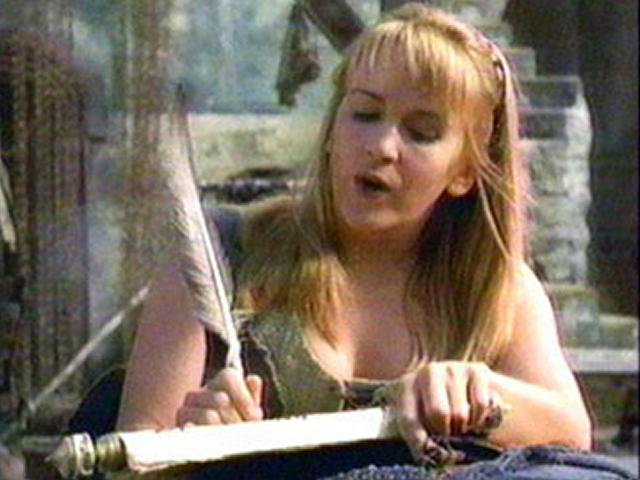
So I did not make it quite as far as Troy this week, alas and alack. Instead I found myself working on FanFic or perhaps FanEpicPo instead. These two poems comment on Xena Episode 1.8 Prometheus. The first speaker is Hercules and the second Gabrielle. It is a start.

Reconnecting: Hercules Speaks

“You‘re not much for girl talk, are you?

Of course, you‘re not like most girls.” –G. to X.

Your friend is right. You are not like most, whether

Girl or epic hero. Your rage still lies close

To the surface, a tool to be saved, and used

When the time of danger comes, and returns,

And returns, and returns. At a moment’s notice,

You turn it outward, with glee, a strange set

Of companions to hold in your heart. We made

A pretty good team once, too, the son of a god

And the daughter of an innkeeper, turned warlord,

Then reformed. I hear you’ve been helping people

To find your purpose. So yes, I do believe

The world needs you at least as much as me.

I will not see you sacrifice the life I helped turn

To the service of the world, not now. You mean too much

To me. It is easier to hold up a wall of rocks

On my back than to change your mind when you

Have made it up. Any other time I would find that

Admirable, but now you are risking your one, sweet

Life when I could do it for you, save the world

Without your cold corpse haunting my days.

Selfish? Yes, but sometimes I wonder if

We shared a soul once. And if I can do

Anything to prevent your untimely death,

That would be a labor worth undertaking.

What We Might Regain: G. Contemplates

Sometimes I wonder what she sees in me.

Sometimes I think of that story Plato wrote

About the people with four legs and two heads

That Zeus got all upset about and split

With lightning bolts, leaving us all asunder:

Only two legs, one head, and half a soul.

If, when Prometheus was rebound and doomed

To have his liver eaten by foul birds,

Day after day, mortals lost his gifts:

Fire and healing. Then what would it mean

If some heroes saved him? What does it mean

That she lets me travel with her, unable

To help with her adventures? It is intimidating,

Sometimes, watching her work like she is

A female Hercules. The sword is one thing,

But backflips and double kicks? I have begun

To write it all down, as Homer did for Achilles

And Odysseus. More people should know of her

Brilliance. Too, I sometimes wonder, if

Saving Prometheus will bring us back our fire

And ability to heal ourselves, what would we

Gain if she ever found that hero, the one

Who somehow in another human body holds

The other half of her enormous soul?
gi

What We Expect from Our Readers

change-the-world

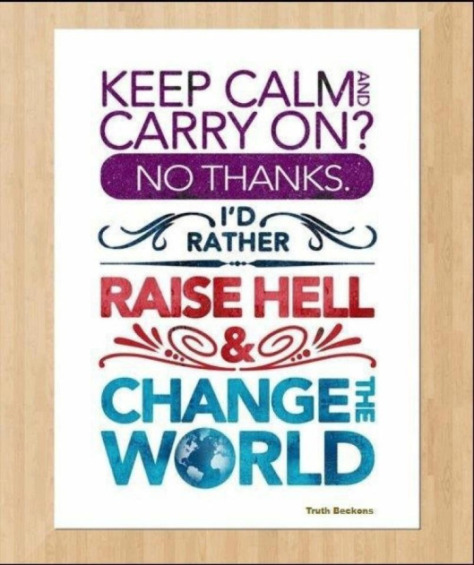
So last night, my roommate Jack asked me what I expected my readers to do after they read my more serious, didactic poems, the ones about Hiroshima and domestic violence and such. Do I expect to change the world? Do I expect to change my readers?

I think that expectation is not necessarily the best way to phrase the answer. Since people come to read poetry at very different times in their lives, weeks, days, I really cannot expect anything. I can hope, certainly. I can hope that they will feel something and perhaps think something, maybe even things that they have not felt or thought before regarding the topic. And for the people who are ready to change, who knows? Maybe something I write can be a springboard. But really it is more about offering a form of companionship. I write what I write because the flame insists on it. If you recognize something in what I write and you feel you are not alone, then that is how the world starts changing. As Jane Hirshfield says:

“I think compassion, in a way, is one of the most important things poems do for me, and I trust do for other people. They allow us to feel how shared our fates are. If a person reads this poem when they’re inside their own most immediate loss, they immediately — I hope — feel themselves accompanied. Someone else has been here. Someone else has felt what I felt. And, you know, we know this in our minds, but that’s very different from being accompanied by the words of a poem, which are not ideas but are experiences.”

Hirshfield, Jane. “’Windows’ That Transform The World: Jane Hirshfield On Poetry.” 14 March 2015. NPR. Web. 23 March 2015.

The Eternal Treasure Hunt

200px-Dickin_Medal

Let me tell you about one of my yoga sestinas and how it illustrates something about me as a writer and, to an extent, writers in general. I started out knowing that I wanted to write about pigeon pose, in part because it is a good way to stretch out your hips, in part because kapotanasana is just fun to say, and in part because I had watched a YouTube video of my yoga teacher performing a song about going away to find yourself. She spent a month in Italy. I spent two years in Japan, so I knew what she was talking about. Also, I had recently gone to my college reunion in Middlebury, Vermont and had felt very much as if I had rediscovered my tribe: goofy people who speak multiple languages and have broadened themselves through travel.

For my six end words, I started with every heart finds its true north. Then I turned to Wikipedia to find out shtuffs about carrier pigeons. I learned a bunch of cool trivia; for example:

The PDSA Dickin Medal was instituted in 1943 in the United Kingdom by Maria Dickin to honour the work of animals in war. It is a bronze medallion, bearing the words “For Gallantry” and “We Also Serve” within a laurel wreath, carried on a ribbon of striped green, dark brown, and pale blue.[1] It is awarded to animals that have displayed “conspicuous gallantry or devotion to duty while serving or associated with any branch of the Armed Forces or Civil Defence Units.” The award is commonly referred to as “the animals’ Victoria Cross.” (Dickin Medal)

But I also found something I could use for the poem, that scientists have found that pigeons have large numbers of iron particles on their beaks, which allow them to sense the magnetic pole. Eureka!

This is, I think, one of the cool things about being a writer. I know there is going to be something out there, that I can find serendipitously, and that I can somehow use. The world can be a fascinating place after all, or, as a Japanese T shirt told me twenty years ago, The world is so full of things.

Yes, it is indeed. You just have to look. Writers, I believe, are people who constantly look. Here is the start of the poem:

The Earth’s white-hot iron center pulls every

magnet’s needle around to point to the heart

of the north, not so different from how a pigeon finds

her way home. They say pigeons have iron on their

beaks, tiny particles that act as a magnetic

guide, helping the birds discern south from north.

It is different for everyone, our magnetic north,

the paths and people who pull us. Not every

bird nests in the same tree or coop. What’s magnetic

to you may not be the thing that pulls my heart

around to face it, eagerly.

Dickin Medal. Wikipedia. 12 Jan. 2015. Web. Mar. 17, 2015

More Damn Muses, But These are the BEST

1024px-1807_Thorvaldsen_Tanz_der_Musen_auf_dem_Helikon_anagoria

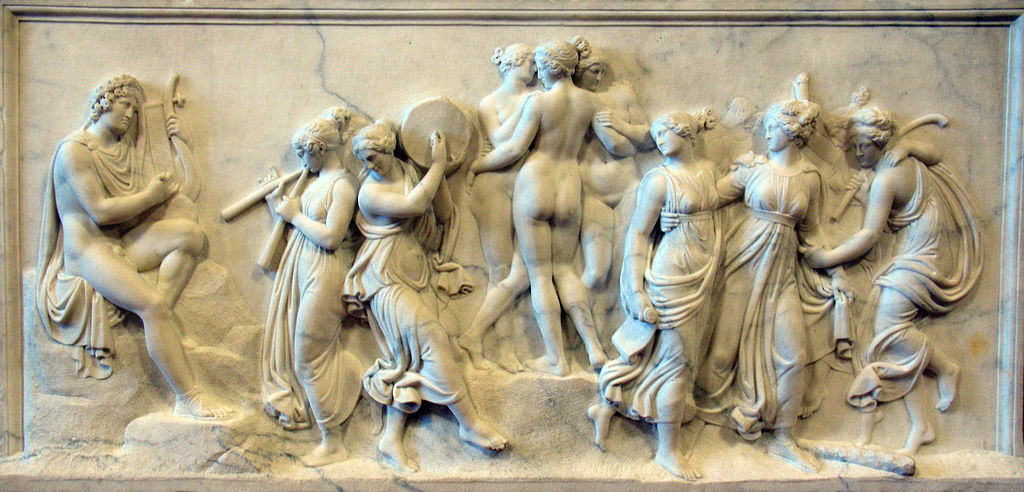
So all this talk about Xena has made me realize that I know damn little about ancient Greece, and given that one of my friends actually teaches high school Latin and Greek (in 2015. I know.), I figure I should fix this grave lacuna in my knowledge. So I started messing about online, figuring that the interwebs would point me in the right direction. After getting sidetracked by a statue of Aphrodite having a bad hair day, I got down to business and found a translation of the The Theogony of Hesiod (Greek, ~700 BCE) translated by Hugh G. Evelyn White in 1914. And who do you think he starts out talking about?

(ll. 26-28) `Shepherds of the wilderness, wretched things of shame, mere bellies, we know how to speak many false things as though they were true; but we know, when we will, to utter true things.’

(ll. 29-35) So said the ready-voiced daughters of great Zeus, and they plucked and gave me a rod, a shoot of sturdy laurel, a marvellous thing, and breathed into me a divine voice to celebrate things that shall be and things there were aforetime; and they bade me sing of the race of the blessed gods that are eternally, but ever to sing of themselves both first and last. But why all this about oak or stone? (2)

(ll. 36-52) Come thou, let us begin with the Muses who gladden the great spirit of their father Zeus in Olympus with their songs, telling of things that are and that shall be and that were aforetime with consenting voice. Unwearying flows the sweet sound from their lips, and the house of their father Zeus the loud-thunderer is glad at the lily-like voice of the goddesses as it spread abroad, and the peaks of snowy Olympus resound, and the homes of the immortals. And they uttering their immortal voice, celebrate in song first of all the reverend race of the gods from the beginning, those whom Earth and wide Heaven begot, and the gods sprung of these, givers of good things. Then, next, the goddesses sing of Zeus, the father of gods and men, as they begin and end their strain, how much he is the most excellent among the gods and supreme in power. And again, they chant the race of men and strong giants, and gladden the heart of Zeus within Olympus, — the Olympian Muses, daughters of Zeus the aegis-holder.

Now aside from the fact that this is just awful darn pretty, it is still making out poets to be mouthpieces who just channel the Muses while the girls do the work. This old hat formula has, as I have asserted before, had a negative affect on wanna be poets who don’t get that writing is work.

Although, now that I think of it, this is the first hat…

“The Dance of the Muses at Mount Helicon” by Bertel Thorvaldsen (1807).

What the Eyes Want

gabqm36

So I have once again been binge-watching Xena: Warrior Princess (XWP) on Netflix. Now I understand why I binge-watch Buffy the Vampire Slayer (BtVS); it is a fairly aesthetically complete show, the writers quickly came to write with a consistent voice (Joss Whedon’s), and they were always, always true to the characters (no mysterious evil babies, unless you count Dawn Summers, as many people do). The villains are compelling and the power relations between Slayer, Scoobies, victims and other non-Scoobies get worked out in interesting ways; this last probably is held together by the high-school-as-horror framework that is the series’ origin story.

In comparison, XWP ranged wildly from overblown operatic tragedy to high camp, often from one episode to the next. The writers wrote narrative arcs that fans twenty years later are still lamenting. And there was not just one mysterious and/or evil baby; there were TWO. And do not EVEN get me started on the final two episodes; although they were aesthically very pretty, and Renee O’Connor handled her katana fight scenes with tremendous aplomb, the story-runners basically broke every rule in the book, betrayed the fans, and put a stink on something so many of us loved. I have taken to my self-styled deconstructionist friend, Jenna Tucker’s way of handling this and I write those two episodes out of the canon. Kaput.

Also, although the Hong Kong style of fighting was always very high quality, sometimes the production value was a bit cut rate or cheesy (think of the Evil Egg Men in “Prometheus”). So here is me with my master’s degrees and my interest in High Quality Popular Culture. Why do I keep going back to this show as a thirsty woman back to sparkling fountain?

And what went through my mind as I wrote that question is one key to the answer. My internal image was the cartoon man crawling through a desert; I had to consciously choose to replace the man with a woman to represent myself in the metaphor more accurately. XWP went off the air in 2001. Fourteen years later, the vast majority of TV shows and films still don’t pass the Bechdel Test, which is that a show must:

  1. Have at least two women in it
  2. Who talk to each other
  3. About something besides a man.

(This is, one would think, NOT A HARD TEST TO PASS. And as other critics have noted it isn’t even the best test to see if a movie could be feminist, as a true feminist agenda has intersections with other groups striving for equality—race, class, LGBTQ, and disability are all groups who are institutionally under- or unrepresented in popular culture.)

So one simple answer is that XWP is still one of the best shows out there for showing strong women interested in a variety of things besides men—their work, their values, their artistic and redemptive goals, who catches the fish and who cooks it, and whether we ever owe the gods our allegiance. Male screenwriters would be surprised to find out what women ACTUALLY talk about, and that the large proportion of our thought really isn’t about them even if we are straight (and these two characters are arguably bisexual if you read the text and the subtext together). It is rare to see female friendship portrayed so richly (even if the two characters sometimes have epic fights, in part due to writerly manipulation To Heighten The Conflict).

Another reason might simply be the aesthetic appeal of seeing the beautiful and athletic Lucy Lawless, Renee O’Connor, and Hudson Leick doing this elaborate acrobatic fighting with the bad guys. And most writers enjoy seeing a writer as the maker of narrative within narrative, which Renee O’Connor’s Gabrielle the bard offers us, in both serious and humorous ways.

But what I think is more important is something I found in James Hillman’s book: The Soul’s Code: In Search of Character and Calling. In a preface made of epigraphs, he quotes Vladimir Nabokov, who says, “Neither in environment nor in heredity can I find the exact instrument that fashioned me, the anonymous roller that passed upon my life a certain intricate watermark whose unique design becomes visible when the lamp of art is made to shine through life’s foolscap.” (From Speak, Memory)

I like this idea of a watermark on the soul, an image that resonates when it meets like images in the world. Hillman claims that the “acorn” of a person’s “genius” (in the Roman sense) often shows itself early in childhood. So I think back to the earliest period of insomnia I can remember, around three, when I would lie in bed and retell myself stories like Cinderella or Sleeping Beauty, generally recast with myself as the princess with the sword and the horse, racing off to save the kidnapped prince. Sounds like a just woman warrior watermark to me.

And the fact that I have studied martial arts off and on for two decades and been a poet for more than three decades, have studied voice, and teach writing: So Xena is the big, tough woman warrior I always wanted to be and Gabrielle is the short blonde bard I have become. I begin to think I watch the show to help me figure out how to integrate these images/roles within myself.

Also, it makes me laugh.

latest

James Hillman. The Soul’s Code: In Search of Character and Calling. New York: Random

Inspiration Tip: Revisiting Old Friends #3

raggedy ann Sam_Spade

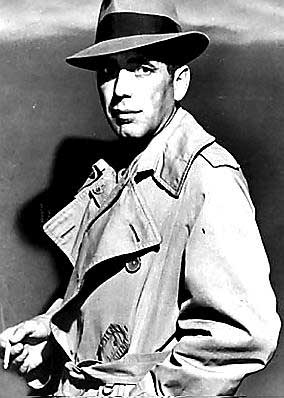
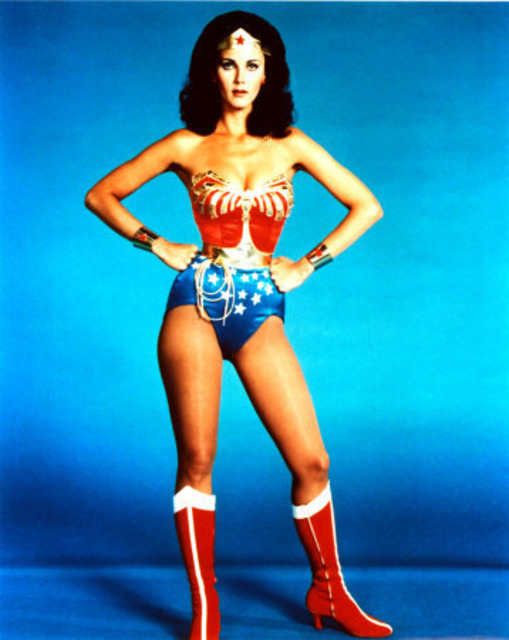
My upcoming book of poetry, Icons & Action Heroes (Batteries Not Included), contains, as you might imagine, a section of poems about figures from popular culture, including Ken, Barbie, Raggedy Ann, Sam Spade, Wonder Woman, Lucy Lawless, Salome, Icara and Daedala, and Amelia Earhart. I even matched Jane with Jack of the Beanstalk, describing their dialogues of seduction and conflict as they go to and return from the castle at the top of the sky, which belonged to the giant and his wife, Cinderella. Talk about feminist revisionist mythmaking!

I think I write about pop culture icons, whether actors or dolls or historical role models, because they have had an impact on me, and I use this word advisedly because it implies leaving a dent behind. It means I have been in contact with something and come away changed.

Lucy_Lawlessuhura

Lately, I have been enjoying reading the blog, iwantedwings: a geeky feminists musings on Visual & POP Culture. the writer has just started a series of analyses of how Disney movie princesses portray and affect women. She is doing the films in chronological order, starting with Snow White (1937), so I suspect the results for the next few weeks at least will continue to be: Negative.

This is one reason why I, like many feminist poets, engage in revisionist mythmaking. To turn Icarus and Daedalus into mother and daughter makes the trope of the glass ceiling more literal, and thus more visceral, especially for those in Our Studio Audience who are not women or think they are not feminists. To make Prince Charming the giant at the top of the beanstalk is to ask what assumptions we make about our hoped for princes, and what cost those assumptions might have. And although I am probably the only feminist poet who has not (yet) gotten around to rewriting the story of Penelope and Odysseus, I reserve the right to do so eventually.

But even more, I want to celebrate the cultural icons that have helped us see how we can be strong. People often talk about Star Trek in this vein. How many of us women, of whatever color, were inspired by Nichelle Nichols acting as Lieutenant Uhura? How many of us cheered to see Kate Mulgrew as Captain Kathryn Janeway? As Katharine Trendacosta says, “The ‘seeing yourself on screen’ thing is a cliché, but it really is important. It’s not just seeing people you can relate to, it’s seeing people you can relate to being successful. That’s the empowering part. That’s what Star Trek: Voyager meant to me.”

wonder-woman star-trek-uhura-nn

Since we are inevitably consumers of popular culture, I think we must be critical and intentional consumers, understanding that the images that we consume are also creating, reinforcing, undermining and transforming the world around us, and ourselves. I write these poems to do this kind of thinking for myself and to help others do it too.

Trendacosta, Katharine. “Why Star Trek: Voyager Meant The World To Me.” iO9.com. Jan. 16, 2015. Web.

More on Important Excitements

 30.1478.90_PS1

A while back I mentioned the term Maggie Anderson uses for poetic obsessions, important excitements, but I could not find where I had read her talking about this. Then, looking for something else, I picked up Robin Behn and Chase Twichell’s book, The Practice of Poetry. And there, nicely dog-eared on page 160, I saw Anderson’s contribution to the book: Important Excitements: Writing Groups of Related Poems. She suggests writing about a dozen poems that are related in either form, content or both. With the name, she takes a phrase from Gwendolyn Brooks and expands on it.

Anderson writes:

“The specific technical skills that an exercise like this can teach are as idiosyncratic as the choice of format and are intricately connected to each individual poets obsessions, whatever ‘importantly‘ excites you. If you choose, for example, to write a group of sonnets you will undoubtedly learn much about rhyme and meter through the consistent practice of it. If you choose to write a group of poems about seashells, you will probably learn some things about objects in space, about enclosures and coverings, about marine detritus, and about who-knows-what in yourself that has generated your interest in shells.”

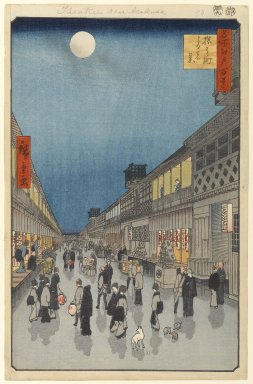
So, for example, I wrote about some of Hiroshige’s One Hundred Famous Views of Edo. I had noticed that several of them seemed to have an older woman and a younger woman walking together, and I decided to write a series of poems that would reflect the kind of mentoring that women of different ages often do for one another. So what follows is a story of women’s lives, told primarily through monologues by the younger woman, the newlywed, and the older woman, her neighbor. There is one about middle age that I still have not gotten around to writing, perhaps because I have been too busy living it, but there are the titles of the ones I have written so far, many of which have been published in the journal Ekphrasis.

The First Pilgrimage

Beneath Immovable Falls, the Neighbor Speaks of Birth

At the Theater District of Saruwaka, the Newlywed Speaks of Death*

The Neighbor Mourns Her Lost Sons

The Newlywed Considers Poetry

The Daughter Contemplates Time and Her Mother

The Mother Takes Her Teenage Daughter to Chiyo’s Pond

Two People, One

The Newlywed at 80 Looks Back

Writing these nine poems taught me about how to do ekphrastic verse (poetry about art) in a way that was not simply describing a picture. (Because of course that is not what Keats does in his “Ode on a Grecian Urn,” which conveys ideas about the momentary nature of love and life in contrast to the hopefully immortal nature of art.) Also, given that those landscapes are about 150 years old, set in a culture very different from the one I am writing from and to, I needed to both explain to my audience what they do not know about the culture, language and geography, preferably in a way that is unobtrusive, but I also had to try to draw universal truths/experiences out in a way that makes us feel like we are all in this human thing together without comodifying another culture.

Oh, and it should be pretty. No sweat.

Anderson continues, “In either case, you will almost certainly learn something about your own imaginative process: your habitual gestures, your extravagances, and your reticences; the places where you give up and the places where you push ahead.”

This understanding of your own writing process and the pushes and pulls going on behind it is, I believe, crucial for all working writers, whether poets, novelists, screenwriters or dissertation writers. The more we understand about what is going on beneath our mental hood, the more we can keep the spark plugs sparking and the engine running smoothly.

Behn, Robin and Chase Twichell, eds. The Practice of Poetry: Writing Exercises from Poets Who Teach. New York: Harper Perennial, 1992.

*Hiroshige. Night View of Saruwaka Machi. 1856. Woodblock Print. Brooklyn Museum, New York.

The Relationship between Emotion and Poetry

So a couple of days ago, a reader gave me this prompt for the blog: Percy Bysshe Shelley (1782 to 1822) wrote, “Poetry is the record of the best and happiest moments of the happiest and best minds.” Discuss!

Okay, Mr. Shelley, here goes. After reflecting on your thought, I respectfully have to disagree. While it may be true that some poetry by some poets comes out of happiness, I do not feel that the majority of my poetry does, and there is a lot of evidence that a lot of creative people, poets among them, write to handle their less positive emotions. In fact Kay Redfield Jamison has written a book about it, Touched with Fire: Manic Depressive Illness and the Artistic Temperament. Given that Jamison is an experienced psychiatrist with bipolar disorder herself, and a gifted writer and researcher, I think that we should listen to what she has to say. (And for those of you who like memoirs, her book, An Unquiet Mind: A Memoir of Moods and Madness, will widen your mind on the struggles of major mental illness. Eloquent and a little scary.)

Rather than beginning with emotions, even the negative ones, I think I more often begin with a phrase or an idea. Looking at the poetry coming in my first two books, one to be published later this year and the other next year, these are some of the patterns I see.

Quotation-June-Jordan-poetry-truth-Meetville-Quotes-196042

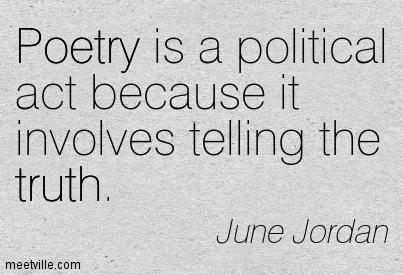
Didactic/Political Poetry, Serious or Funny: Because I read a lot of women poets, and poets who came to age during the Civil Rights/Anti War/Feminist Movements, I have never had a problem with political poetry, as long as it is good poetry. Neither singsong nor screeching will bring opponents around to be allies, nor potential allies to be activists. But beauty, good imagery, sometimes humor: those are the things that can turn hearts. So yes, I write about body image, domestic violence and war. Having traveled to both Hiroshima and Nagasaki while I lived in Japan, and having done so as an Obvious (Default) American (blonde and blue), I had to consider the damage my country had done to a people I respected and liked. Such reflections can lead to poetry, but it is unlikely to be happy poetry.

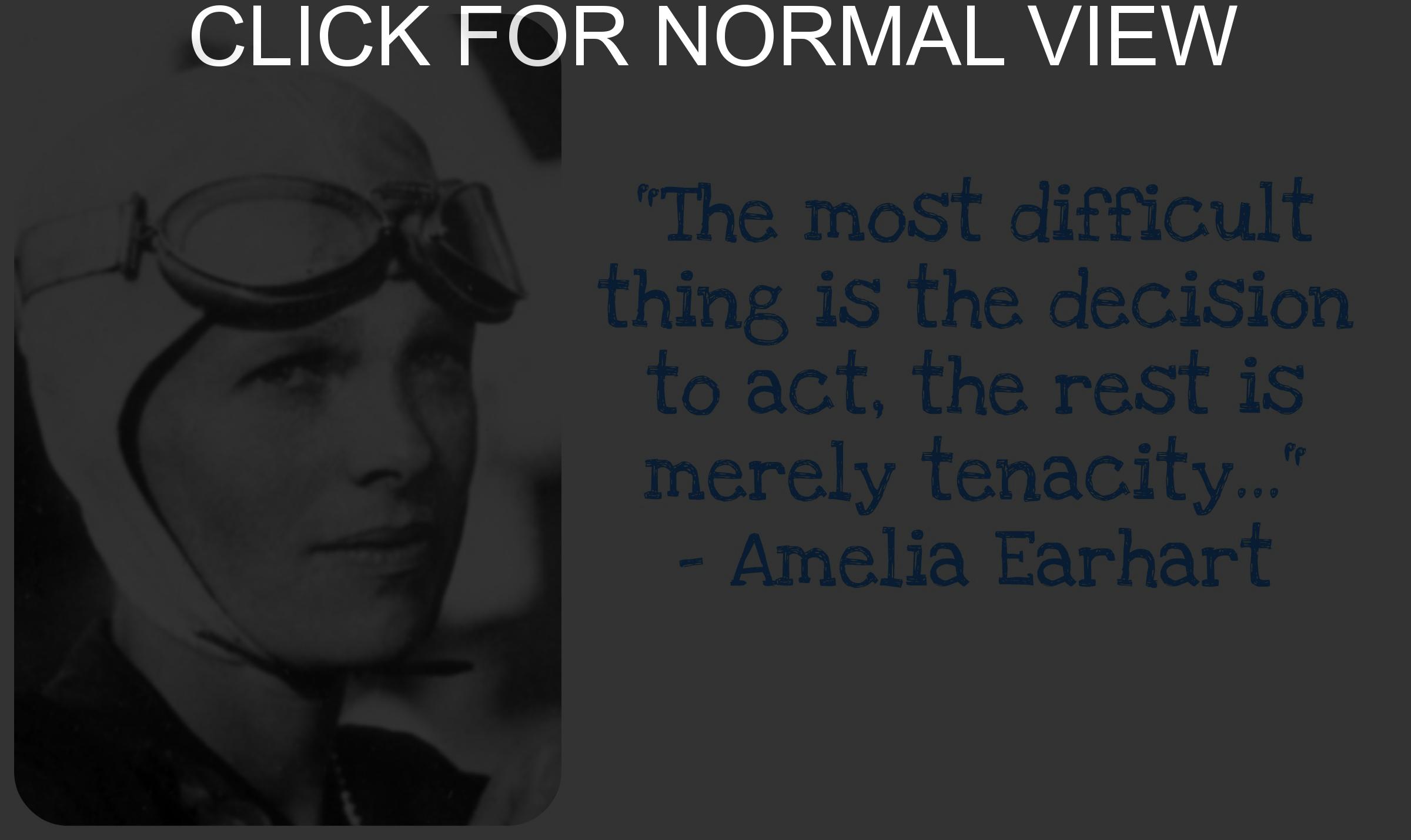
Popular Culture, both Appreciative and Satirical: Again, as a woman, I am constantly aware how the things around me, good and bad, affect my perception of myself and other women, and vice versa. And pop culture plays a huge role in that. So yes, I will write about Ken coming out of the closet, Raggedy Ann getting a heart transplant (from I Love You to Hotchacha) and changing into a different type of gal, Amelia Earhart, Lucy Lawless and other real women being general badasses: to me it is all fair game. I do not know that happiness per se is a part of it.

amelia-earharts-quotes-1

Environmental Poetry: Here I am probably lumping one strand of didactic poetry with the more general subject of nature poetry. Maybe I could keep them separate 20 years ago, but now? We are killing the planet, and I cannot ignore this, even when I am celebrating the beauty, generosity and wildness of Earth and Nature. So even when I am talking about bright yellow daffodils, there are likely to be other, darker colors lurking in the background.

Art/Zen Poetry: This is not the best name, but certainly when I look at a static piece of visual art, often in the quiet of my home or a museum, there is the feeling of movement in the people moving in the landscape, the dynamism of their stories, but also a sense, at the end of the poem I am using to capture that, of completeness and serenity.

zen-issa-o-snail-climb-mount-fuji

Occasional Poetry: Something happens, to me or friends and I write a poem to commemorate it. Once, a friend had a month of big trouble from a roommate, including a restraining order. After the judge threw the case out, and the roommate moved out, my friend had an Exorcism Party, and I wrote a series of poems for that, to create a ritual of getting the bad energy out and laying down the foundation for forgiveness and forgetfulness. Important work, I think, but not particularly happy.

There is undoubtedly more, Mr. Percy, but this is all just off the top of my head. Overall, I would say that happiness is necessary to the healthy person but it is not necessary to the working poet. Hopefully, we can be both.

Thoughts on Assignments as Inspiration

v1p003-foliated-initial-letter-s-q75-422x500

Well, when I arrived home yesterday afternoon, my film studies roommate asked if I would be willing to act in a video he and his friends were making. There would be no words, just actions and facial expressions. I thought, why not? While eventually the film will have copious voice-overs to cover our action, it did remind me of the classic drama/film exercise of the Scene Without Dialogue, which is wicked difficult to write and teaches writers a lot about body language and the unimportance of words, contrary to what most of us believe.

This reminded me of a poem that I wrote as a similar kind of exercise.


On the Difficulty of Avoiding S


There I am, trying to write a quiet

poem, trying to give the reader an idea

of what winter can be: the quiet

that can cover everything, the quilted

feeling of white hovering over, covering

everything. A mood. A moment.

A lifetime. But every word I look at

struggles and fights me. Verbs insist

on using that S, all the nouns bring

friends (not one, but several), and even

silence itself simply refuses to take this

kettle off the stove, and I am, not caught

but stuck, shedding S’s like snakes in spring.

Spilecki, Susan. “On the Difficulty of Avoiding S.” Byline. Oct 2002: 19.