Recognizing the Paradigm


I have been spending my summer vacation so far rereading the Harry Potter series. In Harry Potter: Goblet of Fire, the three European wizarding schools are set in a competition against each other. The individual champions must face dangerous tasks to prove how good they are at magic, strategic thinking and sheer bravery, all in the interest of fostering international and inter-school cooperation. Our Olympics are very similar, using a competition to foster cooperation.

This seems odd. Aren’t the skills that are inherent to competition kind of opposite those that are inherent to cooperation? I have been thinking about this in relation to my teaching these last two or three years. After teaching Martin Luther King Jr.’s “Letter from Birmingham Jail” two to five times a year for the last twenty-plus years, I have seen how he manages to avoid the language of combativeness and argument and replace it with a more nonviolent language of persuasion. He always treats his readers not as opponents who have to be put down or put right, but rather as people who don’t realize they are imminent allies or possibly already allies. This is a very different way of presenting one’s ideas and, if the American political discourse going on these days is a marker, possibly an alien one.

But it is not just politics that seem inherently combative. The news is full of this kind of language, from politics, to sports, to weather. So where do we go for alternate ways of speaking? I wonder if there are texts out there about artistic collaboration, people describing how they work together to create a shared vision. We need more of that and we need it yesterday everywhere. You can’t change the world’s paradigm if you can’t even talk outside the paradigm.

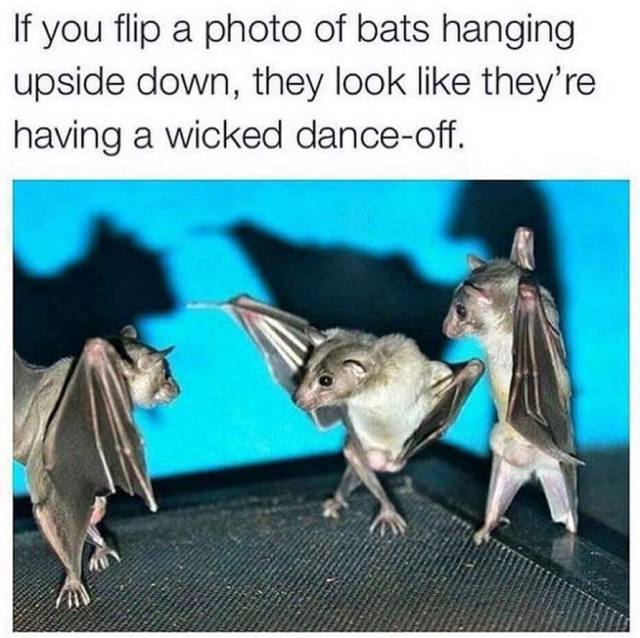
Bat Dance

Some thoughts on experimental poetry.

13100717_1031067010313350_6454586575174409223_n

Sometimes you want to dress up–top hat,

White tie and tails, a foreign medal, a cape.

The dance would be just as impressive,

A waltz, perhaps, certainly not something

With Cossacks. At least one would think

This would be the dance of formal bats,

Emotive, aristocratic and imperial.


One would be wrong. These are bats

Used to hanging upside down, letting blood

Rush to their heads when they are not

Bloodletting right side up. They are wild,

Jazz-inspired, impressionistic, and although

You expected the reverse, they are–in the best

Possible way–way out of your league.

Blue Heart

2016-05-04-aos-21

“The heart is blue/it aches for its own fuel…” –Jeremy Nathan Marks


Blue as the sky on a day when the rain has run

Its course. Blue as the water beneath ice, cold and waiting

For spring to warm and melt. Blue as the jaybird

Perched among the lilacs fooling no one. We think


Of fuel as a motive force, a thing for dead machines

To use to rev and stutter to life. We think of fuel

As the gas in the stove, not the blue flame that warms

Our food, turns spices into vehicles of heat. We think


Of blue as a thing of ice and need, not the bringer of sun

And day. But the heart itself knows blue in all its shades,

From the jeans at the foot of the bed to the hydrangea

And morning glory out the window, from the dark distant


Mountains up to the pale sky framing clouds. Sorrow.

Loneliness. A loss for words. A lost friend. A lost love.

In one direction, purple like thistle in highland heather,

Reminder of battles lost and won. In the other, green


Like the spring’s first blades of grass, poking through

Snow, asserting the incipient end of winter, for now.

For now I will cling to blue as to peacock feathers, wild

Elaborate abundance, souvenir of past good fortune,


Blue as my eyes searching every other eye for a sign:

Is spring coming? Will the sun return to me? Will there be

Warm breezes, bees, robins, picnics, new love?

Are you the one to bring these things into being?


Image from Agents of SHIELD.

Grr. Arrgh.

So yesterday in my last day at MIT for the spring semester, I wrote a fairly brilliant little poem about blue based on two lines from a Jeremy Nathan Marks poem. I thought I had successfully emailed the file to myself, but no such luck. So I am going to have to go in to MIT to get it, because it is very cool and I want you to learn stuff about blue. Because blue is cool.

That is all.

Ole!

flamenco_dancers_london

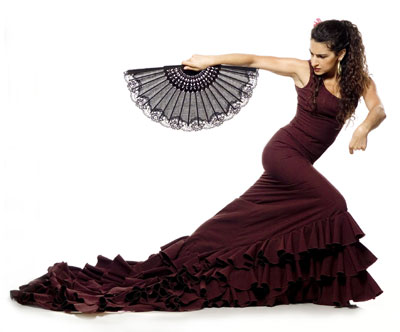
For three years, I studied flamenco dance at the local adult education center, mainly so I could write about it. (Writers are like that.) In the process, I discovered Spanish tapas, made friends, and realized that I liked darker colors than I had previously (cranberry, fir green, etc.). Also, kalamata olives! So, win-win.

As it happened, my teacher in real life is a florist, so I wrote this poem with her in mind, trying to capture the 3-3-2-2-2 rhythm of many of the different traditional dances, such as the allegrias (joy).


The Flamenco Teacher

for Malena, who is “just a florist”


The flowers are extravagant, unafraid,

brazen gypsies, holding nothing back

except their thoughts, haughty, bold

and sultry as a summer in Seville.

Their jade hips, clad in silken frills

blazing orange, purple, red, tilt

and turn toward the sun. They look

it straight in its single eye, like

matadors who challenge a golden bull,


like a flamenco dancer,

like two

who gaze

over their shoulders

at each other,

turn

away.


Petal, pistil, stamen, stem and root:

beneath your hands, these blossoms toss

heads, moody, beautiful, game for anything.

When you dance, your wrists become veined stems.


Your hands,

like yellow irises,

opening,

close,

blossoming,

fall.


Twelve students cower, nerves jangling, filled

with doubt, try to crack through shells built

of concrete, tackle your taconeo, heelwork drills,

and, though tangled in our fears, leery of passion

and lacking the proper heat, feel the music, loud

and fast, hear the sad lyrics, enter the beat of


flat/heel

flat

flat/heel

flat

flat–

heel/flat

heel/flat–


Something happens there, between one foot

and the other, with the keening, thrumming

guitar and the snap of castanets, something lean

and wary, beguiling, a trial by fire–

Uncomfortable? Yes, but vast and rowdy,

extravagant, filled with lust: just what we need

to travel out of our flustered selves, to become


tiger lilies

shot through

with fire,

nasturtiums

skilled

at breaking inertia,

bringing

noses closer

to smell a faint perfume–


We trust you. Down to our roots,

where trembling buries itself in layer

upon layer, we strive to act proud,

new, we strive to fling away nine-to-five

inhibitions, hear the complaint of the driving

guitar as part of our everyday. You try

to turn our white carnation lives

patiently, into vivid play, create

a place for us to grow hardy

and come to no harm, be flamboyant,

joyous: gladiola gorgeous and sure.

Your arms draw broad circles in the air.

We mimic you grimly, well aware

of our flaws. Our own earnest arms only


stammer and

stutter those

moves that

you

demonstrate

smoothly,

until the music

we hear–


and you can see the difference clearly, in our faces–


until

the rambunctious

music clamors

through us,

proves your faith in us

right.


Lightness follows, and grace, and, if it is not

consistent, if navigating gypsy space still

causes us to tighten our muscles and sweat,

if we still swallow our best instincts, if

our breath comes in broken, obstinate gusts–

still, we know we did it once, so we can.


Extravagance

and

patience,

our two

lessons.


Bulbs do turn into buds, the beginnings

of burning color. And buds, though they may

wait a long time and bloom late, always

open and climb if they get enough sunlight

and cultivation. We are, each of us, not such

different creatures, our shut petals stirring,

finally, when we trust. You are a florist. Just

so. What you have learned from flowers,

you must teach.
Psycho Sunday: Badass Women in Combat Gear

bidueller

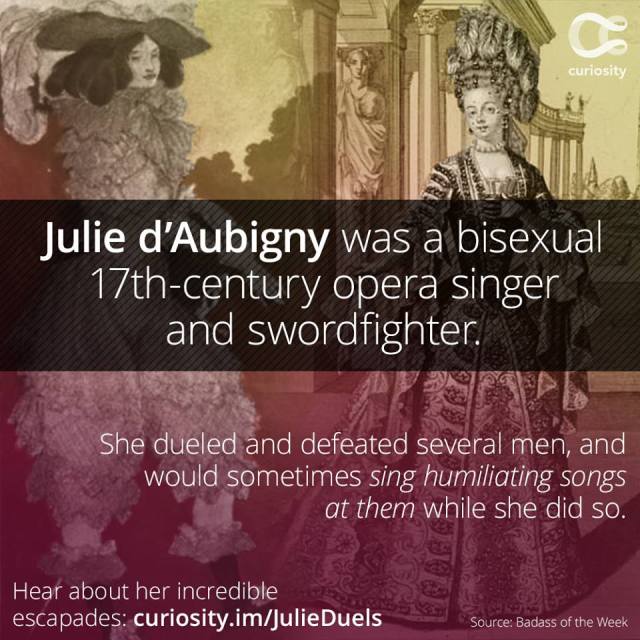
Julie d’Aubigny, AKA La Maupin, was an expert duelist and opera singer who garnered as much fame from her scandalous affairs as she did from her performances. She went on the run from the law with an assistant fencing master, posed as postulant to break a female lover out of a convent (using the dead body of a nun as a prop in the scheme), and once dueled three men in a row who challenged her after she kissed a woman at a ball. (She defeated, and perhaps killed, all three of them.) She would beat any man who threatened her or her fellow opera stars, and apparently had extraordinary powers of memory, as she could memorize an opera script in rapid order.

I am thinking this would be a good movie, if Scarlett Johansson could sing or Idina Menzel could do her own stunts…

Sources:
Clayton, Ellen Creathorne.  Queens of Song.  Smith, Elder & Co., 1863.
Cohen, Richard.  By the Sword.  Random House, 2003.
Gauthier, Theophile.  Mademoiselle de Maupin.  Trans. Helen Constantine. Penguin, 2006.
The Sketch Book of Character.  E.L. Carey, 1835