Getting To Know Characters

firefly cast 364700

So I have been rewatching Joss Whedon’s brief, lamented TV show Firefly and I started to notice how, especially in the pilot, one of the primary ways we get introduced to the characters and find out who they are is by watching their interactions/relationships with the other characters. This may seem obvious, especially for folks who are more used to reading/watching/writing for stage and small and big screens, but my background is primarily in poetry, stories and novels. In poetry what you primarily have to show your characters is their language. Do they talk like Tennyson’s King Arthur or like Popeye? In prose fiction, you get narrative description and internal monologue in addition to dialogue. But in more cinematic stories, all you get is what you can see and hear: costumes, dialect, and interactions that show, for example, affection or power or the like.

So we see the disillusioned Captain Mal Reynolds keeping a lid on the man he relies on for muscle and automatic weapons, Jayne, who is not a bad guy, just pragmatic and occasionally a little mean, when he teases the innocent mechanic Kayley for her obvious crush on the upper class doctor, Simon Tam. Mal has a love/hate relationship for the stylish Companion (read: courtesan) Inara, as in, he loves the woman and hates her job. Kayley and Inara, although seemingly opposites, clearly share an affectionate friendship, in part because they are two out of three women on a ship full of Manly Men, and in part precisely because they are opposites: each woman sees in each other relief from the day-to-day reality of their lives. Inara provides vicarious excitement for Kayley and Kayley has the innocence that Inara lost long ago.

And, sure the costumes help, but even if this were a radio play, I think we would very quickly see who these characters are—in themselves and to each other—and why we should care about them.

Just the Annoying Sidekick? Hardly!

jaynes hat

Here at San Diego Comic Con, the creator of Buffy, Firefly, Dr. Horrible and Dollhouse, and the director of two Avengers movies, just told us the nature and purpose of existence. He also revealed one of his next projects: a “Victorian female Batman” called Twist.

So during Joss Whedon’s big one-man show panel here at Comic Con, a fan dressed in a Jayne hat and a Sunnydale T-shirt asked what was the meaning of life, what was the nature of reality, and how we could be sane and happy in the world. And Whedon responded:

“You think I’m not going to, but I’m going to answer that. The world is a random and meaningless terrifying place and then we all—spoiler alert—die. Most critters are designed not to know that. We are designed, uniquely, to transcend that, and to understand that—I can quote myself—a thing isn’t beautiful because it lasts.”

Whedon added that “the main function of the human brain, the primary instinct, is storytelling. Memory is storytelling. If we all remembered everything, we would be Rain Man, and would not be socially active at all. We learn to forget and to distort, but we [also] learn to tell a story about ourselves.”

And Whedon said, “I keep hoping to be the hero of my story, [but] I’m the annoying sidekick. I’m kind of like Rosie O’Donnell in that Tarzan movie.” He keeps hoping to be Tarzan, but finding that he’s that weird monkey that nobody can tell if it’s a girl or a boy.

“My idea is that stories that we then hear and see and internalize—and wear hats from and come to conventions about… We all come here to celebrate only exactly that: storytelling, and the shared experience of what that gives us.” The shared experience of storytelling gives us strength and peace, Whedon added. You understand your story and everyone else’s story, and that “it can be controlled by us.” This is something we can survive, “because unlike me, you all are the hero of your story.”

Anders, Charlie Jane. “Joss Whedon Just Explained the Meaning of LIfe to Us.” io9.com. 11 July 2015. Web. 12 July 2015.

agent-carter-value-240x300

That a Woman Can Stand Up

carter

In Ester Forbes’ classic young adult novel, Johnny Tremain, the protagonist, Johnny overhears a meeting of the Sons of Liberty in 1773, where James Otis says, “We give all we have, lives, property, safety, skills . . . we fight, we die, for a simple thing. Only that a man can stand up.” Though I read that book for the first time maybe 35 years ago, that line has stayed in my head ever since. I thought about it recently, when I read the two blogs I reposted about Agent Peggy Carter.

I have been lucky not to have to deal with much overt sexism throughout my life. I recognize that as an overeducated middle class white woman doing a relatively “female” job (teaching English), I may have an advantage that other women don’t have. As we have seen with the recent tale of the Nobel Prize-winning sexist idiot who called women in the lab “distractions,” sexism hasn’t gone away and probably won’t any time soon. But it is another reason why we need shows like Agent Carter, to remind us of the time when women had to put up with that kind of bullshit all the time. We remember what our mothers, grandmothers, great-grandmothers, etc. fought for and we sign on for the fight too.

Because it isn’t only sexism. It’s racism, classism, homophobia, me-first politics and religion, and all the other intersecting forms of institutional oppression. And the people most hurt by each of these problems, and that may well include us too, need us to stand up and fight so that others may stand up. But how do we do that? Well, when I went to seminary the first class we took was on anti-oppression, and it required us to face our own isms and untangle them, admit to them, and start habits that would help us stop doing some of the things, having some of the thoughts, that lead us into participating in the oppressions. It’s hard work. You will disappoint yourself more often than not.

keepcalmcarter

So how do we find the strength to fight this battle? Well people like King and Gandhi found religion/God helpful. That can be good for some, although for others sometimes religion has only taught them to be ashamed of themselves, not to respect themselves. So I also like how popular culture heroes, and the writers behind them, offer us a line here or there that is just jam-packed with wisdom. In the last episode of the first season of Agent Carter, we see Peggy jump all the hurdles with her many skills: hand-to-hand fighting, code-breaking, shooting, parachute jumping, and most of all a crack brain and a big heart.

At the end, when one of her so-called “superiors” at work takes all the credit for Peggy’s efforts, another colleague asks her, “How can you just sit here and take that?”

She says, “I don’t need a congressional honor. I don’t need Jack Thompson’s approval or the president’s. I know my value. Anyone else’s opinion doesn’t matter.”

value

And that could just be a single line in a single episode in a single season of a single show. But it is going beyond that. Because when Hayley Atwell goes to ComiCon and other nerd-fest conventions and people ask her for advice on being strong, facing sexism and other oppressions, she tells them, “Know your own value.” And I just bought a T-shirt with her image on it and the phrase, I know my value, because although I do often know my value (thank you, many years of therapy), I also often forget and need a reminder. And this is what characters like Xena, Buffy, and Agent Carter fight for, inside the stories that transfer from TV to our heads: that a woman also can stand up.

Post-Modern Quilting Zeitgeist

ironman

My roommate, Jack, is, among other things, a filmmaker. So far he has made at least three short films in the apartment, which generally means that all the furniture that was in one room ends up in another for about three days. And the cat is intrigued. When he is not making films here, he is usually making films elsewhere as he and his peers all serve on each other’s films in different capacities. Aside from being a fascinating study in collaboration, this situation means that my cat frequently gets to take over his room when he is not around, and Musashi is very much for that.

When he is around, Jack tends to start conversations about writing that last for a couple of hours, usually starting with the words, “So, do you think…?” Last night, when I came home very late (thank you, Massachusetts Bay Transportation Authority, for failing us yet again!) after a lovely dinner of Chinese food with my poetry midwife Pamela (the one I can always count on to tell me whether the ending of a poem sucks; apparently the ones I showed her yesterday do not; Huzzah!), I found Jack actually cutting up VEGETABLES for his dinner.

In my sheer amazement at this, I got into a conversation with him that lasted two hours, largely about Post-Modernism and the death of opportunity for artists to make anything new, since we are all just rehashing what has been done before. Part of this is in regard to an ongoing conversation about my rewriting the Xena narrative, which I would argue is, yes, rehashing, but rehashing to change the world, or at least myself, which is the only way we ever start changing the world, after all.

We were discussing, among many other things, the coming reboot of the X-Files with Gillian Anderson and David Duchovny, the coming Batman vs. Superman movie (link to the retro trailer) and other rehashings of popular culture, and he was bemoaning (no, really, he was: and how often do I get to use that word?) the state of our culture and how if we only redo what we did we will not have the time, money or energy to do new things.

He is not wrong, but I do argue that this is, if you will, not the whole story.

He described how he sees humans, with our technology that allows us to see millions of miles into space, fly at hundreds of miles per hour, and delve deep into the Earth, as godlike. But it is, as one of his friends phrased it, a prosthetic divinity. We can only do these godlike things with our fancy tools. And with those tools we can do great good or great destruction.

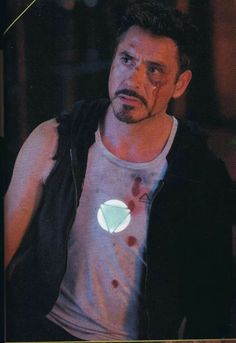
“Yes,” I said. “And that is the story of Ironman.”

Eventually, we agreed that archetypal stories have their place in human meaningmaking and identity production, and that as artists we can only be very intentional in what stories we tell and what stories we consume (read, watch, try to live into…).

How Point of View Changes Content

rashomon-toshiro-mifune-masayuki-mori-1950

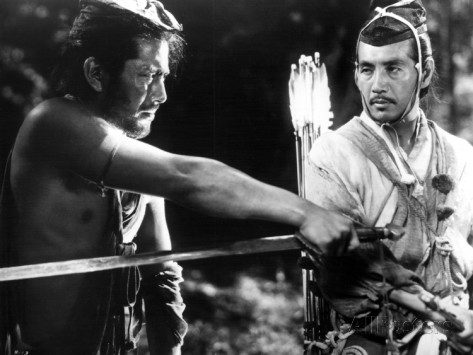
A long time ago, while I was living in Japan after college, two of my best friends from school got married. In my absence, they invited my parents to serve as Pinch Guests. I got three letters describing the wedding and they could have all gone to three different weddings for all I could tell. My mother described what everyone wore (and what is tulle, anyway?). James, the best man and a musician, described the bachelor party and the music for the wedding and reception. The bride wrote about how Wonderful everything had been it was just so Wonderful it was Wonderful! I suspect she could not remember a thing that had happened. This is an example of the Rashomon Effect, which as Wikipedia tells us is “contradictory interpretations of the same event by different people…. It is named for Akira Kurosawa‘s film Rashomon, in which a crime involving four individuals is described in four mutually contradictory ways.”

We have seen this used in lots of films and TV shows, from Hero and Gone Girl to the X Files and Garfield and Friends, and often the use is to shift blame or take credit, but I think it is fun to show how two different characters see an event and choose what they focus their attention on. You walk into someone’s living room and you might notice the interior decoration, but I am going to notice the absence or presence of books and what genres the owner reads. So in theory, if I have written a scene from the point of view of an American interior decorator and I change the pov to that of a Japanese businessman, the whole scene should change.

“Rashomon Effect.” Wikipedia. 24 March 2015. Web. 19 April 2015.

The Stories We Tell and Live Into

As a writer who is also a Christian, I find I think about Passover and Easter as being about the Story. We tell the stories of Exodus and the Passion of Christ at this sacred time of year to remind ourselves of who we are. That is what ritual is for: we eat specific food and tell specific stories and sing specific songs and we know ourselves as a people descended from the people who chose those foods, stories and songs, gathered or invented them and gave them meaning.

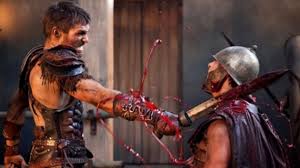
I think of this in the context of the popular cultural narratives that have been occupying my thoughts these last few weeks, in particular, the two separate and very different first century CE localities of ancient Greece and Rome, brought to us by Renaissance Pictures, Rob Tapert and Lucy Lawless, Spartacus: Blood and Sand and Xena: Warrior Princess. The more recent Spartacus (2010 to 2013) was about men (and women) bound to the gladiatorial arena. It was about despair and meaningless death. In contrast, the earlier XWP (1995 to 2001) was about changing one’s way and rising from death into something better.

images

I have binge watched XWP more than once. I rented the DVDs of Spartacus once; while the half naked gladiators were nice, there is no way I would watch those shows again. They are too much like Quentin Tarantino’s Kill Bill, in that when blood sprayed across my computer screen, I automatically found myself throwing up my arms to keep the blood from splashing across my face.

Yep. That bad.

I think about all this now because of the two major interpretations of Christ’s death and resurrection. There are people who talk about Christ’s dying for our sins, as if God was so pissed off with humans that he (it is always he in these readings) needed to kill his own Son to make up for our sin. Weird shit, that. In contrast, a more liberal reading says that humans killed Jesus, but God the Father/Creator/Mother resurrected him to prove to us lame humans that death is not the end, that God can overcome this enormous problem.

So when I look at the stories I use to constitute my identity, I often choose the ones that are not about characters trying to see how much they can get away with but about characters engaged in rescue and redemption, rather like the Jewish idea of tikkun olam, the repair of the world. It is an ongoing project, a battle that never is entirely won. All you can do is stay on the road, take good friends with you for the journey, and keep telling yourselves the stories that remind you who you are, and how strong you can actually be.

fal8