Auden Was Right: Orlando 2016

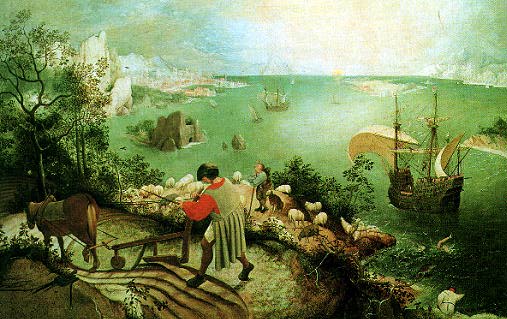
It feels strange today to read people’s Facebook posts about pizza and soccer, when I am reeling from the second largest massacre in US history (Wounded Knee was the first, folks). But then I was reminded of W.H. Auden’s poem about Breughel’s Icarus, both of which I reproduce here. Be kind to each other, children, and activate for control of automatic weapons.

Icarus

Musee des Beaux Arts

W.H. Auden


About suffering they were never wrong,
The old Masters: how well they understood
Its human position: how it takes place
While someone else is eating or opening a window or just walking dully along;
How, when the aged are reverently, passionately waiting
For the miraculous birth, there always must be
Children who did not specially want it to happen, skating
On a pond at the edge of the wood:
They never forgot
That even the dreadful martyrdom must run its course
Anyhow in a corner, some untidy spot
Where the dogs go on with their doggy life and the torturer’s horse
Scratches its innocent behind on a tree.


In Breughel’s Icarus, for instance: how everything turns away
Quite leisurely from the disaster; the ploughman may
Have heard the splash, the forsaken cry,
But for him it was not an important failure; the sun shone
As it had to on the white legs disappearing into the green
Water, and the expensive delicate ship that must have seen
Something amazing, a boy falling out of the sky,
Had somewhere to get to and sailed calmly on.

Third of Three for Jane

img_0535

Postcard from the Pillow


the world i have discovered

is full of more than sunsets and dreams

are not the only reason for being

sorry to leave you to sleep without me

supporting your head (if i had feet

i would stand by my decision) the world

is full of leaves and waking people

not limited by the fading colors

of sheets not tucked in and

not apologetic i am travelling

through a world so full of skyscrapers

and fireworks so full so full I bet you

wish you were here


Photo by Jane Kokernak.

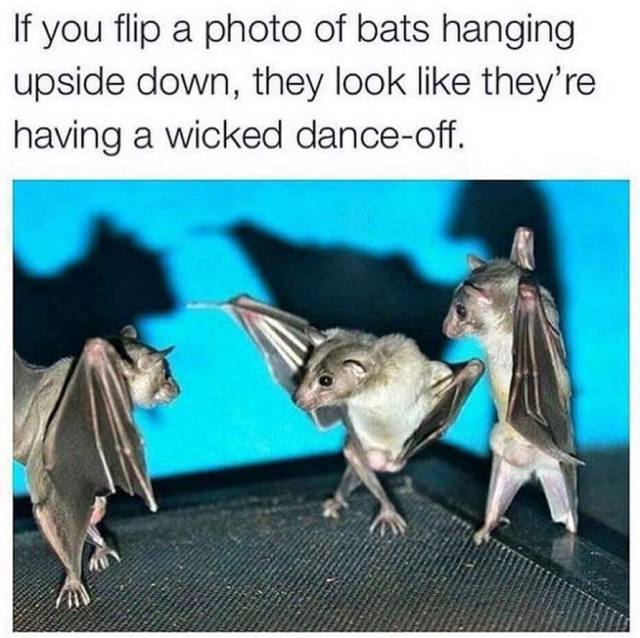
Bat Dance

Some thoughts on experimental poetry.

13100717_1031067010313350_6454586575174409223_n

Sometimes you want to dress up–top hat,

White tie and tails, a foreign medal, a cape.

The dance would be just as impressive,

A waltz, perhaps, certainly not something

With Cossacks. At least one would think

This would be the dance of formal bats,

Emotive, aristocratic and imperial.


One would be wrong. These are bats

Used to hanging upside down, letting blood

Rush to their heads when they are not

Bloodletting right side up. They are wild,

Jazz-inspired, impressionistic, and although

You expected the reverse, they are–in the best

Possible way–way out of your league.

Blue Heart

2016-05-04-aos-21

“The heart is blue/it aches for its own fuel…” –Jeremy Nathan Marks


Blue as the sky on a day when the rain has run

Its course. Blue as the water beneath ice, cold and waiting

For spring to warm and melt. Blue as the jaybird

Perched among the lilacs fooling no one. We think


Of fuel as a motive force, a thing for dead machines

To use to rev and stutter to life. We think of fuel

As the gas in the stove, not the blue flame that warms

Our food, turns spices into vehicles of heat. We think


Of blue as a thing of ice and need, not the bringer of sun

And day. But the heart itself knows blue in all its shades,

From the jeans at the foot of the bed to the hydrangea

And morning glory out the window, from the dark distant


Mountains up to the pale sky framing clouds. Sorrow.

Loneliness. A loss for words. A lost friend. A lost love.

In one direction, purple like thistle in highland heather,

Reminder of battles lost and won. In the other, green


Like the spring’s first blades of grass, poking through

Snow, asserting the incipient end of winter, for now.

For now I will cling to blue as to peacock feathers, wild

Elaborate abundance, souvenir of past good fortune,


Blue as my eyes searching every other eye for a sign:

Is spring coming? Will the sun return to me? Will there be

Warm breezes, bees, robins, picnics, new love?

Are you the one to bring these things into being?


Image from Agents of SHIELD.

Grr. Arrgh.

So yesterday in my last day at MIT for the spring semester, I wrote a fairly brilliant little poem about blue based on two lines from a Jeremy Nathan Marks poem. I thought I had successfully emailed the file to myself, but no such luck. So I am going to have to go in to MIT to get it, because it is very cool and I want you to learn stuff about blue. Because blue is cool.

That is all.

Ole!

flamenco_dancers_london

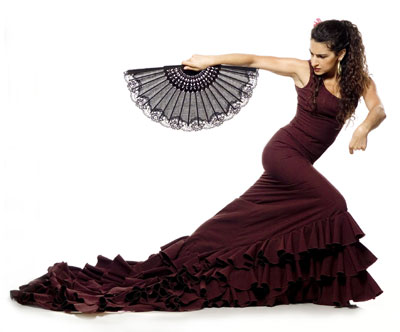
For three years, I studied flamenco dance at the local adult education center, mainly so I could write about it. (Writers are like that.) In the process, I discovered Spanish tapas, made friends, and realized that I liked darker colors than I had previously (cranberry, fir green, etc.). Also, kalamata olives! So, win-win.

As it happened, my teacher in real life is a florist, so I wrote this poem with her in mind, trying to capture the 3-3-2-2-2 rhythm of many of the different traditional dances, such as the allegrias (joy).


The Flamenco Teacher

for Malena, who is “just a florist”


The flowers are extravagant, unafraid,

brazen gypsies, holding nothing back

except their thoughts, haughty, bold

and sultry as a summer in Seville.

Their jade hips, clad in silken frills

blazing orange, purple, red, tilt

and turn toward the sun. They look

it straight in its single eye, like

matadors who challenge a golden bull,


like a flamenco dancer,

like two

who gaze

over their shoulders

at each other,

turn

away.


Petal, pistil, stamen, stem and root:

beneath your hands, these blossoms toss

heads, moody, beautiful, game for anything.

When you dance, your wrists become veined stems.


Your hands,

like yellow irises,

opening,

close,

blossoming,

fall.


Twelve students cower, nerves jangling, filled

with doubt, try to crack through shells built

of concrete, tackle your taconeo, heelwork drills,

and, though tangled in our fears, leery of passion

and lacking the proper heat, feel the music, loud

and fast, hear the sad lyrics, enter the beat of


flat/heel

flat

flat/heel

flat

flat–

heel/flat

heel/flat–


Something happens there, between one foot

and the other, with the keening, thrumming

guitar and the snap of castanets, something lean

and wary, beguiling, a trial by fire–

Uncomfortable? Yes, but vast and rowdy,

extravagant, filled with lust: just what we need

to travel out of our flustered selves, to become


tiger lilies

shot through

with fire,

nasturtiums

skilled

at breaking inertia,

bringing

noses closer

to smell a faint perfume–


We trust you. Down to our roots,

where trembling buries itself in layer

upon layer, we strive to act proud,

new, we strive to fling away nine-to-five

inhibitions, hear the complaint of the driving

guitar as part of our everyday. You try

to turn our white carnation lives

patiently, into vivid play, create

a place for us to grow hardy

and come to no harm, be flamboyant,

joyous: gladiola gorgeous and sure.

Your arms draw broad circles in the air.

We mimic you grimly, well aware

of our flaws. Our own earnest arms only


stammer and

stutter those

moves that

you

demonstrate

smoothly,

until the music

we hear–


and you can see the difference clearly, in our faces–


until

the rambunctious

music clamors

through us,

proves your faith in us

right.


Lightness follows, and grace, and, if it is not

consistent, if navigating gypsy space still

causes us to tighten our muscles and sweat,

if we still swallow our best instincts, if

our breath comes in broken, obstinate gusts–

still, we know we did it once, so we can.


Extravagance

and

patience,

our two

lessons.


Bulbs do turn into buds, the beginnings

of burning color. And buds, though they may

wait a long time and bloom late, always

open and climb if they get enough sunlight

and cultivation. We are, each of us, not such

different creatures, our shut petals stirring,

finally, when we trust. You are a florist. Just

so. What you have learned from flowers,

you must teach.

Some Internal Rhyme for You Heathens

Don’t take it personally, Gentle Readers. A good friend of mine refers to both her two large cats and her college students as the “little beasts.” It’s a term of endearment. Enjoy the poem.

Jack+Beanstalk-2-300dpi

Nightview from the Beanstalk, with Moon


I.

Up here, night clouds move like an ocean breaking

against the beanstalk, rolling into charcoal

horizonless shore as if racing to discover new worlds,

ferocious and green. But there are no new worlds

left to discover. There is no green; only heavy midnight

blue indistinguishable from eternity. Without moonlight,

this foliage is primal, reaching out. Jack says,

Navigate by touch as salmon do, heaving themselves straight

upriver, up waterfalls, up to invisible sky. It is easy to see,

here in the dark, how explorers of old could

convince themselves of destiny, cousin to destination,

of a magnet star calling to the magnet in the breast.

Quest is kin to conquest. Scaling these leaves, helmed

ghosts cry out in seven romance languages, Devil

take the hindmost! and flail their way into the surf

of sinuous vines. Like them, I navigate by clutching.

The shadows between my fingers chime

in recognition. No new worlds. No, now

we colonize each other’s bodies, plant flags

between each other’s eyes. Look at Jack. Unlike most

men, who brag of the last woman laid, he brags

of the last giant killed, lectures long into evening

how the storytellers got it wrong: he never chopped down

the beanstalk, he merely greased its leaves. Effective

enough. I stall his rehearsed glory, resume our dark climb.

Another hour, Jack calls back to me. Until the top? No,

until the moon. He laughs at the way it sounds, as if light

were a place one could climb to, or gloom were a path

to a door. The clouds roll in with a hush like high tide,

leaving their moisture to lick my face, muting my voice.

In the dark, every whisper is loud, every motion

endless. The tangled boughs bend and sway beneath me

like so much black lace. I pry my fingers open, pick

my way blindly upward, always upward, among vines

slicked by cloud, scrambled by breeze. Jack murmurs,

We could drown in all this wet air, these beans

the hue of stone weighing us down. I am glad I can’t see

the ground, justified in asking to climb here at night.

The last boundary, Jack says, lies above us,

in cumulus cliffs of lapis and glacial white

bigger than anybody’s fear of falling. Close your eyes.

What does verdancy mean now? What does height

signify? If beans tremble, but the night wraps

so close you cannot see them, do they fear?

Jack’s right about the beans. Their cool grey

leather strands hang like bits of bone: malleable

and waiting to be fleshed and shoved toward

birth. A terrifying change, that fall into chill

unknown, caught by too many dry hands, ferried into

this netherworld new life of pangs and urges,

blown into a crêche filled with straw and destiny–

that word again, whose syllables encompass end

together with beginning, doom with estimated

time of arrival. If I mapped this altitude, with its

webbed stems and stone lessons, if I charted these blue

fathoms where owls glide, curious as dolphins,

along the prow of this beanstalk, could I soon navigate

through cloudwracked straits to Jack, to a hidden country,

guided by owls as dolphins once were known to guide

ships past reefs, stars past the dark side of the moon?


II.

The white tiger moon crouches, tensed, then lacerates

the clouds and peels them back to reveal a new

beanstalk: both compass rose for a map, and waterfall

of black marble illuminated by blossoms like perfumed

gloves, phosphorescent and casting their own light

on my face, on Jack’s, on village and valley below.

The beanstalk spills from this incalculable height, spills in

ribbons of black ink that pool and trickle into boundaries,

lakes and vales, mountains and rolling roads, the soft

spread of forest–all drawn to scale, all shining like velvet

under moonlight. Soft laughter trails up to us

from the satisfied magician and his dry milkcow, no more

than stick figures in the corner below, near thatched

cottages strangling among the beanstalk’s tangled roots.

Perspective lies. From a distance, waterfalls appear

to pour upward the way the eye climbs from bottom

to shadowy top in the Chinese painting of this night.

From where the magician stands, I am not following

but chasing Jack, tracing his path through a garden

of moonbrightened blooms, up one side of this scroll.

The tiger moon rolls down the hill of clouds, gathering

white, only her eyes still bronze and reflecting our ascent,

her whiskers hoarding starlight, her musty breath

foregoing Confucian Analects to whisper, “Catch him,

catch him,” in the cold breeze. Daylight women have

chased Jack on land, to dig for his gold and fawn

over his beans in the hollows of tawny dunes. I follow

without such haste. Like him, I am an entrepreneur

of thinner atmospheres. I lure him as altitude does,

sew silver behind the clouds, knowing I will reap it again

before dawn, before its white heat scorches our hands to

flinders, tempts us to turn back from this endurance

climb in a vertical jungle gone wild, whose malachite

webs, only dimly seen, stir me until I could weep

from unspent passion, from the feminine ascendant and

racing in pale light. Nightingale song fills the leaves, says Jack.

But I am the silent roaring gale of this night, and my

fireflies flicker and cicadas chirr like the finger cymbals of

a dancer whose limbs twine and untwine as this

beanstalk does around Jack, even in the slightest of winds.


Spilecki, Susan. “Nightview from the Beanstalk,” Sow’s Ear Poetry Review 8 (Fall 1998): 3.
Readers Reply with Hue and Cry!

In response to my little rant the other day about rhyme, I received the following poems, the first from 10000hoursleft (also known as Mek):

After looking up the meaning of profundity
I came to the conclusion you’d likely be
Lumping me in
Oh for my sin
With those in the 98 per cent
Who keep aiming for ascent
To the lofty heights of the minority
To be a 2 percenter my priority
Joys of creative expression
Need not get a mention
Now, I’ll have to stop rhyming


And the second from Mike Allegra over at heylookawriterfellow:

Master sculptor, bearing chisel,
Paused his work so he could wizzle.
And so the marble had to wait,
For sculptor to evacuate.

5135_A-Sculptor-BW2

(Drops mic and strides purposefully toward the exit.)


So I offer here as an apology a sloppy English sonnet. It’s got the rhyme scheme, but I dropped that whole iambic pentameter thing because I am tired after a long day’s work, and iambic pentameter would just be too much on an empty stomach at 7:41 pm.

Apology

I pick up the mic dropped there by Mike

And scanned the sky for ascended Mek.

They used dread rhyme in a way I like

Unlike those whose Yules get decked.

You see, the Food Network is to blame

For my Poetry Traumatic Stress Disorder.

Their December hacks of Clement Moore

Send me screaming to the border.

It seems that rhyme may perhaps have uses

For getting the poet’s ideas across.

It’s not just used by silly gooses;

Sometimes its users are just the boss!

So I will try to embrace the rhyme,

But please, Lord, please, not all the time.

April is the National Month of Poetry!

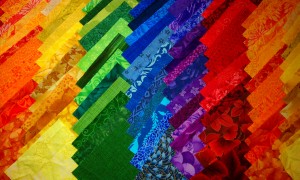
April is National Poetry Month. What that means is that a whole shitload of folks are going to be trying their hands at poetry for the next 20 days. That is a fantastic thing because 2% of them are going to make great art and discover a talent they didn’t know they had and their lives will turn into a frenzy of rainbows because of it. Like this:

rainbow_patches-300x180

And for that reason I will not, I swear, complain about the other 98% who are going to attempt 1) rhyme, 2) paragraphs cut up into three to seven word chunks per line, and 3) stabs at profundity.

I will not complain! I will not! Much.

Instead, I will try to be a bigger person and simply point to the poets who have shown me the way. Like the poem by Eliza Waters:

color was how
the world
sprang to life

to which I responded: “I love your poetry. You cut away everything that isn’t poetry and leave us with just the explosion of meaning. Thank you for that. We need you now more than ever in National Poetry Month, when a whole lot of people will be using all the other words you cut away and calling it ‘poem.'”

Verse Lengths

Invisible-measuring-tape

For some reason this week I seem to keep writing poems with verses of either three or six lines (except for the bridge poem which took its form from its subject). I’ve been trying to figure out how I get my verse lengths. The modernist poet, Marianne Moore, played around with uneven, inconsistent verse lengths, probably for some terribly modernist break-the-boundaries reason. I just find they give me the structure I need to get from the beginning to the end. Looking back just on what I wrote last week, I suspect the answer is that I take the length of the first verse, in which I have my starting idea that has its own length, and then I apply that length to all my other ideas. Not sure how much sense that makes, but it seems to be working for me, so…?