How Poets Get Published: A Rhinoceros and a Thesaurus Walk into a Bar…

rhino Back in December when I talked about line endings, I mentioned the late poet Bill Knott. I never took a class with him while I was getting my MFA at Emerson College, because quite frankly he was strange and a little scary and I already had tons more confidence in my poetry than in my prose. But from him, though second hand, I got two of the most useful bits of poetic advice I have ever gotten. The first was on line endings. The second was about how to play the publishing game.

These days, cover letters (CLs) are not as de rigeur as they were before the advent of online submissions, but they still exist and they still look pretty much the same:

Dear Ms. Editor,

I enclose my poems “Nonchalance,” “Influences,” and “What the Pear Says” for publication in The Stoat Literary Journal. My work has been published in The Rat Vomit Review, Villanelles for Voles, and Most Impressive Poetry. Thank you for your consideration.

That second sentence of the CL is the part where Bill passed on crucial info to me without knowing it. See, editors really prefer to publish people who have already been published. So you start by getting published wherever you can (The Rat Vomit Review was Bill’s way of exemplifying the sort of barrel bottom journal where you would start, a journal that took maybe 40% of submissions*). Then you have your first credit to put into that second sentence. Then you get a second, then a third, and then you start for the next tier, journals that take 35% or 30% and you replace the three journals and work your way up.

This process reminds me of a subletter I had one summer, Estelle, who said she only had two criteria: will it make me gain weight and will it look good on my resume?

So, no, do not start by trying to get your work published in The New Yorker. They only take folks who already have books. Do not waste their time and yours. Start at the bottom and work your way up. I have found that it takes sending any poem out between 15 and 25 times before I get a publication. It gets easier as you go along, but not much. So when they say Read Our Journal Before Submitting, they really mean it, and it is not just to get your money (libraries are your friends here…). You need to understand who actually publishes the kind of stuff you write and who really does not.

For those of you who are coming to poetry from academia, where apparently they tell you to send your journal articles to the top journals first and work your way down, well, that is just a very different world. And this makes sense, of course, because there are Way More WannaBe Poets than WannaBe Doctoral Candidates.

The three keys to this process are simple:

1) Keep good records. Know what you have sent, where, and when.

2) Get a good Rogets Collegiate Thesaurus. The importance of specificity and the Exactly Right Word in poetry cannot be overstated.

3) Develop rhinoceros skin. You will be rejected repeatedly for years. For every acceptance, there will be two dozen rejections, easily. Learn to take it. Learn to put your heart in the stuff you are currently writing rather than the stuff that you have sent like orphans out into the cruel world. You will last longer.

*Writers Digest Market books (Writers Market, Poets Market, etc.) have this info in their hard copy and electronic versions.


Villanelles: Why They Are so F**king Difficult (High Church)

Dylan Thomas, 1914-1953, was a fairly brilliant drunkard, and I do not believe that those two things very often overlap. I do not know what his relationship with his father was like, although it seems that many famous men did not do well with that particular issue, so I am guessing it was, at the least, a bit fraught. Lovely word, that. So here is the poem about death that most Americans seem to think of whenever anyone mentions a formal form of poetry that is not a sonnet.

Do Not Go Gentle into That Good Night


Do not go gentle into that good night,
Old age should burn and rave at close of day;
Rage, rage against the dying of the light.

Though wise men at their end know dark is right,
Because their words had forked no lightning they
Do not go gentle into that good night.

Good men, the last wave by, crying how bright
Their frail deeds might have danced in a green bay,
Rage, rage against the dying of the light.

Wild men who caught and sang the sun in flight,
And learn, too late, they grieved it on its way,
Do not go gentle into that good night.

Grave men, near death, who see with blinding sight
Blind eyes could blaze like meteors and be gay,
Rage, rage against the dying of the light.

And you, my father, there on the sad height,
Curse, bless, me now with your fierce tears, I pray.
Do not go gentle into that good night.
Rage, rage against the dying of the light.

Now a villanelle combines (in my opinion) the disadvantages of a sonnet and the advantages of a sestina. On the one hand, we only have two rhyme sounds: ite and ay, and we have to manage nineteen lines with these. On the other hand, once we have chosen the two lines to repeat, they take up eight of those nineteen lines. All we have to do after that is find six B rhymes and five A rhymes. No problemo! (Yeah, right.)

The problem I have with villanelles is that I have a hard enough time coming up with lines that I can say once, much less than eight times! Look at how Thomas manages this. He uses a succession that moves from wise men, to good men, to wild men, to grave men and finally to the speakers father. This is very similar to what pop music composers call coloring of verses, where each verse makes the same old chorus mean something different (as in Mark Wills country song Wish You Were Here).

But he very strictly follows the form: each of the two repeated lines is repeated EXACTLY every time. (I think of this as High Church Formal Poetry (HCFP): the rubrics are crucial and must be obeyed.) And to give the man his due, I suspect this is one reason why people ALWAYS remember his villanelle, even when they no longer have a clue as to what a villanelle actually is.

Thomas, Dylan. The Poems of Dylan Thomas. New Directions, 1952.

The Quiet Stories of Japanese Woodblock Art

ejiri_in_the_suruga_province

I lived in Matsuyama, Japan from 1990 to 1992, teaching English and studying kendo, Japanese fencing. Since coming home, I occasionally find myself wandering in the Japanese section of Boston’s Museum of Fine Arts (MFA). While the kimonos and swords are works of art and poetry themselves, with their elegance and attention to minute detail, it is the woodblock art, ukiyo-e, which grasped my attention and made me want to learn more. Two of my favorite artists are Hokusai and Hiroshige. Today I’ll tell you about the first.

Katsushika Hokusai (1760-1849) made many different kinds of sketches and woodblock art, from portraits and still lifes to erotica and illustrations for humorous poems, but what he is best known for is his landscapes, particularly his two collections of Views of Mount Fuji. Most people are familiar with the “Great Wave off Kanagawa” (I even have a T-shirt of this!), but some of his less famous works offer me the opportunity for yet another Important Excitement/Small Obsession. And lots of poetry.

For me, the beauty of his landscapes lies not just in the visual beauty, but in the way he adds people to the scenes, villagers and travelers who are responding to each other, to the view, to the viciousness and beauty of nature. And when I look at these pictures in art books and draw on what I learned as an East Asian Studies minor at Middlebury College, I start to tell myself stories about what is happening, who those people are, what their hopes and dreams are, and what small epiphanies I can open up by telling those stories through poetry. Here is one from my upcoming ebook, Icons and Action Figures (Batteries Not Included):

Mount Fuji Seen from Eijiri

(Hokusai, 1823~29)

Typhoon season begins this way:

with a sudden gust

slamming travelers forward

blasting road-dust against their legs

hat papers leaves becoming birds

flutter and soar, tumble and fly—

the trees lean after their leaves

longing to follow

while the travelers stumble

cursing luck and wind and all

impermanence, the loss of letters

painted by hands of white silk,

the loss of a sloping straw hat that leaves

a poor man vulnerable

to the gushing rains

that wait, like Mount Fuji,

solid and irrevocable against the sky.

Spilecki, Susan. “Mount Fuji Seen from Eijiri.” Verve (1996) 8:1.

My Yoga Sestinas

fly-fishing-flies-lures-for-salmon-royalty-free-stock-photo-1200x801When writing sestinas, most people choose their six words fairly randomly, but I like to make a phrase that I can unpack and repack as I go through, as I did with the example last time: how I love those six lines. I think this is why, when writing an essay about my yoga teacher, Erica Magro, didn’t work, and free verse didn’t work, I instinctively started writing sestinas. Those little things that she said were often between five and seven words. Like fly-fishing lures, they caught my wandering mind and hooked it and would not let go until I had worked it out through a poem. Here are just a few:

“The Writing Teacher at Yoga Class”: letting go after all that work.

“Tadasana: Mountain Pose”: now return to mountain stand tall

“The Yoga Teacher” (v 2.0): breathe space into bodies so patient

“Utthika Trikonasana: Extended Triangle Pose”: lifting your heart open to sky

“Shavasana: Corpse Pose”: wholeheartedly resting by means of shavasana

You start talking about one thing and then halfway through, if (when?) the magic happens, you find you are saying True Things. For example, here is an excerpt from “Utthika Trikonasana: Extended Triangle Pose.”

The heart

Wants free flight through the cerulean blue of open sky,

The terrifying free-fall of loving and being loved. To open

Up such an opportunity is incalculable risk. You trust lifting

Forces will hold you up, but the hard ground is a fact you

Can’t ignore, below you, waiting more patiently than sky to

Gather you up and keep you. Sky can’t keep you, only help to

Keep you standing straight, tall, with your beautiful heart

Practicing being open. I think of this in triangle pose, your

Legs a perfect V, one hand on the floor, one reaching for sky,

Your heart radically open. With the rest, I imitate you, lifting

My eyes to open up my chest, my heart, and keep it open.

It’s an odd way to see things, sideways, from below, open

To the world.

ERICA triangle

And of course that is the risk of poetry as well, opening heart and mind and keeping them open in a world that doesn’t make that easy. But I think that most disciplines teach the same lessons, whether it is poetry or yoga or martial arts or music. If you keep on seeing the world from an unusual angle, eventually, if you let it, it will change you.

Also, let’s face it: utthika trikonasana is just a whole lot of fun to say.

Ma, Kelvin. Erica Magro, Yoga Instructor. 2012. Kelvin Ma Photography. Web. 7 Aug. 2014. JPEG file.

The Joy of Sestinas

sestina

Sestinas do not get nearly the same kind of PR as sonnets, but I love them much more, in part because, rather than rhyme (and you know how I feel about rhyme), the key to a sestina is the end words.

Before I go on, I should say that no, Dylan Thomas’s “Do Not Go Gentle Into That Goodnight” is not a sestina. It is a villanelle. We tend to get taught these two together in school but there are many more famous villanelles than sestinas. Elizabeth Bishop’s “One Art” is another great example of a villanelle that you might be thinking of. Everyone always mentions these two whenever I talk about sestinas. Sigh.

A sestina is a 39-line poem with only six end words. The order of the repetitions is as follows from verse one through six:

ABCDEF

FAEBDC

CFDABE

ECBFAD

DEACFB

BDFECA

Then the envoi takes the first three end words of that last stanza as the middle words of the last three lines, and the last three end words as its last three end words:

BE

DC

FA

This means that A will be the final word of your poem, so you have to choose that one carefully. I find it also helps if one or more of your end words can act as two different parts of speech. For example:

Ode to the Sestina    (Draft 1)

Let me now speak in praise of the sestina, and how

it allows me to look at things six and a half ways. I

take a phrase said to me, like a cookie’s fortune about love

and travel, and I hold it up like a gem. All those

facets reflect the light differently. I shine six

colors of light on the phrase, giving each word six lines

to stretch its legs and walk around, do tai chi, line

up for lunch, grab a cup of Joe, and demonstrate how

my blue eyes see the wor(l)d. It only takes six

repetitions before I crack the code, find out why I

can’t stop thinking about the phrase. It’s like those

songs that get stuck in your head, with lyrics about love

or how you want your burger, but it’s not about love

so much as attention, herding the cats of the mind into line

for inspection. The joy and the challenge of those

constraints of a formal form of poetry like this are how

to spread the wild wings of creativity, as if I

were a caged eagle in a zoo. But I don’t feel caged. Six

words repeated offers far more space than six

strides or wing-flaps. Maybe the difference is my love

of words and the many worlds contained in them. I

could make an epic quest inside each one, draw a line

showing my journey on a parchment map. I can show how

it’s done (certainly it helps if at least one of those

words can be both noun and verb), but showing those

intricacies is easy compared to showing how a mere six

repetitions opens up meaning. I don’t always know how

it happens, that slow unwrapping as if a poem were love

or a veil or a kilt. But I almost always find that toeing the line

gives me freedom, the way banks constrain a river’s flood. I

follow the turnings, the rise and fall of the language I

have travelled all my life. And when alchemy turns those

words into a fragile kind of gold, then                        line

six

love

how

I six

those love

lines how

And this is where things always fall apart for a while. Then I just stand up and walk away. Go to the bathroom. Get more coffee. Make a sandwich. Work with some clients (because I often have an open Word document on my computer at work to add a line or two in between appointments). And I trust that the magic that has gotten me this far, and the Working Poet’s Work Ethic that makes me go at it again and again, will see me through. Eventually.

The Pearl of English Poetry

Most people know what a sonnet is because in addition to simply hearing about them in English class, they are exposed to lots of examples from Shakespeare and even get to watch Snoopy act out Elizabeth Barrett Browning’s famous “How Do I Love Thee” on Be My Valentine, Charlie Brown (1975):

There are basically two rules to sonnets, depending on whether you take the English/Shakespearian or the Italian/Petrarchan:

  1. Fourteen lines in iambic pentameter (five feet, with each foot an unstressed and then a stressed syllable)
  2. Rhyme scheme: English ababcdcd efefgg OR Italian abbaabba cdecde

Note that both types have an octet (eight lines) and a sestet (six lines); these are generally used as a sort of problem/solution setup. This how Sherman Alexie can get away with calling this next example a sonnet of sorts. If you know the format, you get the joke.

Steamed Rice

Whole Wheat Bagel

Egg White

Baked Chicken

Tomato Soup

Broccoli

Cheddar Cheese

Garlic Clove

Grape Nuts and Non-Fat Milk

Almonds

Appleß

Ice Water

Insulin

Hypodermic

Alexie, Sherman. The Summer of Black Widows. New York: Hanging Loose Press, 1996.

Muses I Have Known and Written… Part 2

Athena-Pin-up

One thing that impresses me about my yoga teacher, Erica, is how, after we move into that final, fetal position, she always talks about how to use our practice in our busy lives. “The goal is to take the way you feel right now out into the world,” she might say, so that when we get overwhelmed we can call that feeling up and get back into a quiet place mentally and emotionally. We bow to each other at the end of practice, and return to the hectic pace of our “normal” lives like infants tugged from the womb into the cold harsh world against which we have no defenses.

Another time she said, “It’s a fact that the bad things that happen to us are like missiles that travel further than the good things. And that’s okay, because that’s the body trying to protect us from danger. But we need to bring our mind to reassure the body that it’s going to be okay. And that takes practice.” I was stunned, since this exactly explained the pain of a friend of mine who pretty much had been mentally abused by some professors when she was studying for her PhD and has had great difficulty with her writing process ever since, because those years taught her self-doubt to a crippling degree. I repeated the words to myself silently so that I could share them with her. At first I was surprised by the deep wisdom of a woman who is only maybe twenty-eight years old. Then I remembered some things I had said at that age, advice I’d given friends, unexpected insights that I blurted out in my grad school classes. Wisdom is often a byproduct of age, but there is nothing to say that it cannot also be a byproduct of the freshness of youth.

After attending Erica’s classes for three months, I tried to write an essay about the experience, but that didn’t work. Then I wrote the following poem, which I didn’t really like and quickly scrapped:

The Yoga Teacher (v 1.0)

I grew up with a father, brother

God, enthroned holding a rod

In one hand, a shepherd’s crook

In the other, like Aten, gilded,

A pharaoh god to rule both lands

By day. I always thought the spirit

Who flew between them should not

Be a dove, to coo helplessly at war

And devastation, but an owl,

Hunter by night, embodied spirit, holy

To Athena. You remind me of her now,

A grey-eyed goddess, a long dark line

Flowing smoothly into the next posture:

A warrior, ready to throw her spear

Straight through the enemy hordes,

Defeating their violence the hard way

With sweat and strength, and a calm

Eye that knows how to aim true, facing

The uproar outside herself and that within,

Knowing the poetry of long, patient practice.

The problem is that the first part starts so far away from the second part, which is the whole point of the poem. Erica’s tan skin and grey eyes and her powerful Warrior Two posture reminded me of Athena, who Homer always called the grey-eyed goddess. And since my second Masters degree is in Christian theology, I thought I had to start from the God I actually believe in before I could start talking about a Goddess I think is really cool and strong. And although the imagery in the second stanza works, it just seems weird to go from Hebrew to Egyptian to Greek religion just to talk about an Italian American teacher of an Indian practice! I was pushing it, trying to force the connection.

Note to self: that almost never works.

Muses I Have Known and Written…

erica_03

Okay, yes, I have asserted most forthrightly (if that is a word, which I am pretty sure it is) that There Is No Muse. And that is mostly true. At least 98% of the time, there is no gowned goddess who will descend upon your writing table To Inspire You.

Except…when there is.

I am not saying it happens often. But, for example, back at the end of May, my friend Amanda and I made a pact to take one or two exercise classes at our gyms. I dove in headlong. I took a Zumba class, which was frustrating, exhausting, confusing, loud and sort of fun, in a where-is-my-inhaler kind of way. Then I took a “spinning” class and found out why padded bike shorts are a Really Good Idea. (“Stationary bikes,” Elaine, the instructor, confided in me afterwards, “really weren’t made for girl parts.”) Then I took my first yoga class. Enter Erica.

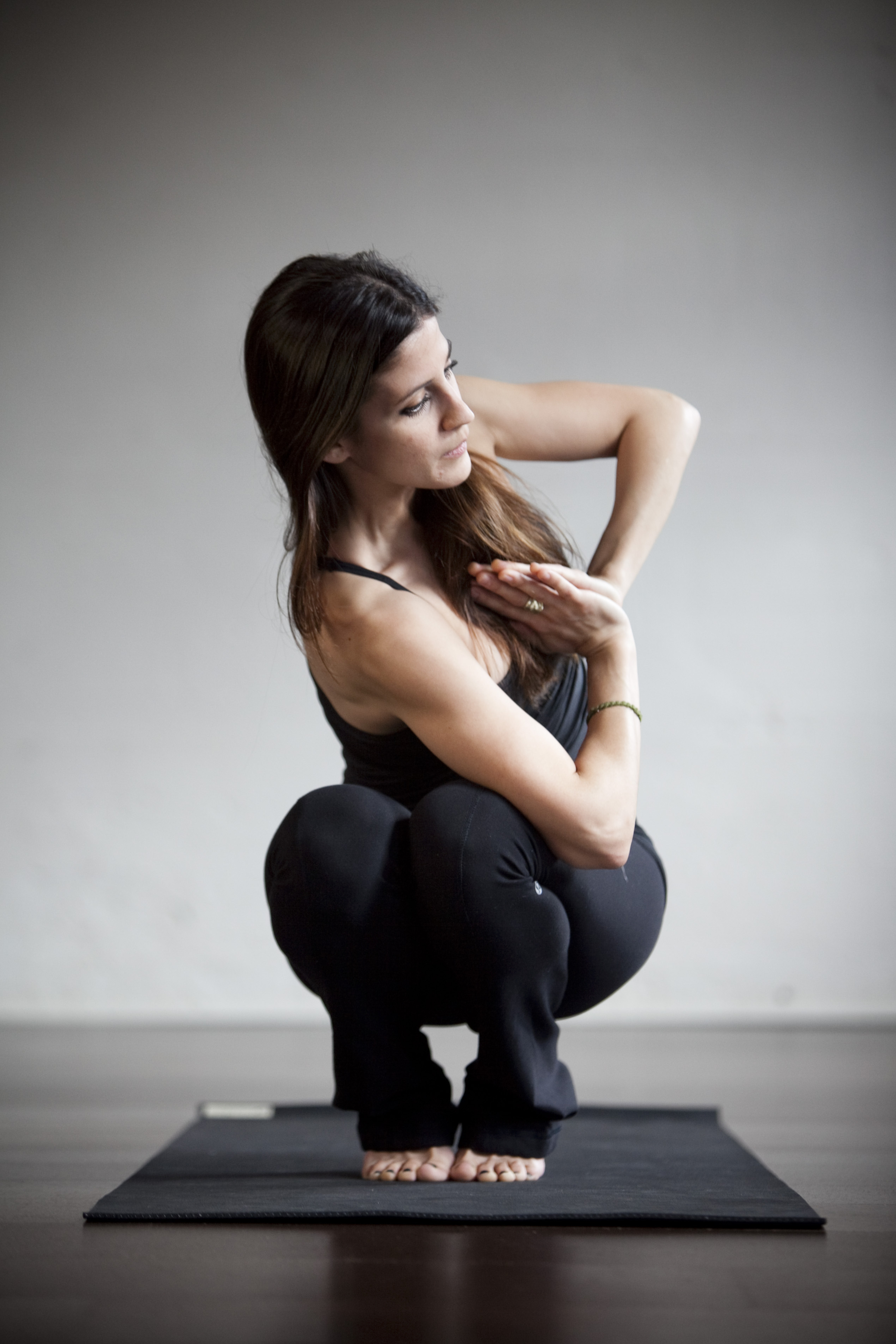
The classroom was maybe thirty feet long, with a mirror along one side. A student showed me where to get a purple mat and two big blue foam blocks. Then this small woman came in wearing a black tank top and black yoga pants. She adjusted the frigid air conditioning, connected her iPod to the room’s sound system and took a block to sit on at the front, quietly greeting the people she knew and introducing herself to the rest of us. She opened the practice with seated meditation and then we began.

The names of the yoga postures are interesting. Some are very old, like shavasana, Corpse pose, and katasana, Chair pose. Others, like Happy Baby and Airplane, must be new interpretations of ancient postures. Some are obvious, like Tree, and others not, like Half Pigeon. (I still don’t know if there is a full pigeon.) We moved from one posture to another to gradually stretch, bend and wake up the entire body, all the muscles, all the joints. And because yoga is meditative, we paid close attention to our breathing. (“Take a deep breath in, and a long breath out. Good job.”) I haven’t always been good at meditation, so I’d feared the yoga my friends raved about would be tedious. It was anything but. And though we only held each pose for five seconds, when the hour was up, I had stretched every muscle in my body. Such a simple set of exercises, yet my sweat dripped onto the purple mat. And Erica did them all with us, modeling the right alignment as she explained how to do each one and what to avoid.

My balance was not very good at the start and I frequently mixed up my left and right. But Erica’s voice was a golden thread calmly guiding us, saying things like, “This back stretch is a good counter-posture to too much texting” or “It’s nice to stretch your beautiful feet.” Or, towards the end, when she had us stretch out in shavasana (and I was thinking, “Sure, lie here like a corpse, that’s positive!”), she said, “Let your feet splay out and let your hands face palm-up, in a gesture of receiving. And relax, without needing to do anything, by means of shavasana.” That is when I realized there was more going on there than I imagined.

I took other classes with other yoga teachers (including one who kept us in postures for a long time but did not do them herself), but I kept returning to Erica’s class. She would say things like, “Gently stretch your forearms. So good! So healthy!” or “Let your heart open to the sky.” She could have said, “Open your chest up” or even “Open your heart to the ceiling,” but she didn’t. The idea that good posture could mean that my heart and the sky could have a connection is, to me, astonishing. I don’t think I have ever before met anyone who speaks poetry in real life, sincerely and without irony, to communicate to ordinary people about the beauty of their feet, their lives, their world. For me, that is a good portion of what poetry is for.


Ma, Kelvin. Erica Magro, Yoga Instructor. 2012. Kelvin Ma Photography. Web. 7 Aug. 2014. JPEG file.

Rhyming Poetry vs. Song Lyrics

hourglass table

Okay, so back around Christmas I indulged in a rant about rhyme. To my mind, rhyme in poetry is a lot like sex in movies. Often it is irrelevant, not really helping the plotline or character development. It is there because people expect to see it there. It makes them feel like they are getting the Real Thing, whatever the heck that means. But this is about rhyme in printed poetry, or in the annoying jingles on TV commercials. In other contexts, rhyme is appropriate and powerful.

Usually that is because the rhyme is original, not the moon/June/spoon pablum we get when we are kids. (Although, having said that, I must admit that a lot of Dr. Seuss and pretty much all of Shel Silverstein is pretty brilliant.) But often you get stopped in your tracks by an original rhyme. This happened to me Friday. I was in the Park Street subway station, on the Red Line waiting to go to MIT, and there was a female musician singing with her guitar. I had never heard the words to Anna Nalick’s “Breathe (2AM)” and the chorus mesmerized me. Here it is:


‘Cause you can’t jump the track, we’re like cars on a cable
And life’s like an hourglass, glued to the table
No one can find the rewind button, girl.
So cradle your head in your hands
And breathe… just breathe,
Oh breathe, just breathe…


This rhyme is awesome because the images are so original. That rhyming couplet has been stuck in my head for days. It sounds true even though I can’t entirely decide what it means.

In older and more traditional poetry, rhyme helped people to remember things. We still use this in the alphabet song. Other cultures developed other mnemonics. Old Scandinavian poetry used alliteration, the repetition of consonants. So, for example, from “The Seafarer”:

A song I sing                                     of my sea adventure

The strain of peril,                         the stress of toil,

Which oft I endured                         in anguish of spirit

Through weary hours             of aching woe. (Kennedy 19)

Now that we live in a world where people read silently and do not do a whole lot of performing for their friends at parties (or at least not that way), such mnemonic devices, which clearly still work as my experience shows, are no longer really necessary. I think this today. I reserve the right to change my mind tomorrow.

Kennedy, Charles W., ed. An Anthology of Old English Poetry. New York: Oxford UP, 1960

Every Rant Deserves an Exception: Muses I Have Known and Written…

Even before I finish my title, I have to start this blog entry because I can’t choose which preposition to use: for? to? about? All of the above? Over the years, I have had several people who have inspired me to write poetry. I don’t really count the men as muses, because to my mind love poetry is a different kettle of gummy bears. Knowing that people have been writing love poetry for 4,000 years or more is a lot of pressure, and I most often handle it by being a bit self-deprecating or funny. I see a lot of humor in romance. Let’s face it, being in love is a lot like being a little insane, and as Buffy the Vampire Slayer would say, “Love makes you do the wacky.” I am not talking about poetry like that, although it is a good idea for a future post.

I am talking about normal people in my life, friends, teachers, whose way of being in the world or the way they talk just triggers either imagery or juxtaposed ideas or a desire to unpack why they are unique to me. This is more like what poet Maggie Anderson calls “important excitements”: the (usually) short-term artistic obsessions writers and artists indulge in. Think of Monet’s 250 paintings of that lily pond. Like that.

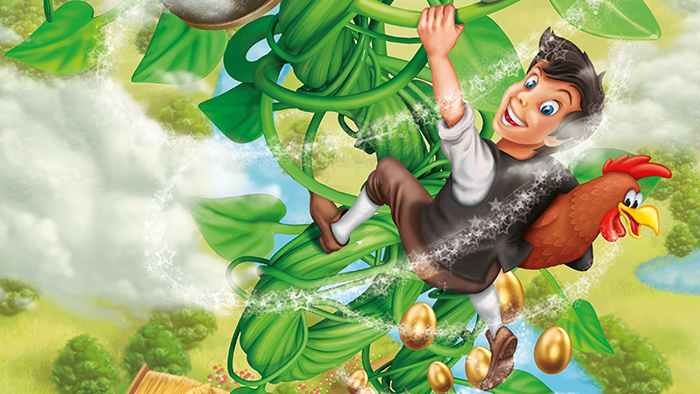
greatwave This happens to me a lot. Usually I get excited about things, rather than people. At some point I will write a post about why I so adore the ukiyo-e woodblock artists from Japan, especially Hokusai and Hiroshige. Or my obsession with writing about characters from popular culture, such as Raggedy Ann, Barbie, Xena, or Amelia Earhart. Or the two months I spent writing incredibly long poems about Jack of the Beanstalk.

Jack_700x394

Sometimes, though, I meet someone who snags my attention. Take one of my flamenco teachers, Malena. I started to study flamenco dance out of curiosity and stayed out of fascination. It should be said that at no time in those three years did any actual talent for dance on my part ever appear. I learned a lot about rhythm and can now clap in time, even when the time is complex, and I can twirl my hands elegantly (big life skill, that). I appreciate Spanish food and rough guitar music and I can still do a little of the footwork (it helps pass the time waiting in subway stations).

cotton-ruffle-tank-dress_7-hot-dresses-from-marc-jacobsBut more than anything, what I saw was a way women could be both feminine and strong. I normally always associated femininity with pink dresses, a lot of skin, some dumb chick simpering up to a man. Bleah. The women who took flamenco class weren’t like that, and Malena herself was (and is) one tough chick in command of her own body. Flamenco is a fiercely passionate kind of dance, noisy, and in some way very feminine. Empowering. So when I wrote more than a dozen poems about flamenco, whether or not Malena was the topic, she was in many ways the trigger, the inspiration. The following is an excerpt from “The Flamenco Teacher” (for Malena, who is “just a florist”):

Petal, pistil, stamen, stem and root:

beneath your hands, these blossoms toss

heads, moody, beautiful, game for anything.

When you dance, your wrists become veined stems.

Your hands,

like yellow irises,

opening,

close,

blossoming,

fall.
The key challenge was to express the visual images and the strong emotions with beautiful words, while also keeping with the kind of ropy uneven rhythm of the different dances, most of which are in 12, not 4/4.

I will leave you with a video of the legendary Carmen Amaya (1913 to 1963) dancing awesome flamenco.