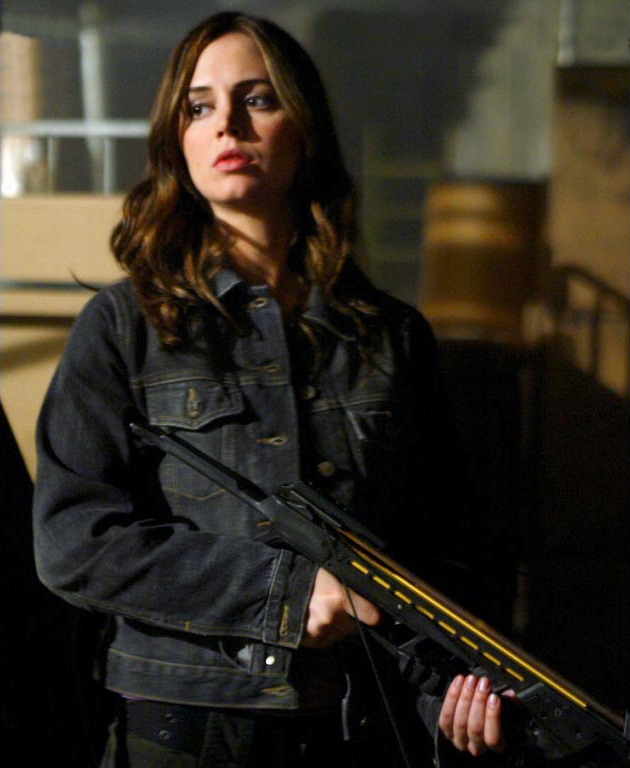
Badass Women in Combat Gear, #5 1/2

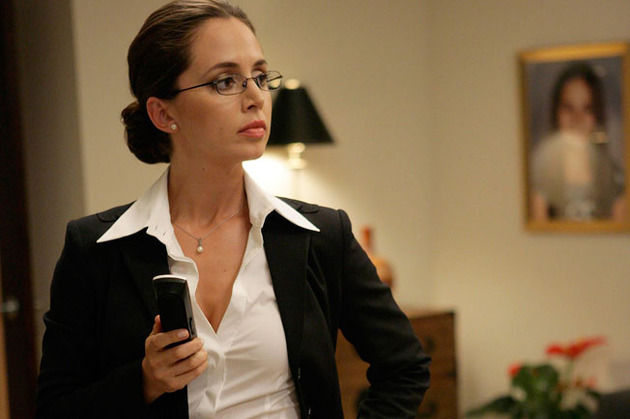
So last month when I put our Eliza Dushku as our BWCG #8, our buddy Heylookawriterfellow commented, “Is it wrong for me to request a badass woman who wears glasses? Ahem. Perhaps I am revealing too much about myself.”

At the time, I thought, well, in both the DC and Marvel comic-verses, mainly the heroes wear glasses when they are undercover. Diana Prince and Clark Kent take off their spectacles to be come Wonderwoman and Superman.

Agents of SHIELD and Agent Peggy Carter also put on their glasses when they don’t want to be recognized, and we all know how effective that is. And the Dushku also wore glasses in the pilot for Dollhouse as a part of her new persona.

dushku_dollhousepriemiere_featured_photo_gallery

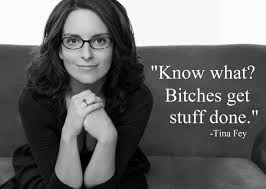
So I thought and thought until I came up with an actual badass woman in combat gear superhero who actually wears her glasses as a superhero. Heylookawriterfellow, I have found one at last: Tina Fey. You’re welcome.

images-1

Writing in the Body: A Feminist Reminder

31tapkPvrML

Working at MIT, I meet a lot of people who seem to think they are brains with big Mickey Mouse gloves: the ideas go zip-zap straight from the synapses in the grey matter to tippetty-tap on the keyboard. This is, unfortunately, not the case. Ergonomics matter because we write in the body. If your body is uncomfortable, then your brain will be uncomfortable and distracted, and that will affect your writing. If your seat is too low or too high, or worse yet, if you are doing that laptop in your lap thing, then you are in a suboptimal position. You can sustain that for a little while, sure, the same as you can sign a form on someone else’s back, but that doesn’t mean you want to write a novel that way.

This probably sounds obvious if all you are looking at is biokinetics, the body working as a machine for productivity. If you treat a machine better, then you will probably get a better product, and possibly even a more consistent product. That is the capitalist, patriarchal way of looking at this subject. I prefer a more ecological, feminist way of looking at it.

Rather than thinking of writing as production for some kind of profit, let’s think about it as reproduction, pulling the seeds out of ourselves to let them bloom and flower in the world, to encourage other people to do the same. Perhaps this metaphor is on my mind because yesterday was Veteran’s Day and that reminded me of the phenomenal art installation constructed at the Tower of London last year to commemorate Britain’s entrance into World War I: Blood Swept Lands and Seas of Red. Art doesn’t have to imitate other art to be inspired by it.

800px-Blood_Swept_Lands_And_Seas_Of_Red_IMG_1745

More importantly for me as a feminist, the idea of writing in the body and from the body is a way to revise (literally, re-see) a problematic trope in Western culture, that (mental) discipline equals (physical) suffering and that this is potentially a good idea. St. Paul wrote about the “thorn in the flesh” (2 Cor. 12:7-10), the pain that keeps us from getting above ourselves, the pain that keeps us from hubris, pride, equating ourselves with the gods or G-d.

This started with the Greeks and the Christians took it and ran with it. And while in certain cases, human pride is absolutely a major problem, particularly when it is coupled with anthropocentric economic policy and action, for a lot of people (especially members of marginalized communities) the real problem isn’t pride so much as shame. The history of overvaluing the mind and denying and devaluing the body is deeply entwined with the oppression of women, minorities, nonhuman animals and the Earth. So when we take care of ourselves while we write, when we treat our bodies with respect and gratitude despite whatever hellish deadlines we are up against, we are engaging in a feminist practice that we can take out into the world in other ways.

Closet Shopping for the Blocked Writer

Style_shopping

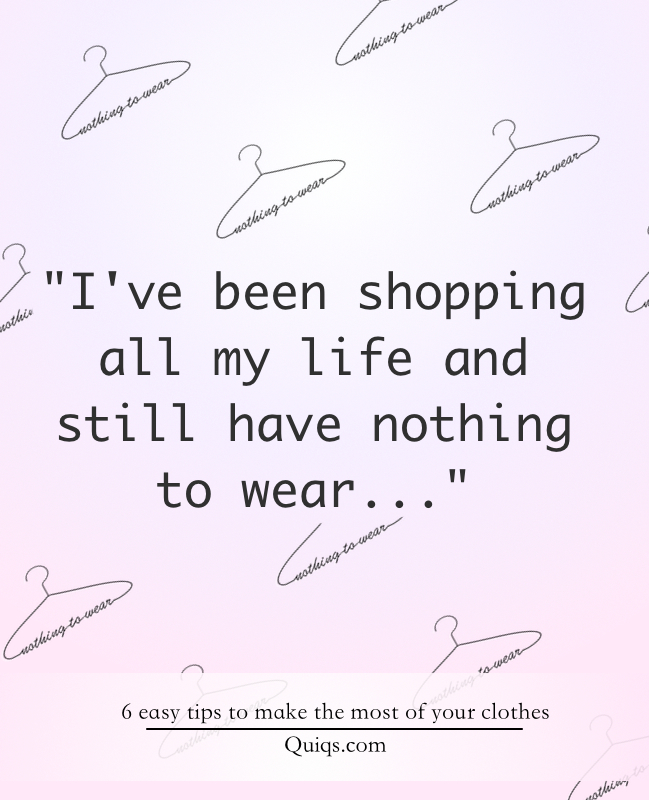
It is easy to get into a rut, whether it comes to writing, cooking, or even wearing clothes. I do this all the time. Since I teach writing, I tend to say the same things over and over again, every semester. Since I functionally live alone, I eat the same things over and over, especially if they are easy, like baked chicken or spaghetti. And, in part because I went to Catholic school for eleven years, where I wore a uniform every day, I tend to fall into patterns of clothing.

Lately it was pointed out to me that, although nobody really cares what I say about writing or what I eat, what I wear will change people’s opinions of me, so I need to be much more intentional about it. One of the ways I have tried this is throwing out worn-out clothing even if it does have a few more months wear left in it and another way is what a friend calls “closet shopping”: digging around in the deep, dark recesses of my closet for things I haven’t worn in years. I’ve also dug around in my jewelry drawer so that I am not simply wearing the same necklace and earrings every single day.

I will say I feel better by doing this. And it made me wonder how it might work to help the rut I am in with my writing. Are there themes I used to write about more that I can revisit? Should I dig out one of my books of Hiroshige or Hokusai woodblock prints and find a new one to poetize about? Should I pick six words off my refrigerator and whack out a sestina?

And since I can’t figure out how to end this post, I will do what songs in the 1980s always did, when they kept repeating the refrain but turning the sound further and further down… I was going to do this by making the font progressively smaller, but wordpress won’t let me. Sigh.

War Poetry

220px-Lieut.-Col._John_McCrae,_M.D.

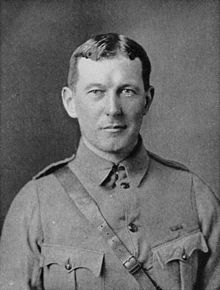
“‘In Flanders Fields’ is a war poem in the form of a rondeau, written during the First World War by Canadian physician Lieutenant-Colonel John McCrae. He was inspired to write it on May 3, 1915, after presiding over the funeral of friend and fellow soldier Alexis Helmer, who died in the Second Battle of Ypres. According to legend, fellow soldiers retrieved the poem after McCrae, initially dissatisfied with his work, discarded it. ‘In Flanders Fields’ was first published on December 8 of that year in the London-based magazine Punch.”

In Flanders fields the poppies blow
Between the crosses, row on row,
That mark our place; and in the sky
The larks, still bravely singing, fly
Scarce heard amid the guns below.

.

We are the Dead. Short days ago
We lived, felt dawn, saw sunset glow,
Loved and were loved, and now we lie
In Flanders fields.

.

Take up our quarrel with the foe:
To you from failing hands we throw
The torch; be yours to hold it high.
If ye break faith with us who die
We shall not sleep, though poppies grow
In Flanders fields.

.

A good source for war poetry from around the world is Carolyn Forché’s anthology, Against Forgetting.

“In Flanders Fields.” Wikipedia. 11 Nov. 2015. Web. 11 Nov. 2015.

Psycho Sunday: Badass Women in Combat Gear #6

maxresdefault

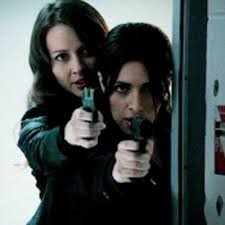
Back to your everyday basic black combat gear (albeit with heeled boots—how do these actors run in these boots???), on the Minority Report-esque TV show Person of Interest, we eventually shift from the two male main characters, the quirky Mr. Finch (Michael Emerson) and the silver fox John Reese (Jim Caviezel). Starting at the very end of season one, the showrunners introduced the character of “Root,” a genius computer hacker who renamed herself after the root code in a computer program. She is pretty much psychotic, and nobody does psycho like Amy Acker, because even when she is preparing to torture you she is just so darn sweet.

images

Starting in Season two, they also introduced Sameen Shaw, a former ISA assassin who self-identifies as having Axis 2 Borderline Personality Disorder and occasionally calls herself a sociopath. As she describes it to a little girl she is trying to protect, “You know that thing that makes you flinch? I don’t have that. I don’t do most emotions. Although I’m pretty good at anger.” Although once again we see women being badasses primarily because they are in some way kind of broken, it is also sort of refreshing to see mental differences being portrayed on television at all, and not entirely in bad ways, especially as we get to know the characters and they get to know each other and come to first respect each other and then eventually like each other.

Shaw and Root also have an interesting chemistry that appears most strongly when they are shooting people together. As disturbing as that is to think about, it’s also lots of fun to watch.

tumblr_mudvw1eukY1ql9uwio2_250

Also, from earlier seasons, Taraji P. Henson as Detective Carter and Paige Turco as Zoe the fixer also make it work whether in uniform or little black dresses. La la la. Our definition of combat gear, like our definition of poetry, continues to expand.

Guy Fawkes Day

Guy-Fawkes

Okay, yeah, yeah. I have Been Remiss Of Late in writing this blog, and although I can point out that sewing SHIELD patches on my sleeves for my Halloween costume and grading papers did keep me busy, the fact is I also simply had no ideas for what to write.

And thanks to Paddington Bear, I know about Guy Fawkes Day, which was yesterday, so:

Remember, remember!
The fifth of November,
The Gunpowder treason and plot;
I know of no reason
Why the Gunpowder treason
Should ever be forgot!
Guy Fawkes and his companions
Did the scheme contrive,
To blow the King and Parliament
All up alive.
Threescore barrels, laid below,
To prove old England’s overthrow.
But, by God’s providence, him they catch,
With a dark lantern, lighting a match!

Five Fascinating Facts about War Poetry

Some fascinating tidbits on war poetry from our friends at Interesting Literature.

InterestingLiterature's avatarInteresting Literature

Facts about the war poets and their poetry, as well as other links between poetry and war

1. The link between poppies and war remembrance dates from the Napoleonic wars, when a writer noted that they flourished over soldiers’ graves. As The History Press website notes: ‘there are several anonymous documents written during the Napoleonic wars which noted that following battle, poppies became abundant on battlefields where soldiers had fallen. These same sources drew the first documented comparison between the blood-red colour of the poppies and the blood spilt during conflict.’ The association would be popularised during the First World War, especially by John McCrae’s poem ‘In Flanders Fields‘ in 1915.

View original post 597 more words

Psycho Sunday: Badass Women in Combat Gear #7

RIZZOLI AND ISLES (TNT)

643101756410b48842ea110569d28c5f RIZZOLI AND ISLES (TNT)

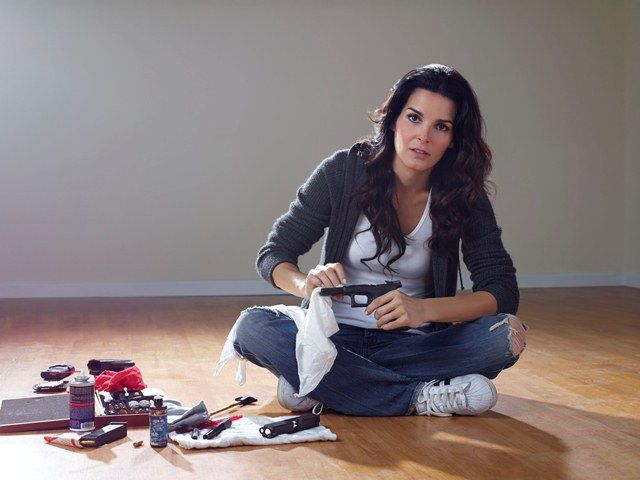
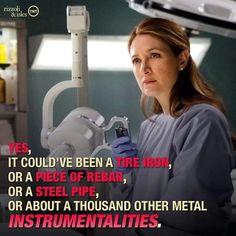
For Rizzoli and Isles, combat gear can be hospital scrubs and scalpel or a pantsuit and t-shirt and a police .45 handgun, but they manage to run around “Boston” solving crimes, dealing with their complex families, making us giggle, all the while looking unrealistically fantastic. That Jane Rizzoli (Angie Harmon) frequently takes down the bad guys like a linebacker is on the plus side of the ledger. That Dr. Maura Isles (Sasha Alexander) has the bad habit of talking about shoes while cutting into dead bodies is on the minus side.

But this show does manage to pass the low-bar Bechdel test, in that it a) has at least two women in it, b) who talk to each other c) about something besides a man. It also passes the slightly higher-bar Mako Mori test, which analyzes films by whether there is: a) at least one female character b) who gets her own narrative arc  c) that is not about supporting a man’s story. It’s hard to believe that here and now in the twenty-first century, it is still so difficult to find shows like this.

“Mako Mori Test.” Geek Feminism. n.d. Web. 25 Oct. 2015

The Return of the New Haven Bed Race

bedracing

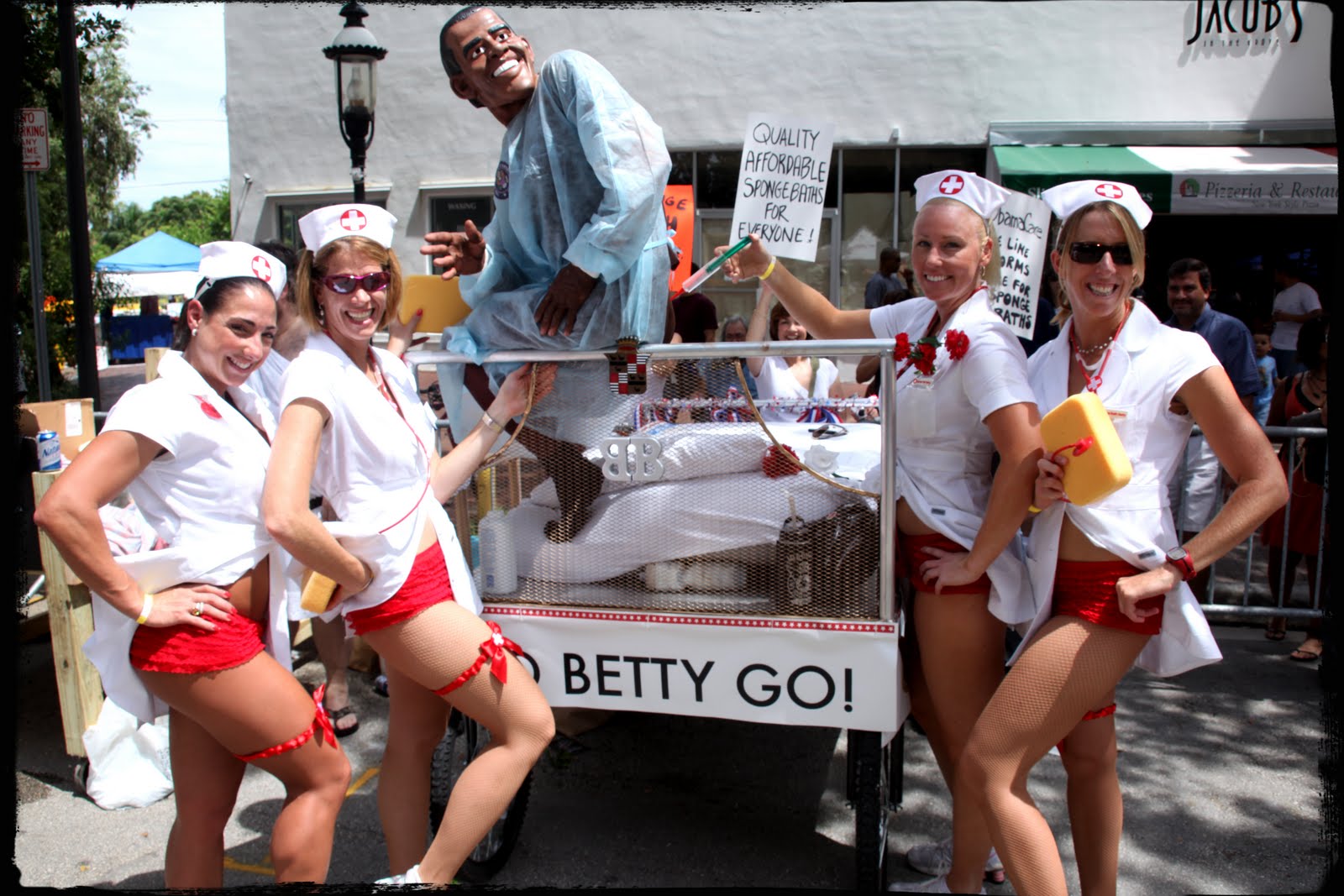
So I was just thinking about the small column I used to write once a month for Matsuyama’s small newspaper The Ehime Weekly RIQ (never did find out what RIQ stood for). There were a few of us foreigners who took turns writing the column, which would be printed in English and translated into Japanese, a sort of Engurish Puraktis. I was thinking about how writing the 20-line (and later down to 16-line) micro-essays was good practice for blogging. Then I thought about my favorite topic, the New Haven Bed Race. Then I Googled the race only to find out that it had stopped running in 1990 but was now running again after 25-year hiatus, and this past Saturday made a comeback! Hoorah!

It is a cool way to make money for charity. Teams decorate their beds and uniforms according to a theme, so for example a hospital team might all be wearing scrubs and stethoscopes with the rider dressed as a patient. The registration this year is $300, which seems excessive to me, but it is for charity, so I guess an eight-person team can split it to make it less ridiculous. Then everybody lines up down on the New Have Common and race in heats.

Giggles all around.

Psycho Sunday: Badass Women in Combat Gear #8

buffy-faith-eliza-dushku-dvdbash-2

Sometimes combat gear is a SWAT uniform. Sometimes it is a black leather catsuit. But if you are Eliza Dushku, a tank top or a denim jacket will also do.

As Faith in Buffy the Vampire Slayer and Angel, Dushku played a Slayer who had had it rough and made a lot of bad choices. As Wikipedia points out, “With Faith, the writers explored the nature of power, and the boundaries and consequences of its use. They wanted to address the issue that, whether the creatures a Slayer kills are good or evil, she is still a professional killer.[41] Co-executive producer Doug Petrie, and writer of Faith-centric episodes such as “Revelations” and “Bad Girls“, says one of the things he loves about the character is that Faith is not wrong in describing herself and Buffy as killers. He goes on to discuss a Slayer’s rights and responsibilities, and how Faith believes her contributions to society relieve her of any legal or moral responsibilities, a view which Buffy does not share.”

Like Natasha Romanov, Faith is a little broken to begin with and only gets worse with all the killing she does—and enjoys. The nice thing about the Buffy/Faith relationship is that we get to see that how you let the job affect you is a choice as much as it is about your environment and support system. So it is not that being a female badass necessarily comes out of brokenness.

In Dollhouse, Dushku played another sometime badass, the Doll/Operative Echo, a former eco-activist turned programmable person. Sometimes a thief, sometimes a hostage negotiator, sometimes a sex worker, the character eventually regains a sense of her original personality and works to take down the company that employs her, and by employ I mean “use.” And again, the pint-sized Dushku made it work.

“Faith (Buff the Vampire Slayer.” Wikipedia. 30 July 2015. Web. 20 Sept. 2015.