So as one roommate is on her way out, she sold me her desk chair, which is easily about fifteen years younger and more solid than my old one. It is also larger, which has led my cat Musashi to claim it as prime nap space if I don’t get there first. It also has armrests that don’t wobble and a back that is high enough for me to rest my head on. Cat notwithstanding, I am hoping that this will make me more productive. Now I just have to figure out how to make it about an inch higher…
Category Archives: writing
The Myth of the Outline
When I teach writing, I always ask my students, “How many of you hate outlines?” usually more than half of the students raise their hands, and well they should.
Most of us were taught to use outlines in fifth grade or so. We had an assignment and were required to turn in an outline with all the Roman numerals and capital letters and then Arabic numerals and lower-case letters—and if you got down to a fifth level of complexity, Greek letters. The teacher read your outline and gave it a checkmark and handed it back to you, with the assumption (stated or unstated) that your writing would follow that outline literally to the letter.
I point this out to illustrate the underlying assumption that our teachers unwittingly taught us: that it is possible to know what you are going to write before you write it. Depending on what kind of a writer you are, this assumption could appear to be anywhere from obvious to ridiculous. And you would be right.
If you are writing about something very concrete, say, the process of turning on a computer or making an omelet, an outline will serve you well. It does not matter how you say things or whether you tell readers to “Push the on button” or “turn the computer on,” to “crack the egg” or “de-shell the egg,” they are likely to understand and be able to comply. But when you start to write about more abstract or complex ideas, then the words you choose to describe idea A might change the content of idea B, and the more that happens, the further you can get from the ideas mapped out in your outline. Then you have a choice: do you follow the new ideas or follow the outline?
There is no single easy answer to this question. One way to decide is by considering your rhetorical situation. Does your audience expect or demand that you follow an agreed-upon path? Do you know enough about your topic to go in one or the other direction, or will you need to do more research? What will be most useful or interesting for you, the writer?
In the professional academic world, this happens all the time. Journals and conferences ask for a 250 word abstract of a 10-20 page essay you haven’t written yet, and no one admits that an abstract like this is a complete work of fiction, with the writer pretending to be able to predict the future. But that’s what you are being asked to do.
Having said this, I must also point out that outlines can be life-savers, especially when you have either very little or too much time to write. When you have very little time, a short outline will ensure that you cover all the needed points. In college, when we had “blue book” exams and had to answer, say, three essay questions in two hours, I would number the parts of each question and pace myself so that I covered all of them. When you have too much time, in contrast, the same thing applies. A student writing a research paper over the course of a semester is going to have lots of ideas and notes about different research sources as the months pass. An outline is a place to record those ideas so that they don’t disappear.
The point in both cases is that the outline is a tool primarily for the use of the writer. It is a working document written, metaphorically, in pencil not with a chisel on stone. It can and should change as your ideas change. Most of my outlines lately are written in two colors of ink on a piece of scrap paper or a cocktail napkin.
Tribal Connections
Somewhat appropriately for Mother’s Day, I was going back to something Writer Chick wrote in her blog a while back that interested me. She said:
“The idea here is that a writer or otherwise creative entrepreneur type person needs a tribe. A group of people so dedicated to them that they spread the word. Offer support. Pledge undying loyalty to the person, their products and/or their brand. Now aside from family, which I think is actually a tribe of sorts, isn’t this a little bit weird? Even your group of friends could be a tribe, I guess. Or your co-workers. But like total strangers?”
To my mind what she describes here is not a tribe. It is a fanbase. A tribe does not promote you; it supports and protects you, perhaps, or shares your particular brand of weirdness, or loves what you love or speaks a shared language. So Middlebury College alumni, who speak at least two languages and have traveled abroad and let it change them, broaden their minds, etc., are one of my tribes. Whedonistas (lovers of Joss Whedon’s prolific oeuvre) tend to be one of my tribes. Peaceful martial artists are one of my tribes.
For my money, your tribe is not there to promote you like a rock star. They are there to understand you when no one else does, to finish your sentences even when you think you are not communicating clearly, and to love you for your oddities, not despite them. Anyway, that’s what I think. What do you think?
Post-Modern Quilting Zeitgeist
My roommate, Jack, is, among other things, a filmmaker. So far he has made at least three short films in the apartment, which generally means that all the furniture that was in one room ends up in another for about three days. And the cat is intrigued. When he is not making films here, he is usually making films elsewhere as he and his peers all serve on each other’s films in different capacities. Aside from being a fascinating study in collaboration, this situation means that my cat frequently gets to take over his room when he is not around, and Musashi is very much for that.
When he is around, Jack tends to start conversations about writing that last for a couple of hours, usually starting with the words, “So, do you think…?” Last night, when I came home very late (thank you, Massachusetts Bay Transportation Authority, for failing us yet again!) after a lovely dinner of Chinese food with my poetry midwife Pamela (the one I can always count on to tell me whether the ending of a poem sucks; apparently the ones I showed her yesterday do not; Huzzah!), I found Jack actually cutting up VEGETABLES for his dinner.
In my sheer amazement at this, I got into a conversation with him that lasted two hours, largely about Post-Modernism and the death of opportunity for artists to make anything new, since we are all just rehashing what has been done before. Part of this is in regard to an ongoing conversation about my rewriting the Xena narrative, which I would argue is, yes, rehashing, but rehashing to change the world, or at least myself, which is the only way we ever start changing the world, after all.
We were discussing, among many other things, the coming reboot of the X-Files with Gillian Anderson and David Duchovny, the coming Batman vs. Superman movie (link to the retro trailer) and other rehashings of popular culture, and he was bemoaning (no, really, he was: and how often do I get to use that word?) the state of our culture and how if we only redo what we did we will not have the time, money or energy to do new things.
He is not wrong, but I do argue that this is, if you will, not the whole story.
He described how he sees humans, with our technology that allows us to see millions of miles into space, fly at hundreds of miles per hour, and delve deep into the Earth, as godlike. But it is, as one of his friends phrased it, a prosthetic divinity. We can only do these godlike things with our fancy tools. And with those tools we can do great good or great destruction.
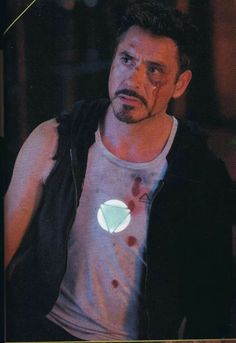
“Yes,” I said. “And that is the story of Ironman.”
Eventually, we agreed that archetypal stories have their place in human meaning–making and identity production, and that as artists we can only be very intentional in what stories we tell and what stories we consume (read, watch, try to live into…).
The Mess of the Old School Writer
One of the problems with still kicking it old school and writing most of my poetry by hand is that when I have a huge project like this (50 poems in the last 33 or so days), my poor roommates cant even sit on the couch without finding bits of paper that say things like “Penelope, Embattled, Requests Aid” or “your heart lies on the road” or “like the fire spreading.” I guess I am thinking of this because of yesterday’s cento, the poem made from bits of other poems. I guess what I really feel like is a kind of bardic Pigpen: as I walk around I let fall a cloud of poems instead of a cloud of dust.
The Magic of Emergent Creativity
Here I go again, letting my writing get in the way of my blogging about writing. Luckily, when I am in a big project like this, I also sit on my own shoulder to watch myself writing, and I learn stuff. What I have learned this week is not exactly new to me, but rather something I have known for a while but have not had the language for. There is a sense of trust that creative writers need to have to be really productive. We must trust that the writing wants to happen, that the story is out there somewhere trying to enter the world, and when we get really, really lucky, it finds us.
J.R.R. Tolkien called this process Subcreation, and talks about it with both fiction and nonfiction in his book Tree and Leaf. But I think today I would rather call it the emergent miracle of creativity or the magic of emergent creativity. In science, emergence is defined as characteristics of a material, say, that are not characteristics of the material’s cells or atoms. The human mind is an emergent characteristic of the human brain. Wetness, reflectivity, and splash are emergent qualities of water that have no clear source in either hydrogen or oxygen atoms. When we are creative, something happens that we do not really ever have complete control over. I throw words on a page, and sometimes they turn into clear or turgid prose and sometimes they turn into a failed poem or a poem of such beauty I reduce myself to tears. Yes, some of that is learned, some of that is my unique imagination applied to a particular subject. Sometimes it can come down to a word I came across the day before or an image from a dream, those tiny gifts the universe gives us, saying, “Take this. Make me more.”
But this thing we learn to trust is what Stephen Buhner, in his book Ensouling Language, calls the golden thread that we find and pick up and follow to the end. I like this metaphor because of the way it has mythic resonance, reminding us of Theseus getting through the labyrinth with his ball of thread, a story about order overcoming chaos, which is, after all, one of the duties of art.
I saw this today during my office hours, which I spent writing a poem about Love and the Epic Hero, which not surprisingly turned out to be very long, about 136 lines. After struggling with a piece at what I originally thought was the end, I finally realized that a different set of pieces in the middle Really Needed to be the ending, because of the pair of images those pieces ended with. One person ends the stanza saying:
I long for a map,
Even if much of it is blank and claiming
“Here be dragons.” At least then I would have
A chance to navigate this strange terrain.
Then the other speaker ends the next stanza with:
This is the territory of dragons. I dare not
Treat it instead as some kind of treasure map.
I love taking an image and using it in two different ways like that, and I did not see when I wrote the first image how I could use it until I wrote the next stanza, but I have learned to trust that I will know what needs to be done.
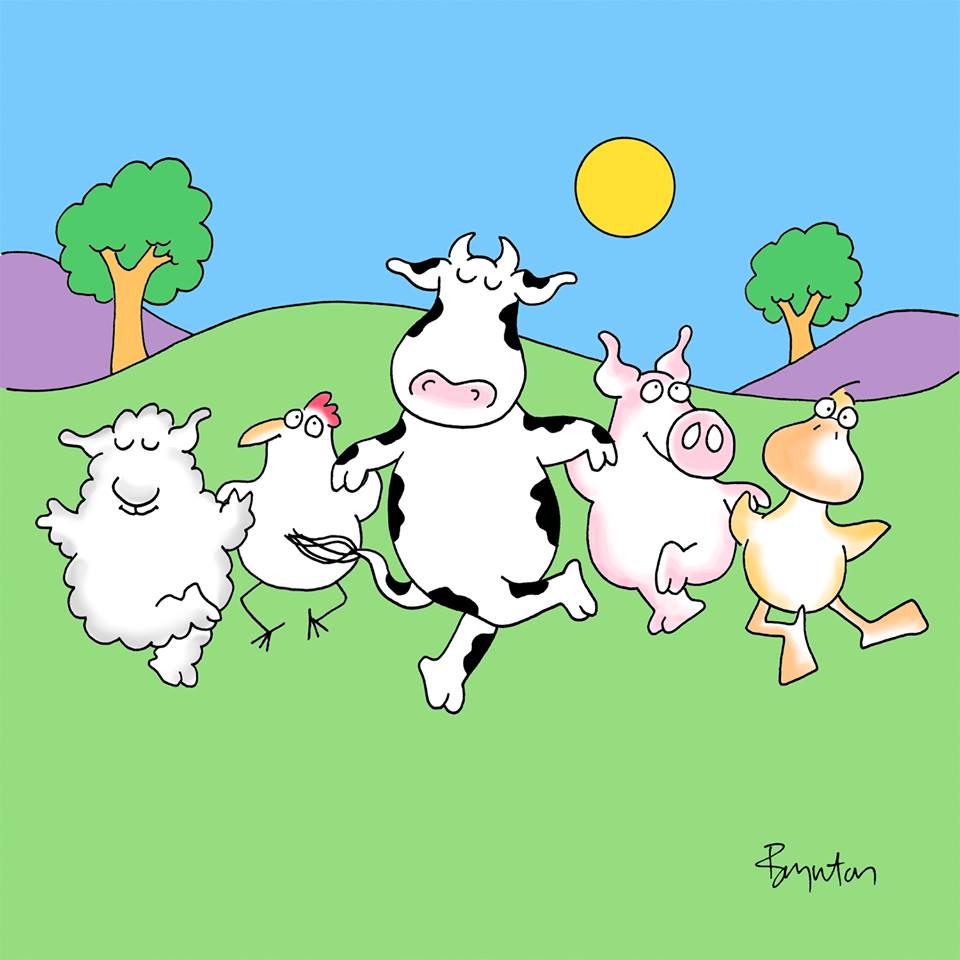
And now, for you, a small dose of Sandra Boynton.
Let Me Sing You the Song of My People
One of the downsides of having a very productive month is that Normal People do not understand how amazing this is and ignore you and Writer People, who do understand, yes, my pretty, they understand All Too Well, resent you. Some of this divergence comes out of a misunderstanding about the creative process. I believe that Sustained Creative Productivity (SCP) requires a shitload of work and self-discipline, for a given value/definition of self-discipline. The word disciple simply means learner. So the kind of self-discipline I am talking about is really learning about yourself and your rhythms, motivations, inspiration. It can be scary, when you identify as a Writer People, to fall into a period of writers block or creative constipation. Like real constipation, it is painful. What is worse, it also threatens your identity. Like a bad knock-knock joke, you ask yourself, How can I Be a Writer if I am not writing? And the only answer you have is either, “Oooh, ooh, I know this one! The sound of one hand clapping!” or “I guess I am not.”
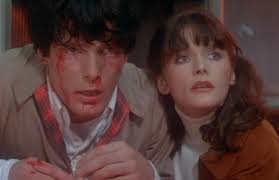
It feels a bit like that moment in Superman II when Clark Kent, who has thrown off his superpowers to be with Lois Lane, suddenly realizes that without his power, he is nothing. It is a crap feeling. (And can I just point out here something I have learned from a friend: if somebody ever tells you that the only way you can have love is to give up your super power, that person is singing the song of Patriarchal Oppression. Invite them out of your life. Then carry on loving and using your super power. Thank you, Jenna Tucker.)
I have often found that I get to the end of the academic year and I am so burnt out from teaching all year that I have nothing to work with. It is so frustrating because I have generally great weather and lots of time and nothing to show for it. And given that I did not always get a lot done during the two semesters, since I basically grade student papers two weeks out of every three, it meant I was not getting much done for the whole frigging year.
But lately, I have noticed that I am getting more done during the semester. This is due to a few things. First, from 2008 to 2012 I was teaching at two schools and doing a second Masters degree at a third (cuz it turns out the Masters degrees are collectible: get the whole set!). Ironically, I was doing this because I had gotten so burned out teaching. It was often a gruelling process to balance all that stuff, but, much like getting hit over the head with a baseball bat, it felt GREAT when it stopped. Suddenly I had extra time to do things, like write, or like watch old TV shows or read novels or pop culture textual criticism (cuz as an English teacher, I nerd hard).
Second, all those papers? There is a trick to using the thing you would rather not be doing as a counterbalance to what you do want to be doing. I can get any amount of writing done if I am staring at a pile of 38 student papers. Grade some, write some, grade some, write some. Lather, rinse, repeat.
Finally, if next month turns out to be One of Those Mays, dry, barren, devoid of writerly hope, etc., I will try not to worry about it and just call it a vacation. Read some light novels. Kick back for a change. Failing that, I can sing you the Song of My People:
I am not writing!
I am not writing!
I will neeeeeeeeever write again!
Woe betide me!
As the block rides me!
I will neeeeeeeeever write again!
It actually sounds a lot like the Darth Vader theme, now that I think about it, or possibly Wagner…
Literary Cross Training, Part 1: Genres
Well, lately it seems that cross training is getting very big at local gyms. The idea is to use a different sport or style of training, such as running or weights or boxing, to enhance your own playing of a sport or style of training. I think this works well in writing too.
Novelists can learn from plays how to make the unit of a scene (time and place with characters dealing with a conflict) in a tight way. Fiction writers can learn from screenwriting how to use natural, concise dialogue. Nonfiction writers can learn about description from fiction writers. And everybody can learn about precise and musical language from poetry.
And presumably what we learn from the blogosphere is how to be opinionated in 100 to 1000 words, preferably with amusing pictures of cats.
33 Years of Poetizing!
Well, it does not seem possible, but I have been writing poetry seriously for 33 years. Such a landmark seems to require a thoughtful contemplation of what I have learned, and also a giddy Snoopy dance of celebration. First the contemplative bit.
Some of my poetry is conversational. Conversations in different languages have their own music. English tends to march along, which is why iambic pentameter is historically such a popular rhythm in our literature. Japanese is more takataka takataka, as they say, at least in the cities. The romance languages are more fluid and flowing. One way to achieve this kind of music is through internal rhyme and slant rhyme. Rather than putting a perfect rhyme (bright light) at the end of lines, you put them in the middle of lines, and not necessarily at the same distance from each other. A slant rhyme (light bide) pulls the reader’s attention without drawing too much attention to itself, a bit like the difference between a cat tapping you on the arm rather than jumping into your lap. You can see examples of this at poetry slams, spoken word events and other performances.
I have learned a lot about why and how revising happens. This post by Ann Michael on gestation says it quite well.
I have learned about dealing with rejection, which for me is having many eggs in many baskets, and only caring deeply about the eggs I am currently laying, rather than the ones I have sent off to become omelets. Many writers struggle with this. There are even whole books about it.
One of the hardest things for some people is abandoning projects that are going nowhere. I remember the utter aghast looks on my college classmates’ faces when a visiting poet said that if the work in his Not Yet drawer still didn’t work after half a dozen passes with weeks or months in between, he chucked it. But honestly, sometimes it make sense to, you should forgive the phrase, Let It Go. Though as one of my colleagues has recently shown, it is not always easy.
Lastly, I have learned that although we all write alone, we are saner and wiser if we also surround ourselves with a community of other writers and artists and people who are trying to make order out of chaos.
And when you have the opportunity, do the Hokey Pokey to bagpipe music.