Not So Pathetic After All

salinger

So it seems that nothing cuts into your writing time like actually having to go to work, rather than sitting around watching your neighbors try to shovel their cars out of six feet of snow, pointing, and mocking, with the cat. But it is a) the weekend again and b) There Will Be Snow (but only 8 to 10 inches, or possibly 16 to 18). Frankly, most people in New England are numb to the numbers. Or maybe that is just windchill.

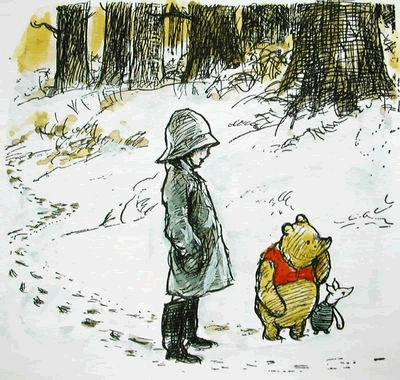
When I think of the Great Poets, I do not only think of Homer, Chaucer, and Shakespeare; I also think of Elizabeth Bishop and Billy Collins. But at times even these pale in the shadow of the truly great. Below I give you Winnie the Pooh, my vote for Bard of Snowpocalypse 2015:

The more it snows

(Tiddely-Pom)

The more it goes

(Tiddely-Pom)

The more it goes

(Tiddely-Pom)

on snowing

And nobody knows

(Tiddely-Pom)

How cold my toes

(Tiddely-Pom)

How cold my toes

(Tiddely-Pom)

are growing

If you believe Facebook, poets are not the only ones who take the weather personally, but for me, writing about weather often serves as a good metaphor for the inner life, serene or chaotic. In literature, the so-called pathetic fallacy is the idea that nature mimics human emotion; we see it in anthropomorphisms like “the sky wept.” We like them so much because in fact human emotion often mimics the weather: grey skies make us gloomy, and the sun lifts our gloom.

So what are we to say about six feet of snow in three weeks and another two feet on the way? Now you understand why I like Pooh so much.541

Milne, A.A. I do not remember which book. Illustration by E. Shepherd.

Haiku and the Problem of English

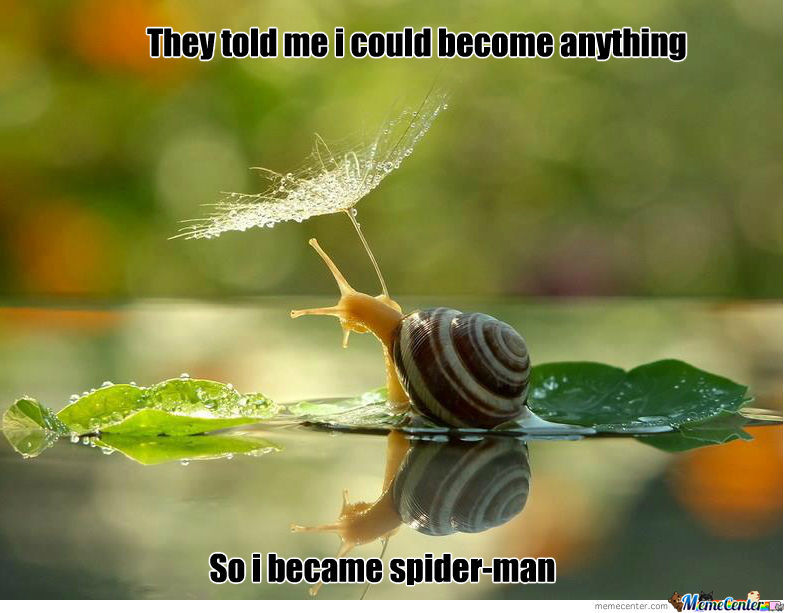
snail-hope_o_1161914

Toodling around on WordPress for the past few days, I keep seeing people writing what they undoubtedly think of as haiku. I got taught what everybody else got taught about haiku in fifth grade English class: a haiku is a Japanese three-line poem, the lines having five, seven, and five syllables, for a grand total of seventeen syllables. Easy-peasy, right? Well, actually, no.

First of all, that description is a definition of a senryu, not a haiku. For the poem to be a haiku, it needs a kigo, a word that refers to the seasons and nature. Also there should be a kireji, a “cutting” word, that is like a caesura (pause) in English poetry. Often, translations of Japanese poems in English will use punctuation like a colon or a period to show the stopping and starting again. Often the first two lines set up an image and the last line pulls the rug out from under the reader or possibly gives the reader something new to appreciate.

Second, syllables in English are very different from syllables in Japanese. The word for teacher, sensei, looks like two syllables to an English speaker, but is in fact four in Japanese, se/n/se/i. This means that while you could feasibly have as many as seventeen words in a seventeen-syllable poem in English, Japanese poets are using very few words indeed.

One of the ways that the classical poets got around this problem was with a kind of poetic shorthand, phrases or tropes that everyone recognized. So, for example, the phrase “wet sleeves” implies the end of a love affair.

One of the uses of these shorter poems (we can talk about tanka, renga and haibun another time) is to write a final farewell poem at one’s death. Often a samurai would write such a poem before going off to battle, as presumably, one fights with more ferocity if one has accepted the possibility of one’s death and prepared oneself for it.

To the Western world, Matsuo Basho (1644-1694) is probably the most well-known and widely quoted Japanese poet. You probably had his frog haiku in your schoolbook just as I did: furu ike ya / kawazu tobikomu / mizu no oto

an ancient pond

a frog jumps in

the splash of water [1686]

I also really like Kobayashi Issa (1763-1828). He is one of the four great haiku masters, along with Basho, Buson and Shiki. Here is one of his poems.

O snail

Climb Mount Fuji,

But slowly, slowly!

The Relationship between Emotion and Poetry

So a couple of days ago, a reader gave me this prompt for the blog: Percy Bysshe Shelley (1782 to 1822) wrote, “Poetry is the record of the best and happiest moments of the happiest and best minds.” Discuss!

Okay, Mr. Shelley, here goes. After reflecting on your thought, I respectfully have to disagree. While it may be true that some poetry by some poets comes out of happiness, I do not feel that the majority of my poetry does, and there is a lot of evidence that a lot of creative people, poets among them, write to handle their less positive emotions. In fact Kay Redfield Jamison has written a book about it, Touched with Fire: Manic Depressive Illness and the Artistic Temperament. Given that Jamison is an experienced psychiatrist with bipolar disorder herself, and a gifted writer and researcher, I think that we should listen to what she has to say. (And for those of you who like memoirs, her book, An Unquiet Mind: A Memoir of Moods and Madness, will widen your mind on the struggles of major mental illness. Eloquent and a little scary.)

Rather than beginning with emotions, even the negative ones, I think I more often begin with a phrase or an idea. Looking at the poetry coming in my first two books, one to be published later this year and the other next year, these are some of the patterns I see.

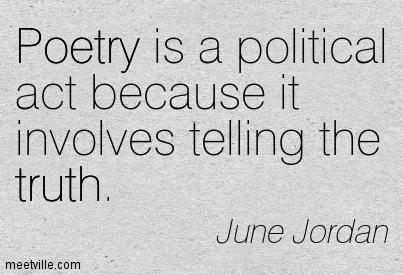
Quotation-June-Jordan-poetry-truth-Meetville-Quotes-196042

Didactic/Political Poetry, Serious or Funny: Because I read a lot of women poets, and poets who came to age during the Civil Rights/Anti War/Feminist Movements, I have never had a problem with political poetry, as long as it is good poetry. Neither singsong nor screeching will bring opponents around to be allies, nor potential allies to be activists. But beauty, good imagery, sometimes humor: those are the things that can turn hearts. So yes, I write about body image, domestic violence and war. Having traveled to both Hiroshima and Nagasaki while I lived in Japan, and having done so as an Obvious (Default) American (blonde and blue), I had to consider the damage my country had done to a people I respected and liked. Such reflections can lead to poetry, but it is unlikely to be happy poetry.

Popular Culture, both Appreciative and Satirical: Again, as a woman, I am constantly aware how the things around me, good and bad, affect my perception of myself and other women, and vice versa. And pop culture plays a huge role in that. So yes, I will write about Ken coming out of the closet, Raggedy Ann getting a heart transplant (from I Love You to Hotchacha) and changing into a different type of gal, Amelia Earhart, Lucy Lawless and other real women being general badasses: to me it is all fair game. I do not know that happiness per se is a part of it.

amelia-earharts-quotes-1

Environmental Poetry: Here I am probably lumping one strand of didactic poetry with the more general subject of nature poetry. Maybe I could keep them separate 20 years ago, but now? We are killing the planet, and I cannot ignore this, even when I am celebrating the beauty, generosity and wildness of Earth and Nature. So even when I am talking about bright yellow daffodils, there are likely to be other, darker colors lurking in the background.

Art/Zen Poetry: This is not the best name, but certainly when I look at a static piece of visual art, often in the quiet of my home or a museum, there is the feeling of movement in the people moving in the landscape, the dynamism of their stories, but also a sense, at the end of the poem I am using to capture that, of completeness and serenity.

zen-issa-o-snail-climb-mount-fuji

Occasional Poetry: Something happens, to me or friends and I write a poem to commemorate it. Once, a friend had a month of big trouble from a roommate, including a restraining order. After the judge threw the case out, and the roommate moved out, my friend had an Exorcism Party, and I wrote a series of poems for that, to create a ritual of getting the bad energy out and laying down the foundation for forgiveness and forgetfulness. Important work, I think, but not particularly happy.

There is undoubtedly more, Mr. Percy, but this is all just off the top of my head. Overall, I would say that happiness is necessary to the healthy person but it is not necessary to the working poet. Hopefully, we can be both.

The Loneliness of the Long-Distance Writer

lonelypanda

In the end, we all write alone.

As a performing introvert, sometimes I revel in the solitude and sometimes I get edgy and want to talk to other people about the things I am writing about. Not imaginary people, like editors of journals and their subscribers. Real people with faces and names and opinions. At least, that is what it feels like.

I don’t know a lot of poets these days. Working in academia, I know a lot of fiction writers, scholars, science writers, bloggers and at least two recovering journalists. This is usually enough, as the issues we all face in terms of writing process and simply putting down the right words in the right order are ubiquitous regardless of genre. Having some writer friends is not only helpful; I would argue that it is necessary for your long-term happiness as a working writer. There are some things that only other writers understand:

  • the habit of leaving a notepad in the bathroom for 3 am inspirations
  • the frustration with having thought of the almost-right word (no, that is not good enough, dammit)
  • the victory of writing 1665 words a day for more than two weeks in a row
  • scribbling the lyrics to a new song idea on the inside of your Dunkin Donuts bag, sometimes before you get around to eating the donut
  • those white-noise days when you stare at page or screen for hours and produce nothing
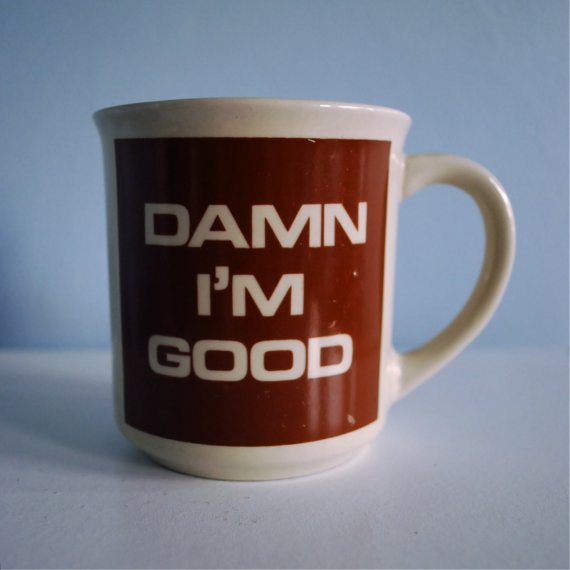
  • the feeling of “Damn, I’m good!”* when you finish an exquisite bit of writing even you didn’t know you were capable ofdamnfinemug

You can experience the joys and pains alone, but it is exhausting, especially when you are also submitting work to those imaginary editors out there in Journal Land and receiving form rejections back in a much higher proportion than the acceptances. And, alone, you can solve the obstacles in your writing—the clunky transitions, the fifth draft ending that still sucks—but it will go faster with a friend.

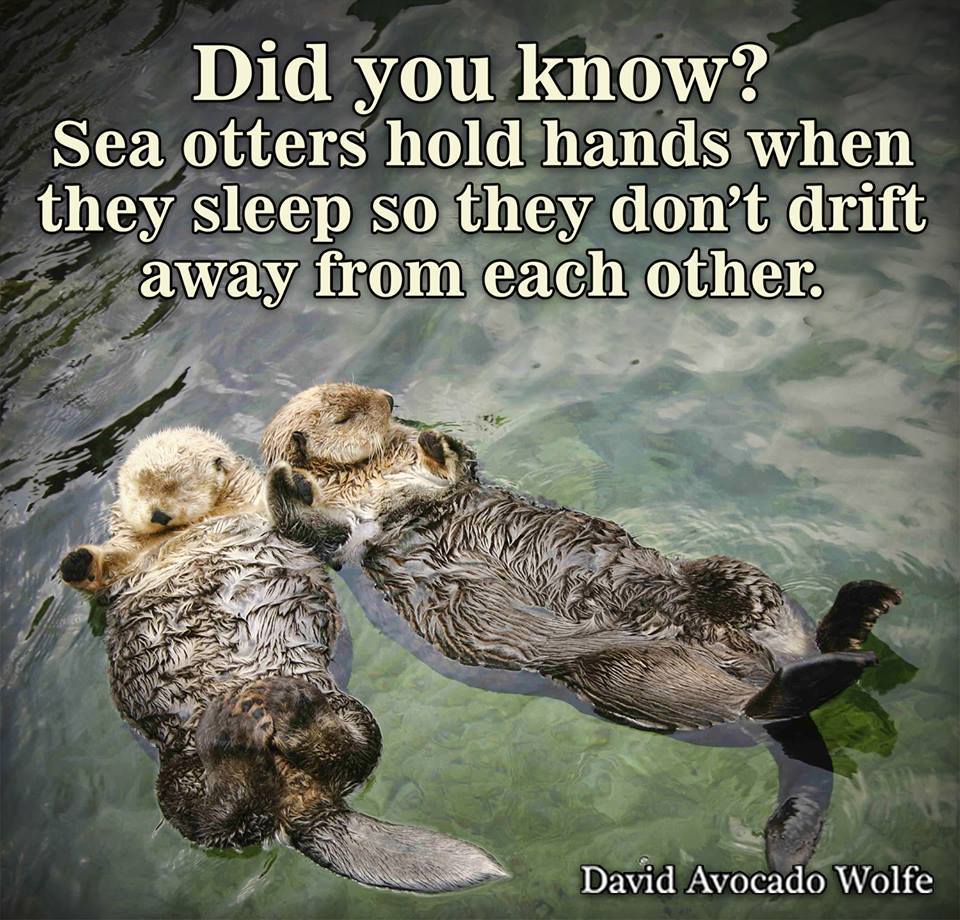
When I think of this, I think of otters, who sleep on their backs on the water, holding hands so that they don’t get separated. Sometimes, you just need a buddy.

otters

* A college friend of mine had a mug that said this. I have always thought it would be a great mug for a writer. George Eliot at the least would have found it invaluable.

Inspiration Tip: Revisiting Old Friends

sign

One way I rev the engine of creation when I am stuck in neutral gear is to go back to one of my favorite poets, often Marge Piercy, Billy Collins, or Nancy Willard, but occasionally someone less famous. A while back I was updating the Publication section on my Curriculum Vitae, which entailed digging through contributer’s copies. During the 1990s, I published a lot of my poems about art in a then-new journal called Ekphrasis, which means–get this–poems about art.

It is still around, a great little journal, and one of the best things about it is that it publishes some really cool poetry/poets. One of the poets I discovered there was Simon Perchik, who writes these skinny little poems with lines that just blow my mind. His line “or perhaps your shadow overflowing again” (from “D111”) inspired a poem about a panic attack; “today is missing/the ground is missing” (from “D180”) inspired a poem about an anxiety attack on a hot summer day. I cannot find some of the other poems; they were not all about mental health!

The ending of one of my favorite Nancy Willard poems was put on postcards several years back in a Poetry in Public sort of program. This is from “The Hardware Store as Proof of the Existence of God.”

“In a world not perfect but not bad either

let there be glue, glaze, gum, and grabs,

caulk also, and hooks, shackles, cables, and slips,

and signs so spare a child may read them,

Men, Women, In, Out, No Parking, Beware the Dog.

In the right hands, they can work wonders.”

Willard, Nancy. Water Walker. New York: Knopf, 1989.

Voice: Made from Eyes and Heart and Some Legos

midd

I was just reading Ann E. Michael’s blog post about voice and it got me thinking. She quotes Stanley Kunitz, who thought images from childhood were a key part of voice, but I am not completely convinced. I feel like I did not find an outer landscape that matched my inner landscape until I went to college in Vermont. If I were to write with my childhood imagery, there would be a lot more fireflies and dragonflies in my writing, more lilacs and sunflowers, small islands in the center of small lakes, and cloud animals.

Instead, I have a deep love of the passing seasons, the colors of mountains changing as the color of the trees changes, rolling hills, flashing waterfalls, and somewhere a cow or two hanging out. Living in Japan also affected my poetry strongly. The Japanese often represent the seasons in their visual arts and literature. And I think the complex process of translation that is living in a very different culture also changed the way I hear my voice. Also, the moon: there is a famous Japanese poem written while the poet was working in China as a sort of ambassador and missed his wife, something like how we all walk beneath the same moon. I still find that comforting and I think that is why the moon comes up often in my poetry.

One of the interesting things I have learned from studying singing is that I can feel where my voice is in my body. The high parts resonate in the head and the low parts resonate in the chest. It seems to me very important to remember that we write from the body. It is not enough to have a brain and hands.

And of course part of voice/style is always going to be technical, how you put the words together in a way that conveys your personal music. You keep rearranging the parts until it comes together the way you want it.

lego_yellow3-6001-522x442

Writing about Food

Dramatic_Woodchuck_by_HankaBanka

Back in the 1990s, when I taught creative writing in Northeastern University’s old night school, I found similar problems with the poetry and the autobiography students: cliché and vagueness. The poets wrote things that sounded like bad pop love songs and the autobiographers covered large swaths of time with things like, “I would go to school and then I would come home and after I would do my homework, I would go out with my boyfriend…”

Q: How much would would a wouldchuck chuck if a wouldchuck could chuck would? A: None. Smart Writer Woodchucks use simpler tenses and more riveting detail.

To solve this dilemma, I had both classes write about food before they took on any other topic (and, following the advice of a colleague, I said they were not allowed to write about Love until they had earned it). Food is a great topic for a few reasons. Everybody eats, everybody has an emotional connection to food (both positive and negative), and food stimulates not just the visual sense, but also the smell, taste and tactile senses. It is the perfect topic.

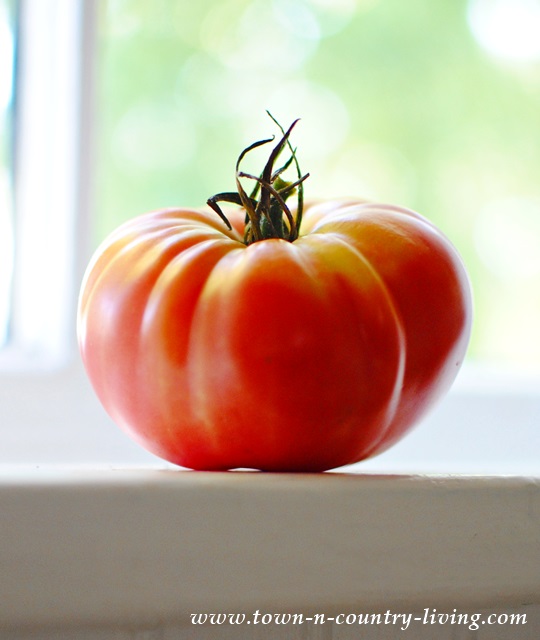
During these years, the English department of the night school sponsored an April poetry reading every year to showcase the teaching poets in honor of National Poetry month. One year I read a poem I had written about a tomato, sunning itself on my windowsill like a Buddha.

After the reading, a student came up to me goggle-eyed, and said, “I am never going look at tomatoes the same way again!”

Without thinking, I said, “That is the whole purpose of poetry.”

And the more I have thought about it, lo these many years, the more I believe I was right.

Tomato-on-Windowsill

33 Years of Poetizing!

snoopydance

Well, it does not seem possible, but I have been writing poetry seriously for 33 years. Such a landmark seems to require a thoughtful contemplation of what I have learned, and also a giddy Snoopy dance of celebration. First the contemplative bit.

Some of my poetry is conversational. Conversations in different languages have their own music. English tends to march along, which is why iambic pentameter is historically such a popular rhythm in our literature. Japanese is more takataka takataka, as they say, at least in the cities. The romance languages are more fluid and flowing. One way to achieve this kind of music is through internal rhyme and slant rhyme. Rather than putting a perfect rhyme (bright light) at the end of lines, you put them in the middle of lines, and not necessarily at the same distance from each other. A slant rhyme (light bide) pulls the reader’s attention without drawing too much attention to itself, a bit like the difference between a cat tapping you on the arm rather than jumping into your lap. You can see examples of this at poetry slams, spoken word events and other performances.

I have learned a lot about why and how revising happens. This post by Ann Michael on gestation says it quite well.

I have learned about dealing with rejection, which for me is having many eggs in many baskets, and only caring deeply about the eggs I am currently laying, rather than the ones I have sent off to become omelets. Many writers struggle with this. There are even whole books about it.

One of the hardest things for some people is abandoning projects that are going nowhere. I remember the utter aghast looks on my college classmates’ faces when a visiting poet said that if the work in his Not Yet drawer still didn’t work after half a dozen passes with weeks or months in between, he chucked it. But honestly, sometimes it make sense to, you should forgive the phrase, Let It Go. Though as one of my colleagues has recently shown, it is not always easy.

Lastly, I have learned that although we all write alone, we are saner and wiser if we also surround ourselves with a community of other writers and artists and people who are trying to make order out of chaos.

And when you have the opportunity, do the Hokey Pokey to bagpipe music.